 how-to
Breathwork Techniques for Deep Relaxation: A Guide
Table of Contents
- What You'll Need Before You Begin
- Diaphragmatic Breathing: The Foundation of Breathwork Techniques
- 4-7-8 Breathing Benefits for Deep Relaxation
- Box Breathing Technique Steps for Stress Relief
- How Long to Practice Breathwork for Relaxation
- Breathwork Meditation Scripts for Guided Practice
- Common Mistakes to Avoid with Breathwork Techniques
- Contraindications and Safety Considerations
- Frequently Asked Questions
Last Updated: September 30, 2026
What You'll Need Before You Begin
You do not need much to start a breathwork practice. A quiet spot, a few minutes, and a body willing to slow down are enough. That low barrier is exactly why breathwork techniques for deep relaxation work so well for people who feel too busy for wellness routines. (Source: vagal tone and its impact on the nervous system)
At Body Alchemy Sedona, we teach breathwork as a nervous system skill, not a performance. The goal is a calm state you can return to on a hard day.
Here is the short list of what actually matters before your first session.
Creating a Comfortable Space
Your space should signal safety to your body. A cluttered, noisy room makes it harder to settle, so pick somewhere you can be still for five to ten minutes.
A few simple steps:
- Choose a spot with steady temperature and soft light
- Sit in a chair with feet flat, or lie on a mat
- Loosen tight clothing around the chest and waist
- Silence your phone or set it to do not disturb
- Keep a blanket nearby, since body temperature often drops as you relax
That is it. No special equipment, no app required. If you want guidance, a teacher-led session removes the guesswork about pacing and posture.
Diaphragmatic Breathing: The Foundation of Breathwork Techniques
Diaphragmatic breathing is the base layer of every other technique on this list. It uses your main breathing muscle, the diaphragm, instead of your chest and shoulders.
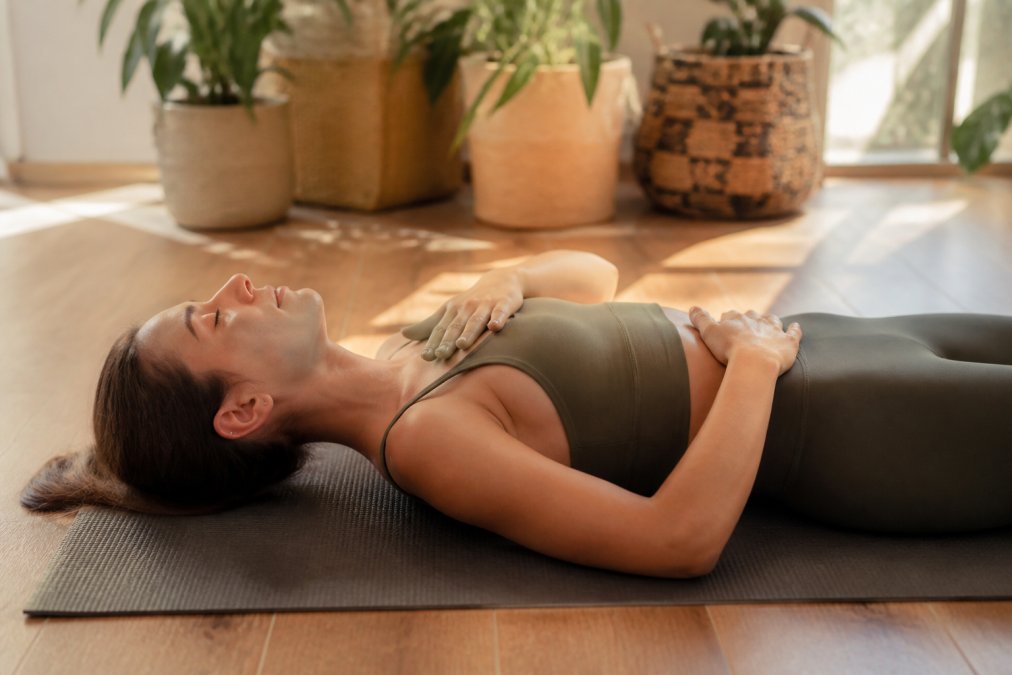
Most adults default to shallow thoracic breathing, which keeps the body in a low-grade stress response.
Why Slow Belly Breathing Actually Calms You
Most articles tell you to breathe slowly and stop there. The reason it works comes down to the vagus nerve, the tenth cranial nerve and the main highway of your parasympathetic nervous system.
How to Practice Diaphragmatic Breathing
- Lie on your back with knees bent, or sit upright in a chair.
- Place one hand on your belly and one on your chest.
- Inhale through your nose for about 4 seconds. Feel the belly hand rise.
- Exhale slowly through pursed lips for about 6 seconds.
- Keep the chest hand mostly still. Only the belly should move.
- Repeat for 5 to 10 minutes.
If your chest hand moves more than your belly hand, you are still thoracic breathing. That is normal at first. Slow down and try again.
A Quick Test for Vagal Response
You can check whether your practice is landing. Sit quietly for one minute and count your pulse at the wrist. Then do five rounds of 4-second inhale, 8-second exhale. Count your pulse again immediately.
4-7-8 Breathing Benefits for Deep Relaxation
The 4-7-8 technique is one of the most popular breathwork techniques for winding down at night. It pairs a short inhale with a long hold and an even longer exhale.
Step-by-Step Instructions for 4-7-8 Breathing
- Sit or lie comfortably with your back supported.
- Rest the tip of your tongue behind your top front teeth.
- Exhale fully through your mouth first.
- Inhale quietly through your nose for a count of 4.
- Hold your breath for a count of 7.
- Exhale slowly through your mouth for a count of 8.
- That is one round. Start with 4 rounds and build up.
Keep the inhale-exhale ratio gentle. If holding for 7 seconds feels strained, shorten the whole cycle and keep the proportions. Never force a hold.
Box Breathing Technique Steps for Stress Relief
Box breathing is a four-part cycle: inhale, hold, exhale, hold, each for the same count. It is the technique many people reach for when they need focus and clarity under pressure.
- Sit tall and relax your shoulders.
- Exhale all your air.
- Inhale through your nose for a count of 4.
- Hold for a count of 4.
- Exhale through your nose for a count of 4.
- Hold empty for a count of 4.
- Repeat for 5 to 10 rounds.
When to Use Box Breathing
Use box breathing when you need to steady yourself but cannot lie down. It fits into moments between tasks.
Good times to use it:
- Before a meeting or presentation
- During a stressful commute
- After a difficult conversation
- When you feel scattered and need to reset (Source: growing interest in wellness and mindfulness practices)
| Technique | Best Time to Use | Typical Duration |
|---|---|---|
| Diaphragmatic breathing | Daily baseline practice | 5-10 minutes |
| 4-7-8 breathing | Before sleep, anxiety relief | 4-8 rounds |
| Box breathing | Stressful moments, focus | 5-10 rounds |
| Alternate nostril breathing | Morning, before meditation | 5-10 minutes |
How Long to Practice Breathwork for Relaxation
Most people feel calmer within two to five minutes of slow breathing. That short window is the honest answer to how long to practice breathwork for relaxation: you do not need an hour to shift your state.
A simple structure:
- 2-3 minutes of diaphragmatic breathing to settle in
- 2-5 minutes of your chosen technique
- 1-2 minutes of natural breathing to close
Micro-Dosing Breathwork for a Busy Day
Most people quit breathwork because they think it requires a 30-minute meditation block. It does not. You can train the same nervous system response in short bursts scattered through the day, a practice sometimes called micro-dosing.
A sample weekday schedule:
- On waking (90 seconds): Five rounds of 4-7-8 before you check your phone. This sets your starting tone for the day.
- Mid-morning (60 seconds): One minute of box breathing before your first meeting or deep-work block.
- After lunch (90 seconds): Diaphragmatic breathing with a long exhale to counter the post-meal slump.
- Late afternoon (60 seconds): Alternate nostril breathing if you feel scattered or irritable.
- Before bed (3-5 minutes): A full 4-7-8 session to wind down.
Why Short Sessions Still Work
The relaxation response is not cumulative in the way a workout is. It is a state you can enter and exit many times a day. Each time you slow your exhale, you nudge vagal tone up and stress hormones down. The benefit comes from frequency, not duration.
Breathwork Meditation Scripts for Guided Practice
A script gives your mind something to follow so it stops wandering. Breathwork meditation scripts work well for people who find silent practice hard.
The exhale is the relaxation lever. When in doubt, make the out-breath longer and slower than the in-breath, and the calm state follows.
Common Mistakes to Avoid with Breathwork Techniques
The biggest mistake is treating breathwork as a performance. People push for bigger breaths, longer holds, and faster results, then wonder why they feel dizzy and tense.
Watch for these errors:
- Breathing through the mouth instead of the nose
- Forcing deep breaths until you feel lightheaded
- Holding your breath longer than is comfortable
- Practicing only when you are already overwhelmed
- Skipping the exhale and rushing to the next inhale
- Expecting instant results and quitting after one session
Contraindications and Safety Considerations
Breathwork is generally gentle, but it is not risk-free for everyone. Certain conditions call for caution or a conversation with your doctor first.
- A heart condition or uncontrolled high blood pressure
- Asthma or another respiratory condition
- A history of panic attacks or severe anxiety
- Epilepsy or a seizure disorder
- Glaucoma or recent eye surgery
- Are pregnant
Frequently Asked Questions
What is the most calming breathing technique for immediate stress relief?
The 4-7-8 breathing technique often provides quick calm. Inhale through your nose for 4 counts, hold for 7, then exhale through your mouth for 8. This extended exhale activates the parasympathetic nervous system, slowing your heart rate and reducing stress. Many people feel a noticeable shift within 2-3 rounds. For ongoing relaxation, combine it with diaphragmatic breathing to build a sustainable practice that supports your nervous system daily.
How does the 4-7-8 breathing technique promote deep relaxation?
The 4-7-8 technique uses a longer exhale than inhale, which stimulates the vagus nerve and triggers the parasympathetic nervous system. This shifts your body out of fight-or-flight and into a calm state. The breath retention also increases carbon dioxide tolerance, which can reduce anxiety over time. Practicing regularly helps regulate cortisol and supports deep relaxation, making it easier to fall asleep and stay calm during stressful situations.
Are there specific breathwork techniques recommended for anxiety?
Yes. Box breathing and 4-7-8 breathing are commonly recommended for anxiety because they emphasize slow, controlled breaths. Alternate nostril breathing can also help balance the nervous system. Start with 5 minutes of box breathing: inhale for 4, hold for 4, exhale for 4, hold for 4. If anxiety feels overwhelming, try a physiological sigh: two quick inhales through the nose followed by a long exhale through the mouth. Always stop if you feel dizzy and return to normal breathing.
How long should I practice breathwork to feel a deep relaxation effect?
Most people notice relaxation within 2-5 minutes of slow breathing. For lasting benefits, aim for 10-20 minutes daily. Consistency matters more than duration: 5 minutes every day can be more effective than an hour once a week. If you're new, start with 3-5 minutes of diaphragmatic breathing and gradually increase. Over time, your body learns to shift into a calm state more quickly, and you may find that even 1-2 minutes of conscious breathing helps during stressful moments.
Breathwork is simple, but building a habit that sticks is where most people stall. At Body Alchemy Sedona, our therapist-led studio offers breathwork alongside yoga, sound healing, and custom massage, so your nervous system gets support from more than one direction. Every session is tailored to your needs, whether you visit us in West Sedona or book a mobile appointment. Get started with Body Alchemy Sedona and rediscover what deep relaxation actually feels like.