 Comparison
Massage vs Breathwork for Stress Relief in Sedona
Last Updated: November 11, 2026
Quick Summary
Choose massage when your main problem is tight muscles or pain from overuse, and breathwork when racing thoughts and poor sleep are the issue. Many people use both, bodywork to loosen the body and breathwork to keep it settled, with deep relaxation as a shared goal.
- Massage works mainly through touch and pressure on tight tissue.
- Breathwork works mainly through slower, deeper breathing that helps the nervous system settle.
- Track sleep, energy, movement, pain and daily tasks on a 1 to 5 scale for three to four weeks.
- Judge progress by the trend over weeks, not by a single bad day.
- Start with one approach for four weeks before adding or switching anything.
Table of Contents
- Two Different Goals: Deep Relaxation and Physical Healing
- What Restoring Daily Flow Actually Looks Like
- Breathwork for Stress: What It Does and Where It Fits
- Nervous System Regulation Techniques Compared
- Deep Relaxation Practices vs Bodywork for Physical Healing
- Matching an Approach to Your Symptoms, Goals, and Schedule
- Building Sustainable Wellness Habits You Can Keep
- Frequently Asked Questions
Two Different Goals: Deep Relaxation and Physical Healing
Stress and sore muscles often get lumped together, but they call for different tools. Massage and breathwork both help you feel calmer, yet they work on different parts of the same problem. Knowing which one you need saves time and money, and it makes the time you spend feel worth it.
Here is the basic split. Massage works mostly through the body: touch, pressure and movement that ease tight tissue. Breathwork works mostly through the breath: slower, deeper patterns that help the nervous system settle. Many people benefit from both, but starting with the right one for your goal makes a real difference. Naming the goal early helps, whether you're visiting or booking ongoing care.
What Restoring Daily Flow Actually Looks Like
"Restore daily flow" sounds vague, so it helps to pin it to things you can observe in an ordinary week. Flow, in this sense, means your body and mind aren't constantly pulling you off course. You get through the morning without fighting yourself, you can move without stopping to brace, and a small annoyance doesn't ruin the rest of your afternoon.
A practical way to check this is to look at five everyday areas and rate each one from 1 to 5 on a few mornings a week:
- Sleep: How long it took to fall asleep, how many times you woke up, and how rested you felt on waking.
- Energy: Whether you hit a mid-afternoon slump that makes you reach for caffeine or sugar just to function.
- Movement: How stiff you feel getting out of a chair or climbing stairs, and whether that changes across the day.
- Pain or tension: Where it sits, how often it shows up, and whether it limits anything you want to do.
- Completing daily tasks: Whether you can finish the things you planned without needing to abandon half of them.
Keep the notes in a basic notebook or phone app. You aren't looking for perfect numbers. You're looking for direction. If the averages drift upward over three to four weeks, the approach you're using is probably helping. If nothing moves after a fair trial, that's useful information too, and it's a good reason to talk with a clinician rather than simply adding more practices.
One caution: day-to-day scores swing with weather, workload and illness, so judge the trend over weeks, not the bad Tuesday.
Breathwork for Stress: What It Does and Where It Fits
Breathwork is a family of practices built around how you breathe. If you'd like to try it with a guide, you can book a breathwork journey in Sedona and work through the basics in a session. Slow, steady breathing is a common way people try to ease stress in the moment.
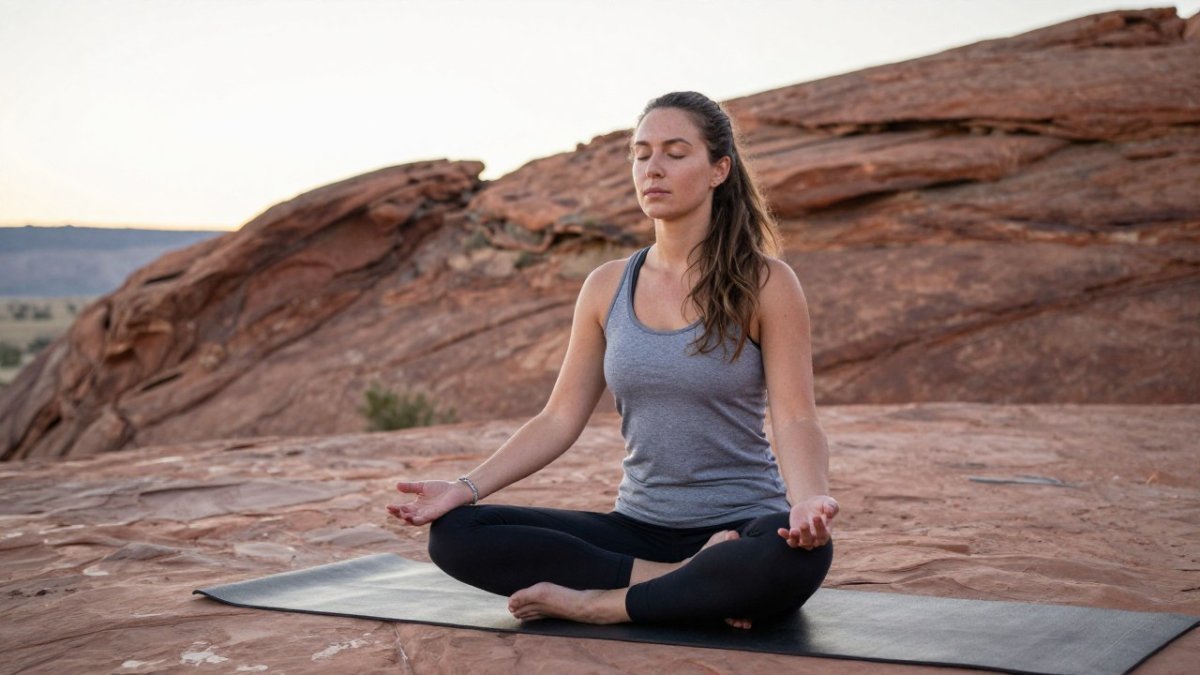
Breathwork works well as a daily habit or a session you return to when stress builds. It is not a replacement for medical care. Think of it as one tool among several for stress.
Nervous System Regulation Techniques Compared
Several techniques fall under nervous system regulation. Slow breathing, grounding exercises, gentle movement and guided relaxation all aim to help the body shift out of constant alert mode. Each one suits a different moment.
- Slow breathing: Good for quick resets during a busy day.
- Grounding: Helpful when your mind feels scattered or racing.
- Gentle movement: Useful when stress lives in your muscles.
- Guided relaxation: Best when you want to fully let go and rest.
The right choice depends on what your body is telling you in that moment.
Deep Relaxation Practices vs Bodywork for Physical Healing
Deep relaxation practices and bodywork overlap, but they are not the same. Relaxation practices, such as breathwork and sound healing, are often used to support calm. Bodywork, such as therapeutic massage, works directly with muscles and tissue.
If you have ongoing muscle tightness or pain from overuse, bodywork may suit the physical side of your goals. If your main problem is racing thoughts or poor sleep, relaxation practices may fit better. Many people combine them, using bodywork to loosen the body and breathwork to keep it settled afterward.
Matching an Approach to Your Symptoms, Goals, and Schedule
Most people don't need to figure out the whole field at once. A rough guide can help sort your situation.
- If your main complaint is racing thoughts, poor sleep or feeling wound up: Start with slow breathing or guided relaxation, practiced daily for about ten minutes. These are low-cost and easy to repeat.
- If your main complaint is muscle tightness, stiffness or pain from sitting or overuse: Bodywork such as therapeutic massage tends to address the tissue directly. Pair it with gentle movement between sessions so the change holds.
- If you've been dealing with something for months and nothing you've tried has moved it: Ongoing support with a clinician or qualified practitioner is the better first step. Relaxation tools can still help with the stress that comes with it.
- If your schedule is tight and you can only commit to small pieces: Choose one practice you can do in under fifteen minutes, twice a week at minimum, rather than a demanding routine you'll abandon by the second week.
Constraints matter as much as symptoms. Think about how much time you can realistically protect each week, what you can spend without strain, and whether you have physical limits that a given practice needs to respect.
A workable sequence for most people: begin with one approach for four weeks, track the notes described above, then decide whether to keep it, add a second approach, or switch. Changing three things at once makes it impossible to know what helped.
Watch out: if you have a diagnosed condition, a recent injury, or pain that is sharp, worsening, or waking you at night, get it assessed before starting any new bodywork or intensive breathing practice. These tools support comfort and recovery; they don't replace medical care for a known problem.
A quick guide to which approach fits your main complaint, based on the advice above.
| Main complaint | Starting approach | Practical note |
|---|---|---|
| Racing thoughts, poor sleep, wound up | Slow breathing or guided relaxation | About ten minutes daily |
| Muscle tightness, stiffness, overuse pain | Bodywork such as therapeutic massage | Pair with gentle movement between sessions |
| Symptoms lasting months, nothing has helped | Ongoing support from a clinician or practitioner | Relaxation tools can still help with stress |
| Tight schedule, limited time | One practice under fifteen minutes | Aim for at least twice a week |
Building Sustainable Wellness Habits You Can Keep
Lasting change usually comes from small, repeatable habits. Try a few minutes of slow breathing each morning, a short walk on most days, and an evening with screens put away early.
Expect progress to be gradual. Review your check-ins every few weeks, adjust what isn't working, and keep what helps. A steady approach can help turn a good session into a sustainable way of living.
Frequently Asked Questions
What is the difference between holistic wellness and deep relaxation?
Holistic wellness is a broad approach that looks at physical, mental, and emotional habits together over time. Deep relaxation is a narrower goal focused on feeling calmer during a session or practice. A holistic plan often includes relaxation, but relaxation alone does not cover sleep, movement, or daily habits. Many people use both, relaxation for immediate relief and wellness habits for steady, longer-term change.
Can breathwork help with stress and nervous system regulation?
Slow, controlled breathing is one of the most commonly used tools for managing stress. Many people find slow breathing helps them feel calmer. It is not a cure for chronic stress or anxiety. Breathwork works best as a repeatable daily practice, and people with heart or lung conditions should check with a doctor before trying intensive breathing exercises.
How do I choose between a relaxation session and a bodywork session for physical discomfort?
Start with what you need most. A relaxation-focused session, such as a calming massage or sound session, suits people who feel overloaded and want to unwind. Bodywork aimed at a specific issue, like lower back tension from an old injury, suits people who want the therapist to address a particular area. If you have a diagnosed condition, ask your provider before booking, and tell the therapist about injuries, medications, or recent procedures.
How often should I practice breathwork for stress?
A short daily practice is a common starting point. Five to ten minutes of slow breathing once or twice a day is a realistic starting point, and you can add a few minutes during stressful moments. Track how you feel over two to three weeks. If the practice causes dizziness, chest discomfort, or anxiety, stop and speak with a healthcare professional.