 how-to
Energy Work for Nervous System Regulation: A How-To
Table of Contents
- Energy Work for Nervous System Regulation: What It Is and How It Works
- Signs Your Nervous System Is Dysregulated
- How to Calm a Dysregulated Nervous System: A Step-by-Step Practice
- Vagus Nerve Reset Techniques You Can Do at Home
- The Benefits of Sound Healing for Stress and Emotional Balance
- Contraindications and Safety: When to Pause or Ask First
- Measuring Progress: How to Know It's Working
- Frequently Asked Questions
Last Updated: October 2, 2026
Energy Work for Nervous System Regulation: What It Is and How It Works
The key idea is simple. Your body holds stress in physical patterns. Tight jaw, shallow breath, clenched gut. Energy work gives those patterns somewhere to go.
This guide walks you through what's happening inside your body, how to spot dysregulation, and a step-by-step practice you can do today. No incense required.
The Autonomic Nervous System and Your Window of Tolerance
Your autonomic nervous system runs the show behind the scenes. It controls heart rate, digestion, and how safe you feel.
It has two main branches:
- Sympathetic nervous system: your fight or flight response
- Parasympathetic nervous system: rest, digest, and repair
The window of tolerance is the zone where you can handle stress without tipping over.
Energy work widens that window. It trains your body to return to center faster after stress hits.
The Scientific Mechanism of 'Energy' in the Body
Here's where most guides get vague. "Energy" isn't a floating cloud. It's a mix of real, measurable signals.
When practitioners talk about energy in the body, they mean:
- Interoception: your sense of what's happening inside you
- Vagal tone: how well your vagus nerve regulates your organs
- Breath chemistry: how carbon dioxide and oxygen levels shift your state
Slow breathing and humming stimulate the vagus nerve directly. That triggers parasympathetic activation, which lowers heart rate and calms the stress response. So when someone says they "feel the energy move," they're often describing a real physiological shift.
Cleveland Clinic overview of the vagus nerve
Signs Your Nervous System Is Dysregulated
Dysregulation shows up in your body before your mind catches on. Most people miss the early signals.
Watch for these:
- Waking at 3 a.m. with a racing mind
- Feeling wired but tired all day
- Tight shoulders, jaw, or lower back that never fully relaxes
- Snapping over small things, then feeling guilty
- Numbness or disconnection from your own body
A common mistake is treating these as personality flaws. They're not. They're your nervous system stuck in a protective pattern.
The good news: patterns can change. That's what the next section is for.
How to Calm a Dysregulated Nervous System: A Step-by-Step Practice
Calming a dysregulated nervous system means giving your body clear signals of safety. This practice takes about 10 minutes. Do it sitting or lying down, somewhere quiet.
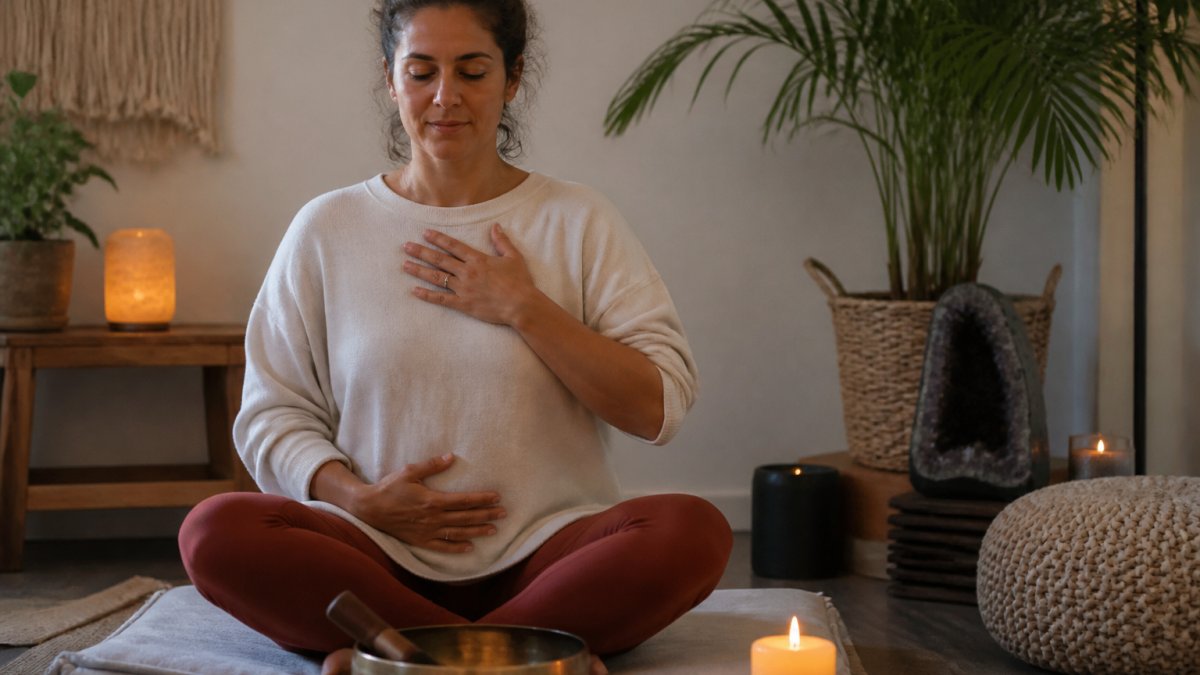
Step 1: Ground and Orient (2 minutes)
Start by feeling where your body meets the surface beneath you. Press your feet into the floor.
Then slowly look around the room. Let your eyes rest on a few objects, a lamp, a window, a plant.
If your mind races, that's fine. Just keep looking. The body leads, the mind follows.
Step 2: Breathe and Hum (4 minutes)
Breathe in through your nose for a count of four. Breathe out for six. Keep the exhale smooth, not forced.
After a few rounds, add a hum on the exhale. Humming creates vibration in your throat and chest that stimulates the vagus nerve.
A common mistake is breathing too hard. Slow and quiet beats big and dramatic.
Step 3: Somatic Release and Intention Setting (4 minutes)
Now scan your body from head to toe. Where do you feel tightness?
Let the muscles soften on the exhale.
If a spot won't release, don't fight it. Just note it and move on.
Finish by setting one clear intention for the rest of your day. Keep it small and doable.
What to Do If It's Not Working
Sometimes the body won't settle on the first try. That's normal. Try these adjustments:
- Add movement. Rock side to side or shake out your hands for 30 seconds, then try again.
- Open your eyes. Some people feel safer with eyes open. That's fine.
- Shorten the practice. Five minutes done is better than ten minutes skipped.
- Change the time of day. Morning or evening may work better for you.
Consistency matters more than length. A short daily practice beats a long one you do once a week.
Vagus Nerve Reset Techniques You Can Do at Home
Vagus nerve reset techniques are quick tools you can use anywhere. They work by stimulating the longest cranial nerve in your body. The vagus nerve runs from your brainstem down through your neck, chest, and abdomen, and it's the main pathway for the parasympathetic "rest and digest" response.
Here are the most reliable ones, with how to do them and when they help most.
Humming
Hum any tune for two minutes. The vibration in your throat and chest stimulates the vagus nerve directly. This is one of the easiest resets because you can do it anywhere, in the car, in a bathroom stall, while washing dishes. It's especially good for mental chatter and mild anxiety.
Long Exhales
Make your out-breath twice as long as your in-breath. In for four, out for eight. Do this for two to three minutes. The long exhale activates the parasympathetic branch and slows heart rate. This is the go-to technique for acute stress, before a meeting, after a hard conversation, when you feel your chest tighten.
Cold Water on Your Face
Splash cold water on your face or hold a cold pack to your cheeks and forehead for 30 seconds. This triggers the dive reflex, which slows heart rate and redirects blood flow. It's a strong reset, so use it when you need a fast shift, not as a daily habit.
Singing or Chanting
Singing does the same thing as humming but with more breath control. Even five minutes of singing along to a song you like can shift your state. Chanting, like a simple "om" or any sustained vowel sound, works too. The key is the vibration and the extended exhale.
Gentle Neck Stretches
Slow, never forced. Turn your head left and right, tilt ear to shoulder, look up and down. Move slowly and breathe. The vagus nerve passes through the neck, so gentle movement there can help. Never push into pain. If you have neck issues, check with a doctor first.
How to Choose
Pick one and use it when you feel the stress response building. Consistency beats intensity here. A two-minute hum every day will do more than a 20-minute session once a month.
A Note on Safety
These techniques are gentle, but they're not right for everyone at every moment. If you have a heart condition, seizure disorder, or a history of trauma that activates easily, check with a doctor or licensed mental health provider before trying cold water or intense breathwork. If something feels wrong, stop.
The Benefits of Sound Healing for Stress and Emotional Balance
Sound healing uses vibration and rhythm to settle the nervous system.
The benefits of sound healing for stress come from a few places.
People often report better sleep, lighter mood, and an easier time letting go of tension after a session.
National Center for Complementary and Integrative Health on sound and relaxation practices
Contraindications and Safety: When to Pause or Ask First
Energy work is gentle, but it isn't right for everyone at every moment. Safety comes first.
Pause and check with a doctor or licensed mental health provider if you:
- Have a history of trauma or PTSD that activates easily
- Are in acute crisis or grief
- Have a heart condition, seizure disorder, or recent surgery
- Are pregnant and unsure what's safe
Breathwork in particular can stir up strong feelings. That's often part of the release, but it should never feel overwhelming. A good practitioner will check in with you and adjust.
If something feels wrong, say so. You're allowed to stop.
Measuring Progress: How to Know It's Working
Progress with nervous system work is quiet, but it's real. You won't always feel a dramatic shift.
Track these over a few weeks:
- How fast you return to calm after stress
- How well you sleep
- How often you notice tension before it takes over
- How connected you feel to your body
A simple journal works. Rate your stress and your body awareness daily on a scale of one to ten.
This is where biofeedback thinking helps. You're learning to read your own signals and respond.
Frequently Asked Questions
How can I fix a dysregulated nervous system?
Start with daily regulation practices, not one-off fixes. Grounding techniques like feeling your feet on the floor, slow exhales, and humming can activate the parasympathetic nervous system. Somatic practices such as gentle shaking or rocking help release stored survival energy. Consistency matters more than intensity. A trauma-informed therapist or bodyworker can help you build a routine that fits your specific stress response.
Can Reiki help with nervous system regulation?
Many people report feeling calmer after Reiki, and research suggests energy work may support relaxation and emotional balance. Reiki is not a replacement for medical care, but it can be a supportive practice for stress release. Look for a practitioner who understands the autonomic nervous system and can tailor the session to your needs.
What is the 7 minute vagus nerve reset?
The 7-minute vagus nerve reset is a short routine combining breathwork, humming, and gentle movement to stimulate the vagus nerve. It typically includes slow diaphragmatic breathing, humming on the exhale, and light neck or shoulder stretches. You can do it anywhere. It is designed to shift you out of fight or flight and into a more regulated state.
Can sound healing be used for nervous system regulation?
Yes. Sound healing uses vibration and rhythm to influence your physiological state. Instruments like singing bowls or tuning forks can promote parasympathetic activation and reduce stress. Many people find that sound sessions help them drop into a meditative state more easily than silent meditation. It is often combined with breathwork or somatic practices for deeper regulation.
Stress doesn't have to run your life. Your nervous system can learn a new pattern, and it often does faster than you'd expect.
At Body Alchemy Sedona, we help you get there with therapist-led care. Our studio offers custom massage therapy, energy work, breathwork, and sound healing, in-studio or through mobile appointments. Every session is tailored to your body and your goals.
Dive in with us and rediscover what it feels like to truly thrive.