 listicle
Mobile Massage Services in Sedona: What to Know
Table of Contents
- Why Mobile Massage Services Work in Sedona
- What to Expect from a Mobile Massage Session
- How to Prepare for an At-Home Massage
- Mobile Massage for Wellness Retreats and Personal Reset
- Post-Hike Recovery and Therapeutic Bodywork
- Vetting Your Mobile Massage Therapist
- Booking and Logistics
- Frequently Asked Questions
Last Updated: October 4, 2026
Why Mobile Massage Services Work in Sedona
Sedona's landscape takes a physical toll, the red rocks, elevation, and intensity of the sun demand recovery. Mobile massage services solve a real problem: you get therapeutic bodywork without leaving your home or hotel, so you actually show up.
When people don't have to drive somewhere, they prioritize their recovery. The convenience removes friction from the healing process.
Mobile massage services offer real personalization. A therapist coming to your space tailors the experience to what your body needs, focused on your specific recovery without the clinic rush.
What to Expect from a Mobile Massage Session
Before Your Therapist Arrives
Your therapist arrives with a portable massage table, linens, and oils, setting up in whatever space works best, bedroom, living room, or patio. Setup takes about 10 minutes.
Before the session starts, expect a real discussion about your body, stress level, injuries, and what you hope to get. This shapes everything that happens next.
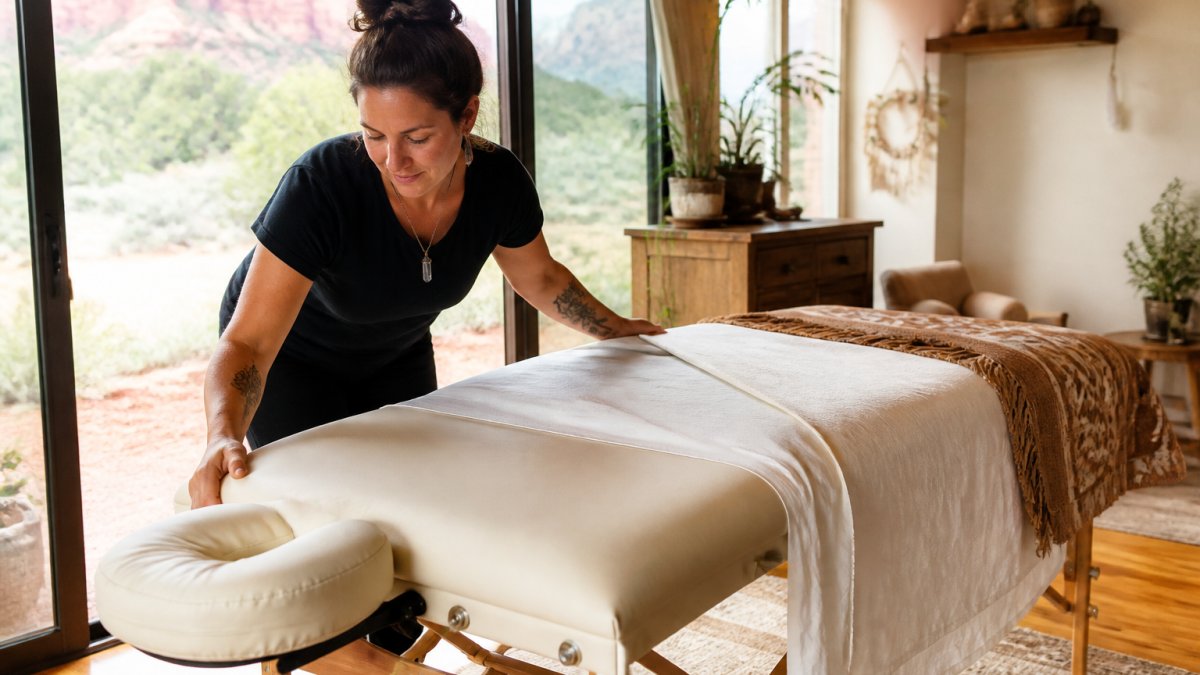
Clear clutter if you can, but don't stress. What matters is a quiet room and a comfortable surface for the table.
During the Session
Undress to your comfort level, most people remove everything except underwear, though you're fully draped throughout. Good therapists maintain professional boundaries while creating an environment where you can relax.
The massage varies depending on what you need. Deep tissue work feels intense but purposeful; Swedish relaxation feels flowing and gentle. Many sessions blend both.
You're in control. If something hurts, speak up immediately. A skilled therapist adjusts based on what your body tells them.
After Your Appointment
Expect to feel relaxed. Your nervous system has shifted into parasympathetic (rest-and-digest) mode. Sit quietly for 10-15 minutes if you can.
Drink plenty of water, massage releases metabolic waste, and hydration helps flush it out. Slight soreness the next day is normal and resolves within 24 hours.
Deep sleep or energy afterward both signal the massage worked.
How to Prepare for an At-Home Massage
Space and Environment
Temperature matters. When undressed on a table, your core temperature drops fast. Most people are comfortable around 72-75°F, mention it to your therapist ahead of time so they can bring extra blankets.
Noise pulls your nervous system back into alert mode. Close windows if there's street noise and let anyone in your home know you'll be unavailable. Turn off phone notifications, a buzz genuinely interrupts the parasympathetic shift that makes massage work.
Bright overhead lights keep your nervous system slightly activated. Dimmer lighting signals safety and downshift. If your space is bright, your therapist might bring a lamp or ask you to close blinds.
Clear the floor around where the table will go so your therapist can move freely and work at different angles. Functional space is all you need.
Physical Readiness
Eat lightly 1-2 hours beforehand. A heavy meal can trigger nausea when pressure is applied to your abdomen.
Avoid caffeine right before the session. Caffeine keeps your sympathetic nervous system (fight-or-flight) slightly activated. You're paying for a massage partly to shift into parasympathetic mode (rest-and-digest). Caffeine works against that. If you're a regular coffee drinker and can't skip it entirely, at least finish it 2-3 hours before your appointment.
Wear comfortable, loose clothing to the appointment. You'll change into the drape once the therapist is ready, but getting there in tight jeans or a restrictive shirt keeps your body in a slightly defended posture. Loose clothes signal to your nervous system that it's okay to relax before the session even starts.
Show up without a running to-do list in your head. This is harder than it sounds. If you're mentally rehearsing emails or worrying about deadlines, your muscles stay tense and your nervous system stays vigilant. Your therapist can feel this the moment they touch you. Give yourself permission to be unreachable for an hour. That's actually the whole point. If you know you'll be anxious about something, mention it to your therapist. They can adjust their approach, sometimes grounding work or slower, deeper pressure helps settle an active mind better than light, flowing techniques.
The Day Before
If you've had a particularly stressful day or done intense physical activity, let your therapist know when you confirm the appointment. They'll adjust their approach. Someone who's been hiking all day needs different work than someone who's been sitting in meetings. Someone who's emotionally activated might benefit from slower, more meditative techniques rather than aggressive deep tissue work.
Mobile Massage for Wellness Retreats and Personal Reset
Sedona draws people seeking transformation. Whether you're here for a weekend or a week, mobile massage services fit perfectly into a personal reset.
A wellness retreat isn't just about the activities, it's about creating space for your nervous system to downshift. Mobile massage does that without requiring you to navigate to a spa. You stay in your retreat space, fully present, fully available to the healing.
Many people book multiple sessions during a retreat. The first session often surfaces what your body actually needs. The second and third sessions deepen the work. By the end of a week, you've genuinely shifted, not just mentally, but physically.
Post-Hike Recovery and Therapeutic Bodywork
Hiking Sedona is intense. The elevation, the terrain, the heat, they demand a lot from your legs, lower back, and shoulders. Post-hike recovery isn't optional if you want to keep moving.
Mobile massage accelerates recovery in ways rest alone doesn't. Deep tissue work on your quads, calves, and glutes clears metabolic waste and restores range of motion. Work on your lower back and shoulders addresses the compensation patterns that develop when you're hiking uneven terrain.
The best timing is 24-48 hours after a difficult hike. Your muscles have already started the repair process, and massage supports that work. It's not about luxury, it's about functional recovery.
Vetting Your Mobile Massage Therapist
This matters more than most people realize. You're inviting someone into your home or hotel room. You deserve to know they're legitimate, trained, and professional.
Ask about credentials. Licensed massage therapists have completed formal training and carry liability insurance. They follow professional standards around hygiene, boundaries, and client confidentiality.
Ask what modalities they specialize in. Some therapists focus on deep tissue work. Others specialize in relaxation, cranial-sacral therapy, or intuitive bodywork. Match their specialty to what you actually need.
Check references or reviews if available. Real feedback from other clients tells you whether someone follows through, respects boundaries, and delivers results.
Booking and Logistics
How Far in Advance to Book
If you know you want a massage, book at least a week out if you can. Mobile therapists often fill up, especially on weekends and during peak season. A week's notice gives them time to fit you in without rushing their schedule or yours.
That said, many therapists keep some same-day or next-day slots open for people who need recovery quickly, someone who just finished a difficult hike, or a visitor who arrived and realized they're sore. If you're flexible on timing, ask about availability. If you have a specific day and time in mind, booking earlier increases your chances of getting exactly what you want.
What to Communicate When You Book
Beyond the date and time, a good booking conversation covers a few things. First, your location: home, hotel, vacation rental, or somewhere else. This matters because setup and logistics differ. A hotel room might have limited floor space. A vacation rental might have a patio where outdoor massage is possible in good weather. Your therapist needs to know what they're working with.
Second, what you're coming in for. Are you recovering from hiking? Managing chronic pain? Looking for relaxation? Dealing with stress? This shapes which modalities and techniques your therapist brings. Someone who specializes in deep tissue recovery work approaches your session differently than someone trained in relaxation and parasympathetic work. Both are valuable, but they're not the same.
Third, any injuries, chronic pain, or physical limitations. If you have a shoulder injury, lower back pain, or recent surgery, mention it upfront. Your therapist isn't a doctor and can't treat medical conditions, but they can avoid aggravating them and can focus work on supporting your recovery.
Fourth, your pressure preference. Do you like deep, intense work, or lighter, more flowing techniques? Most therapists blend both, but knowing your starting preference helps them calibrate. If you're not sure, say so, a good therapist will start moderate and adjust based on how your body responds.
Confirmation and Final Details
Confirm the appointment a day or two before. This isn't just a courtesy; it's practical. Life happens. If something's changed, you're sick, plans shifted, you need to reschedule, a quick confirmation conversation gives both of you time to adjust. Most therapists ask for at least 24 hours notice if you need to cancel or reschedule.
Use the confirmation to mention anything else that might matter: "I'm staying in a rental with limited parking, so I'll meet you outside," or "My roommate will be home but in another room," or "I have a sensitive lower back, so please avoid deep pressure there." These details take 30 seconds to mention and prevent awkward moments during the session.
Payment and Cancellation Policy
Ask about payment methods upfront. Most mobile therapists accept cash or digital payment. Know which they prefer so you're not scrambling at the end of the session. Payment typically happens at the appointment, not in advance.
Understand the cancellation policy. Most therapists ask for at least 24 hours notice if you need to cancel or reschedule. If you cancel with less notice, some charge a cancellation fee. If you're booking during a busy season or for a specific time slot, ask about the policy explicitly.
What to Expect on the Day
Your therapist will arrive within a 15-minute window of the scheduled time. They'll have their portable table, linens, oils, and any other tools they need. Setup takes about 10 minutes. During that time, you'll have a brief conversation about what you're experiencing physically, what brought you in, and what you hope to get from the session. This isn't a rushed intake form; it's a real conversation that shapes the work.
Once the therapist is ready, you'll change into the drape in private. The session itself is typically 60 or 90 minutes, depending on what you booked. The therapist will leave the room while you dress afterward, giving you privacy and a few minutes to transition back to normal awareness.
One last thing: arrive at your appointment with realistic expectations. One session won't fix chronic pain or undo months of stress. But it will shift how your body feels, how your nervous system responds, and how you move through the next few days.
Frequently Asked Questions
What should I prepare at my rental or home for a mobile massage session?
Create a quiet, warm space with a flat surface for the table, a bedroom or living room works well. Remove clutter, ensure good lighting, and let your therapist know about any stairs or tight hallways. Have fresh linens available and let your home reach a comfortable temperature before they arrive. Turn off phones and let household members know you'll be unavailable. The therapist handles most setup, but a welcoming environment helps you relax faster and get more from the session.
Are mobile massage therapists in the area licensed and insured?
Before booking, ask directly about licensing, insurance coverage, and professional credentials. A quality provider will share this information readily. Licensed therapists understand anatomy, contraindications, and professional boundaries, critical for safe, effective therapeutic work. Don't hesitate to verify credentials; it protects both you and the practitioner.
How far in advance should I book mobile massage services?
Booking 1-2 weeks ahead gives you better availability, especially during peak travel seasons. Same-day or next-day appointments may be available depending on therapist schedules, but advance booking ensures you get your preferred time and therapist. For wellness retreats or group sessions, book further out. Contact your preferred provider to see current availability and any seasonal booking windows.
What are the benefits of booking a mobile massage versus a studio visit?
Mobile massage eliminates travel time and lets you relax in familiar surroundings without the commute. You avoid resort markups and can customize your environment for comfort. For visitors in vacation rentals or locals with mobility challenges, it's a practical choice. Studio visits offer a dedicated wellness space and full amenities. Choose mobile for convenience and privacy, studio for immersion in a dedicated healing environment. Many people use both depending on their needs.