 comparison
Why Holistic Massage Is Different: A 2026 Guide
Table of Contents
- What Makes Holistic Massage Different?
- Holistic vs. Clinical Massage: A Side-by-Side Comparison
- The Benefits of Holistic Massage Go Beyond Muscle Relief
- What to Expect in a Holistic Massage Session
- How Often to Get a Massage for Lasting Results
- Safety, Contraindications, and When to Speak Up
- Conclusion
- Frequently Asked Questions
Last Updated: October 2, 2026
What Makes Holistic Massage Different?
Holistic massage is a whole-person approach to bodywork that treats physical tension as one piece of a larger picture, including your nervous system, emotions, and daily patterns. At Body Alchemy Sedona, we explain it this way: the goal isn't just loosening a tight shoulder. It's helping your whole system settle.
That distinction matters more than most people expect when they book a session.
A standard massage often follows a set routine. A holistic session starts with questions. How are you sleeping? Where do you hold stress? What has your week actually looked like? The therapist builds the session around your answers, not a script.
National Center for Complementary and Integrative Health overview of massage therapy
The Whole-Person Approach
The whole-person approach means your therapist considers mind, body, and environment together. Muscle tension rarely shows up alone. It usually travels with poor sleep, shallow breathing, or a nervous system stuck in overdrive.
In practice, that changes small things. A therapist might spend ten minutes on breathwork before touching your back. They might dim the lights, warm the room, or work slowly through one area instead of rushing across your whole body.
- Physical: soft tissue manipulation, myofascial work, deep tissue where it helps
- Mental and emotional: quiet space, emotional release, body awareness
- Environmental: lighting, sound, temperature, and unhurried pacing
None of this is decoration. Each element signals safety to your body, and a body that feels safe lets go more easily.
Holistic vs. Clinical Massage: A Side-by-Side Comparison
The clearest difference is intent. Clinical and sports massage target a specific problem, like a strained hamstring or post-surgical recovery. Holistic massage targets how your whole system feels and functions.
| Factor | Holistic Massage | Clinical / Sports Massage |
|---|---|---|
| Primary goal | Whole-person wellness and relaxation | Treat a specific injury or condition |
| Session planning | Customized treatment plan built per visit | Condition-specific protocol |
| Pressure | Varied, guided by your response | Often firmer and more targeted |
| Nervous system focus | Central to the session | Secondary to the physical goal |
| Best for | Stress, chronic pain management, reset | Rehabilitation, performance, acute issues |
| Typical cadence | Every two to four weeks for maintenance | Clustered around an injury or event |
| Documentation | Notes on sleep, mood, stress patterns | Range of motion, strength, outcome measures |
Neither is better. They solve different problems. If you tore something, you want clinical care. If you're wound tight from months of stress, holistic work often fits better.
Where the Two Actually Overlap
Most people don't live in one lane. A runner rehabbing a calf strain still carries stress in their jaw and shoulders. Someone managing anxiety still gets knots from desk work. Good practitioners borrow from both sides.
A common pattern: a clinical therapist resolves the acute issue, then refers out for ongoing nervous-system work. Or a holistic therapist notices something that needs a doctor's eyes and says so. That handoff is a feature, not a failure.
How Holistic Work Fits With Medical Care
Holistic massage isn't a replacement for medical treatment, and any practitioner who frames it that way is a red flag. It's a complement. Many people use it alongside physical therapy, chiropractic care, or mental health counseling, not instead of them.
If you're in active treatment, tell both providers what you're doing. A physical therapist can often tell you which areas are safe to work and which need to wait. A massage therapist who asks for that context is doing their job.
National Center for Complementary and Integrative Health overview of massage therapy
The Benefits of Holistic Massage Go Beyond Muscle Relief
The benefits of holistic massage show up in places people don't expect: sleep, mood, digestion, and how you handle stress the following week. Many clients report they feel calmer for days, not just hours.
That's the nervous system at work. Massage supports the shift from your sympathetic nervous system, the fight-or-flight side, toward a parasympathetic response, where rest and repair happen. When that shift occurs, heart rate settles, breathing deepens, and muscle tension releases without force.
Nervous System Regulation and Stress Relief
Nervous system regulation is the quiet engine behind most holistic massage results. Therapeutic touch can support lower cortisol levels and encourage serotonin production, which is part of why regular sessions help with stress relief and mood.
Here's the mechanism most guides skip. Your skin is packed with receptors that feed information straight into the nervous system. Slow, predictable pressure, the kind holistic work favors, sends signals up the vagus nerve, the main pathway between your brain and your gut, heart, and lungs. When that pathway gets stimulated, your body reads it as safe. Heart rate variability improves, digestion turns back on, and the muscles that were bracing finally let go.
That's why a holistic session often feels different from a deep-tissue session, even when the pressure is similar. The goal isn't to overpower tension. It's to convince the nervous system it doesn't need to hold it.
The research on vagus nerve stimulation and massage is still developing, so treat it as promising rather than settled. What's well established is the general stress response, and that's enough to explain most of what people feel.
What most guides miss is that consistency matters more than intensity. One deep session won't undo a year of tension. Smaller, regular sessions often do more.
Making the Benefits Last After You Leave
The hour on the table is the easy part. What you do in the next 24 to 48 hours decides how long the calm sticks.
A few things that help:
- Drink water, but don't overdo it, there's no evidence you need to flush anything out
- Take a slow walk instead of a hard workout the same day
- Keep the evening low-key if you can; your nervous system is still settling
- Notice your breath during the day and let your exhale run a little longer than your inhale
- Book the next session before the tension fully returns, not after
None of this is dramatic. It's just giving your body a runway to land on instead of yanking it back into traffic.
What to Expect in a Holistic Massage Session
Expect a slower start than a typical massage. Your therapist will ask about stress, sleep, injuries, and what you want from the session before you're on the table.
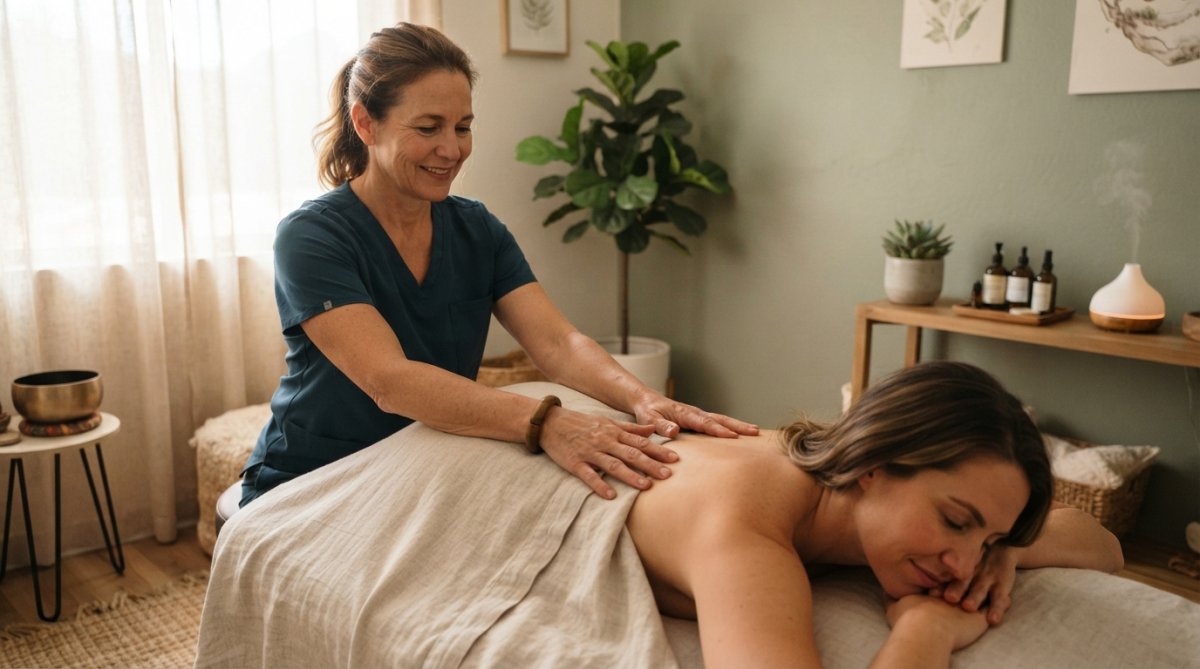
From there, a few things are standard:
- A brief intake conversation, sometimes with breathwork
- Varied pressure, adjusted as your body responds
- Work that may include energy work, aromatherapy, or sound elements
- A few quiet minutes at the end so you're not rushed out the door
If you're skeptical about the energy or sound side, say so.
How Often to Get a Massage for Lasting Results
For general stress relief, most people do well with one session every two to four weeks. For chronic pain management or recovery from a specific injury, weekly sessions for a short stretch often work better.
A practical way to decide:
- Start with one session and note how you feel for the next week
- If tension returns within a few days, shorten the gap
- If you feel good for weeks, stretch it out
- Reassess every few months rather than locking into a fixed schedule
Safety, Contraindications, and When to Speak Up
Holistic massage is generally safe, but it isn't right for everyone at every moment. Certain conditions call for a doctor's clearance first or a modified approach.
Speak up if you have any of the following:
- Recent surgery, fractures, or blood clots
- Skin infections, rashes, or open wounds
- Pregnancy, especially in the first trimester
- Active cancer treatment or a compromised immune system
- A bleeding disorder or you take blood thinners
Conclusion
The real challenge with holistic massage isn't finding a therapist. It's finding one who actually listens and builds the session around you instead of running a routine. That difference is the whole point.
Frequently Asked Questions
What is the difference between a holistic massage and a regular massage?
A regular massage often focuses on a specific area or uses a set routine. Holistic massage looks at the whole person: your stress levels, sleep, emotional state, and physical patterns. The therapist adapts each session to what your body actually needs that day, rather than following a script. That means slower work, more check-ins, and a treatment plan built around you.
How often should you get a holistic massage for optimal results?
For general stress relief, once or twice a month works well for most people. If you are managing chronic pain or recovering from an injury, weekly sessions for the first few weeks can help your nervous system settle. After that, many people shift to every two to four weeks. Your therapist can help you find a rhythm that fits your body and budget.
What should I expect during a holistic massage session?
Expect a longer intake than a standard spa visit. Your therapist will ask about stress, sleep, injuries, and what you want from the session. The massage itself may include slow strokes, breathwork, and quiet pauses. You stay draped and comfortable the whole time. Afterward, you may feel deeply relaxed or slightly emotional as your nervous system unwinds.
Is holistic massage better for stress relief than standard massage?
It depends on what you need. Standard massage can relax tight muscles quickly. Holistic massage goes further by calming the nervous system, which is where chronic stress lives. Techniques that support vagus nerve activation and parasympathetic response can lower cortisol and help your body return to homeostasis. For ongoing stress, that deeper regulation often lasts longer.