 How-to
Can One Massage Session Reduce Stress?
Table of Contents
- What the Research Says About One Massage Session and Stress
- How Massage May Affect the Body's Stress Response
- How Long Does a Massage Session Last, and Does Length Matter?
- Best Massage for Stress and Anxiety: Which Styles Are Worth Trying
- Self-Massage for Stress Relief: What You Can Do Between Sessions
- Safety, Limits, and When to Talk to a Clinician
- Booking Your First Session at Body Alchemy Sedona
- Frequently Asked Questions
Last Updated: November 14, 2026
What the Research Says About One Massage Session and Stress
Can one massage session reduce stress? Yes, for most people, in the short term. The honest version: you will likely feel calmer for hours to a few days, not weeks. That is the realistic window, and it is worth knowing before you book.
Most studies on massage and stress are small, and many rely on self-reported feelings rather than hard clinical outcomes. The pattern across studies is consistent enough to take seriously, but it is not the kind of evidence that lets anyone promise a specific result.
Here is what one session can realistically do, based on the research:
- Immediate relaxation: Most people report feeling calmer within minutes of starting and for a while after. This is the most reliable effect.
- Short-term stress relief: Feelings of tension often ease for several hours to a day or two. Sleep that night is frequently better.
- A modest mood lift: Many people feel lighter afterward. The effect is real but usually temporary.
- Not a lasting reset: One session does not rewire your stress response. Benefits tend to fade over days, not persist for weeks.
Regular sessions over several weeks are more likely to produce steadier changes than a single appointment. That does not make one session pointless. It makes it a reset, not a repair.
Watch out: do not treat one session as a substitute for care if your stress is severe, ongoing, or tied to depression or an anxiety disorder. Massage can be a helpful part of a plan, but it works best alongside other habits and professional support.
One more thing worth saying plainly: the research on single sessions is thinner than the research on massage as an ongoing practice. Most studies look at a series of sessions, not one. So when someone asks whether one session works, the most accurate answer is that the short-term relaxation effect is well supported, and the longer-term stress reduction is not something one appointment reliably delivers.
How Massage May Affect the Body's Stress Response
When you are stressed, your body shifts into a fight-or-flight mode. Heart rate rises, muscles tighten, and stress hormones like cortisol increase. Massage is thought to push the other way, toward rest and recovery.
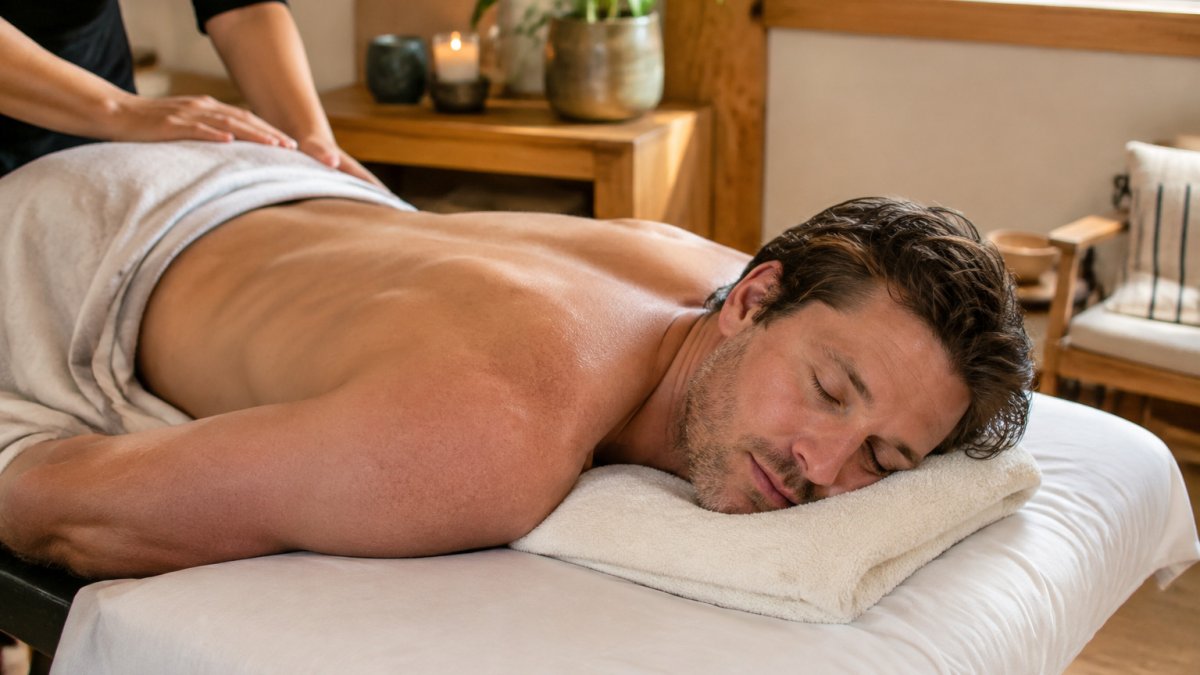
The exact mechanisms are still being studied, but researchers have looked at several possible effects. Some studies report lower stress hormone levels after massage. Others report slower heart rates and a shift toward calmer nervous system activity. These findings are promising, but they are not yet strong enough to say exactly how much any one session changes your body.
Heart Rate, Cortisol, and the Nervous System
Think of your nervous system as having a gas pedal and a brake. Stress presses the gas. Relaxation touches the brake. Massage seems to nudge things toward the brake, which may explain why people often feel their pulse slow and their breathing deepen during a session.
Cortisol is the stress hormone most often measured in these studies. Some trials find it drops after massage. Others find little change. The honest take: the results are mixed, and a single lab measurement is only a snapshot.
Endorphins, Mood, and Emotional Well-Being
Massage is also linked to mood. Many people feel lighter and more content afterward, and some research points to changes in chemicals tied to pleasure and pain relief, such as endorphins. The effect on mood is often easier to notice than changes in hormones.
Emotional well-being is personal, though. A session that leaves one person floating may leave another feeling only mildly relaxed. Both outcomes are normal.
How Long Does a Massage Session Last, and Does Length Matter?
Most sessions run 30, 60, or 90 minutes. Length matters less than most people think. What matters more is whether the pressure and style fit you, and whether you actually relax during the appointment.
A 30-minute session can be enough for a quick reset, especially if you are short on time or new to massage. A 60-minute session is the most common choice and gives the body time to settle without feeling rushed. A 90-minute session suits people who want slower, more thorough work or who find it takes them a while to unwind. Longer is not automatically better. If you are very tired, sensitive to touch, or anxious, a shorter session may feel better and leave you less drained.
Style matters too. Gentle relaxation work tends to feel soothing right away. Firmer deep tissue work can help with knots but may leave you sore for a day, which is not the same as relaxed. If stress is your main goal, start gentle and move firmer later if you want.
Here is a practical first-session guide:
- Before you book: Mention any health conditions, medications, recent injuries, or areas to avoid. Ask whether the therapist has experience with stress-related tension.
- At the start: Say what you want. "I want to feel calmer" is a useful instruction. So is "lighter pressure than you think." You are allowed to ask for less.
- During: Speak up if pressure is too much or an area feels off. Good therapists check in, but you do not have to wait to be asked.
- After: Drink water, move slowly, and give yourself a quiet hour if you can. Many people feel sleepy or slightly emotional afterward. That is normal.
Cost and access are real considerations, and pricing depends on the session length, style, and setting. For current prices, check the Body Alchemy Sedona website or request a quote. If a session is not feasible right now, lower-cost options like self-massage, slow breathing, and gentle stretching are worth trying. They are not equivalent to a professional session, and it is dishonest to pretend otherwise, but they can take the edge off.
Watch out: if you have a blood clotting disorder, recent surgery, a serious injury, osteoporosis, or are pregnant, talk to a doctor before booking. And if stress is persistent or severe, massage is a complement to care, not a replacement for it.
Best Massage for Stress and Anxiety: Which Styles Are Worth Trying
Not every style suits every person. Here are a few common choices:
- Relaxation massage: Gentle, slow strokes. Good for first-timers or anyone very anxious about touch.
- Deep tissue massage: Firm pressure aimed at deeper muscle layers. Helpful for knots, but can feel intense.
- Swedish massage: Flowing strokes that many people find soothing and easy to settle into.
- Sound healing and breathwork: Not massage, but many people pair them with bodywork to deepen relaxation.
If stress is your main goal, start gentle. You can always move to firmer work later. Tell your therapist what you need before the session starts.
Self-Massage for Stress Relief: What You Can Do Between Sessions
You do not need a therapist to get some relief. Simple self-care can help between appointments:
- Shoulder rolls: Roll your shoulders slowly, ten times forward and ten back.
- Neck and jaw release: Gently massage the base of your skull and unclench your jaw.
- Hand massage: Use your thumb to press slow circles into your palm.
- Slow breathing: Breathe in for four counts and out for six, for a minute or two.
A common mistake is pressing too hard. Gentle pressure is usually more soothing than force.
Safety, Limits, and When to Talk to a Clinician
Massage is generally safe for most healthy adults, but it is not right for everyone. Talk to a doctor before booking if you have a blood clotting disorder, recent surgery, a serious injury, osteoporosis, or are pregnant. Tell your therapist about any medical conditions, medications, or areas that are sore or swollen.
Massage should not replace care for depression, anxiety disorders, or ongoing stress that affects your daily life. If you feel overwhelmed, hopeless, or unsafe, reach out to a doctor, a licensed mental health professional, or a crisis line right away.
Booking Your First Session at Body Alchemy Sedona
If you want to see how a session feels for yourself, book a massage session with our therapists. Our team can help you choose a style that fits your goals and your comfort level.
Choosing the right therapist matters as much as choosing the right style. Look for someone licensed, ask about their training, and say what you need before you start. Learn how to choose a massage therapist to know what to look for.
If you are curious what other clients have experienced, you can read client testimonials before you book. For a comparison of styles, see how deep tissue and relaxation massage differ.
Our first session is simple. Tell us how you are feeling, what you hope to get from the time, and any areas to avoid. We will take it from there, gently, and at your pace.
Stress tends to build quietly, and it can feel hard to slow down on your own. If you are ready to take a real break, our team is here to help you ease into it. Reach out to Body Alchemy Sedona to book your first session and see how you feel afterward.
Frequently Asked Questions
Can a massage take away stress?
A single massage may ease stress for a while, but it is unlikely to erase long-term stress on its own. Many people notice they feel calmer, lighter, and less tense afterward, and some small studies have measured drops in stress-related markers such as heart rate or cortisol right after a session. Those effects often fade over days. Think of one massage as a useful reset that works best alongside sleep, movement, and other habits that address the source of the stress.
How much can one massage session reduce stress?
There is no exact number, and results vary from person to person. Studies generally report short-term changes in mood, muscle tension, and some physiological stress measures immediately after a session. The size of the effect depends on the person, the style of massage, the session length, and how stressed they were beforehand. A single session can be a meaningful break, but the research does not promise lasting change from one visit.
What type of massage is best for stress and anxiety?
Relaxation-focused styles such as Swedish massage are commonly chosen for stress, because they use slow, rhythmic strokes and moderate pressure. Some people also find that a session including attention to the neck, shoulders, and back helps most. The best choice is usually the one that leaves you feeling settled. If you are unsure, tell your therapist you want to focus on stress relief and describe how you are feeling.
Can self-massage help relieve stress?
Self-massage can help you feel more relaxed in the moment. Gently rubbing your neck, shoulders, scalp, or feet with slow pressure and steady breathing can ease tension you carry through the day. It will not replace a professional session, and it may not feel as deep, but it is free, easy to do at home, and can be used whenever tension builds.