 blog
Customized Massage vs Swedish Massage: Which Fits You?
Last Updated: November 10, 2026
Quick Summary
Choose Swedish massage for a full-body routine that follows a set sequence, or a customized massage for a session built around your body and goals on the day. The difference comes down to whether you want a proven routine or a session shaped around your specific needs.
- Swedish massage uses long gliding strokes, kneading, and light-to-medium pressure in a set sequence.
- A customized session can borrow Swedish strokes, deep-tissue work, trigger point release, or stretching.
- If you catch yourself holding your breath, the pressure is too much.
- A standard Swedish massage runs 60 or 90 minutes, while customized sessions often run longer.
- Check with your doctor before booking if you are pregnant or have a medical condition.
Table of Contents
- Customized Massage vs Swedish Massage: The Short Answer
- What Makes Swedish Massage the Standard
- How Customized Massage Rewrites the Script
- Swedish Massage Benefits That Hold Up
- Customized Massage Benefits for Real Life
- Massage Pressure Preferences: Reading Your Own Body
- Massage Session Length and What Fits Your Day
- Booking a Session That Actually Meets Your Needs
- Frequently Asked Questions
Customized Massage vs Swedish Massage: The Short Answer
If you want a full-body routine that follows a set sequence, book a Swedish massage. If you want a session built around your body on the day, book a customized massage. That's the honest short version. The difference usually comes down to one question: do you want a proven routine, or a session shaped around your specific needs?
Below, we'll break down both styles, how they differ in pressure and technique, and how to pick the right one for your body.
Swedish massage is a whole-body relaxation treatment that uses long gliding strokes, kneading, and light-to-medium pressure in a set sequence. It's the most common style taught in massage schools and the one most people picture when they think of massage therapy.
Customized massage is a session planned around your goals, pressure preferences, and areas of tension, rather than a fixed routine. The therapist adapts techniques and focus as your body responds.
Here's what most guides get wrong: they treat these as beginner versus advanced. They're not. They're two different jobs.
What Makes Swedish Massage the Standard
Swedish massage became the default for a reason: it suits a wide range of people. The strokes are predictable, the pressure is gentle to moderate, and the whole body gets attention in a logical order.
The core techniques:
- Gliding strokes along the muscles, warm and continuous
- Kneading to loosen surface tension
- Friction on tighter spots
- Percussion for stimulation
- Light stretching at the end
A standard session flows from one area to the next. Your therapist isn't improvising much. That consistency is the point. Many people find it calming and relaxing.
For a deeper look at how Swedish stacks up against other styles, read our breakdown of deep tissue vs relaxation massage.
How Customized Massage Rewrites the Script
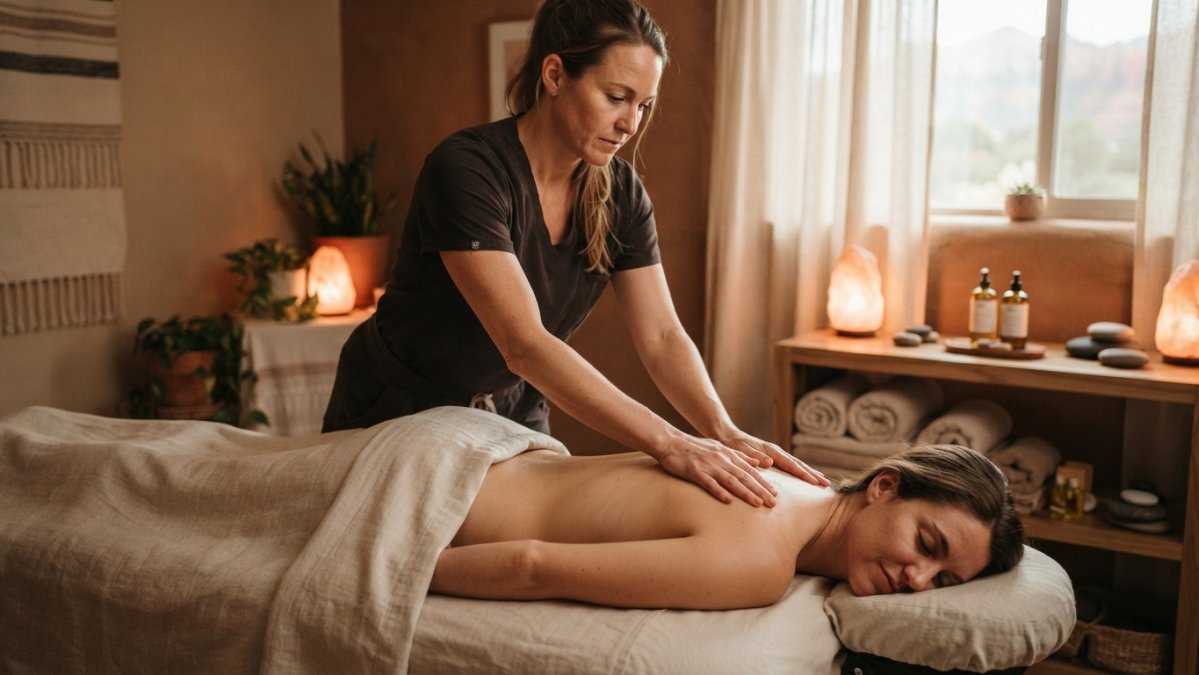
Customized massage flips the order. Instead of starting with a routine, your therapist starts with you. But the word "customized" gets used loosely, so let's be precise: customization describes how a session is planned and adapted, not one fixed technique. A customized session can borrow Swedish strokes, deep-tissue work, trigger point release, stretching, or all of the above. What makes it customized is that the plan is built around your goals and adjusted as your body responds.
That's different from therapeutic massage, which usually means work aimed at a specific clinical or injury-related goal, and from deep-tissue massage, which is defined by pressure and depth rather than by planning. You can have a customized session that's light and gentle. You can have a deep-tissue session that follows a standard protocol. The labels overlap, which is why they confuse people.
Here's how the planning actually works. A real intake conversation comes first. Where does it hurt? What does your week look like? How do you respond to pressure? Have you had bodywork before, and what worked or didn't? Then the session gets built from there. Maybe that means more time on your neck and shoulders. Maybe it means skipping your legs entirely. Maybe it means switching from long gliding strokes to slow, focused work on one stubborn area.
The therapist stays tuned in as the session unfolds. If something isn't landing, they change it. That's the whole idea.
Our custom blend massage is built around your needs for the day.
Watch out: if a therapist never asks what you want to get out of the session and just starts working, that's a routine, not a customized session.
Swedish Massage Benefits That Hold Up
Many people find a steady, predictable session relaxing, and some say it helps them unwind after a long week.
The other benefits people report:
Customized Massage Benefits for Real Life
A customized session is shaped around your specific complaints, so it can focus where you need it most.
Think about it this way. If you sit at a desk all day, your hips and shoulders need different work than a runner's calves. A customized session can spend twenty minutes on your hips and ten on your shoulders. A Swedish routine splits time evenly across the whole body.
One honest caveat: customized work depends heavily on the therapist's skill and your ability to communicate. If you can't describe what you're feeling, the therapist is guessing. More on that below.
Massage Pressure Preferences: Reading Your Own Body
Most people pick pressure wrong on the first visit. They ask for deep pressure because it sounds more serious, then spend the session tensing up.
Here's a simple way to read your own body:
- If you catch yourself holding your breath, the pressure is too much
- If you're mentally drifting off, the pressure is probably right
- If you feel nothing at all, ask for more
Pressure isn't a measure of how good the massage is. It's a dial your therapist adjusts based on how your muscles respond in real time. The best sessions move between gentle and deep pressure depending on the area.
If you're unsure how to pick a therapist who reads pressure well, our guide on how to choose a massage therapist walks through the questions to ask.
Massage Session Length and What Fits Your Day
A standard Swedish massage runs 60 or 90 minutes. Customized sessions often run longer, because intake and focused work take time.
Here's a rough guide to what fits:
| Session Length | Best For | What to Expect |
|---|---|---|
| 30 minutes | One focused area | Quick tension relief, no full body |
| 60 minutes | General relaxation or one problem area | Full body or focused work, not both |
| 90 minutes | Customized work with full body | Intake, targeted work, and full coverage |
| 120 minutes | Deep chronic tension | Slow, thorough work with time to settle |
Booking a Session That Actually Meets Your Needs
The real difference between a great massage and a forgettable one isn't the style. It's whether the therapist understood what you needed. So instead of picking a label off a menu, pick based on three things: your goal, your pressure preference, and where you actually hold tension.
Start with your goal. If it's general relaxation, better sleep, or just a reset after a stressful stretch, Swedish is a solid choice. If it's a specific problem, a stiff neck from desk work, tight hips from running, recurring low back tension, a customized session is the better fit. And it's not either-or. A customized session can absolutely include Swedish techniques; the therapist just decides when and where to use them.
Then think about pressure. Most people pick pressure wrong on the first visit. They ask for deep pressure because it sounds more serious, then spend the session tensing up. A simple way to read your own body: if you catch yourself holding your breath, the pressure is too much; if you're mentally drifting off, it's probably right; if you feel nothing at all, ask for more. Pressure isn't a measure of how good the massage is. It's a dial your therapist adjusts based on how your muscles respond in real time.
Finally, be specific about areas of concern. "My shoulders" is a start. "My right shoulder blade aches after long days at the computer, and it's worse in the afternoon" gives the therapist something to work with. The more concrete you are, the less guessing happens.
A few practical notes. Say something if the pressure feels off, even mid-session. And if you have an injury, recent surgery, are pregnant, or have a medical condition such as high blood pressure, diabetes, or a history of blood clots, check with your doctor before booking bodywork. Massage is generally safe for most people, but some conditions call for a clinician's sign-off first.
Watch out: booking a deep-pressure session on your first visit with a new therapist can leave you bracing instead of relaxing. Start moderate.
If you're unsure how to pick a therapist who reads pressure well, our guide on how to choose a massage therapist walks through the questions to ask. If you have questions about what to expect during your visit, our FAQs page covers the basics. And if you're weighing cost before you commit, here's what a custom massage costs per hour.
Frequently Asked Questions
What is the difference between a customized massage and a Swedish massage?
Swedish massage follows a set sequence of gliding strokes, kneading, and percussion at a moderate pressure, designed for whole-body relaxation and circulation. A customized massage is built around your specific goals, whether that's chronic tension in one area, limited range of motion, or recovery after an injury. The therapist chooses techniques, pressure, and time allocation session by session rather than working from a fixed routine.
Can a customized massage include Swedish techniques?
Yes. Swedish strokes are one of the tools a therapist can draw on during a customized session. If your body responds well to long gliding strokes and kneading, those can be part of the plan alongside deeper work on problem areas. The difference is that the technique serves your goal rather than the clock. Ask your therapist to include the strokes you enjoy most.
How much pressure is used in a Swedish massage?
Swedish massage typically uses light to moderate pressure. It should feel soothing rather than intense, and you should be able to breathe easily throughout. If you want more depth, speak up. Pressure is always adjustable, and a good therapist checks in during the session. Your massage pressure preferences matter more than any label on the menu.
How long does a Swedish massage usually last?
Swedish sessions are often offered in 50 to 60 minute blocks, though lengths vary. Massage session length affects how much ground you can cover. A shorter session suits focused work on one area, while a longer one allows a full-body pass plus extra time where you need it. Tell your therapist what you want to prioritize so the time is spent well.