 How-to
How to Choose a Massage for Hip Pain That Actually Helps
Last Updated: November 18, 2026
Quick Summary
Choose a massage for hip pain by matching it to your symptoms first: outer hip pain points to the glutes, deep buttock ache to the glutes and deep rotators, and front-of-hip stiffness to the hip flexors. Skip deep pressure on acute inflammation, and get clicking or catching checked medically before any bodywork.
- Deep tissue suits chronic, dense tightness, not sharp pain or a hot, swollen joint.
- A 20-minute home routine on glutes and hip flexors, two to three times a week, eases stiffness.
- Work the muscles around the IT band, not the band itself.
- Pick a therapist with clinical training who assesses your movement before treating.
- See a doctor first for pain after a fall, locking, numbness, or night pain.
Table of Contents
- Start With Your Symptoms, Not the Technique
- Deep Tissue Massage for Hip Pain: When Stronger Pressure Helps
- Self-Massage for Hip Pain: A 20-Minute Routine You Can Do at Home
- How to Massage Hips and Thighs: Target the Glutes, Hip Flexors, and IT Band
- How to Choose a Massage Therapist for Hip Pain
- When Hip Pain Needs Medical Assessment Instead of Massage
- Book a Session That Fits Your Body and Your Goals
- Frequently Asked Questions
Start With Your Symptoms, Not the Technique
Most people book a massage for hip pain by picking a style off a menu. That is backwards. The right choice starts with what your hip is actually doing.
Sharp pain on the outside of your hip when you lie on that side points one direction. A deep ache in the buttock that runs down the back of the leg points another. Tightness in front when you stand up from a chair points somewhere else again.
A massage for hip pain only works when it matches the tissue causing the trouble.
Here is a quick way to sort it out:
- Pain on the outer hip, worse lying on it: look at the gluteal muscles, especially gluteus medius and minimus
- Deep buttock ache, sometimes down the leg: glutes and deep rotators first, and get it checked if it radiates
- Stiffness in front of the hip and groin: hip flexors, including the psoas and iliacus
- Pain that comes with clicking, catching, or pinching: get a medical opinion before bodywork
That last one matters. Hip impingement, often called FAI, changes the plan. So does an old injury that never fully settled.
The point is simple. Your symptoms tell you where to start. The technique comes second.
Match the massage to what your hip is actually doing, starting with the symptom.
| Symptom | Where to start | Note |
|---|---|---|
| Pain on outer hip, worse lying on it | Gluteal muscles, especially gluteus medius and minimus | , |
| Deep buttock ache, sometimes down the leg | Glutes and deep rotators first | Get it checked if it radiates |
| Stiffness in front of hip and groin | Hip flexors, including psoas and iliacus | , |
| Clicking, catching, or pinching | Get a medical opinion before bodywork | Hip impingement (FAI) changes the plan |
Deep Tissue Massage for Hip Pain: When Stronger Pressure Helps
Deep tissue massage for hip pain helps when the problem is chronic tension in thick tissue, not acute inflammation. It uses slow, focused pressure to reach the glutes, hip flexors, and deep rotators that a lighter massage never touches.
That pressure is not for everyone. Here is a simple way to match pressure to what your hip is telling you:
- Chronic tightness that has been there for weeks or months, feels dense and ropey, and has stopped responding to foam rolling or stretching: deep tissue is a reasonable first choice. The tissue needs sustained compression to release.
- A dull ache that worsens with sitting and eases with movement: start with moderate pressure on the glutes and hip flexors. Deep tissue can work, but go slower than you think you need to.
- Sharp pain, a hot or swollen joint, or a recent injury: skip deep tissue. Strong pressure on acute inflammation can make things worse. Wait until the acute phase passes and get cleared if you are unsure.
- Pain that comes with clicking, catching, or pinching: get a medical opinion before any bodywork. Deep pressure will not fix a structural issue and may aggravate it.
Deeper does not mean better. The pressure should feel like a firm, useful stretch, not something you white-knuckle through. If you feel sharp pain during the work, say so.
A common pattern is that people wait until the tightness is severe and then ask for the deepest pressure available. That is backwards. Consistent moderate work over several sessions does more than one aggressive session that leaves you sore for days.
Deep tissue massage works best as part of a plan, not a one-off.
Self-Massage for Hip Pain: A 20-Minute Routine You Can Do at Home
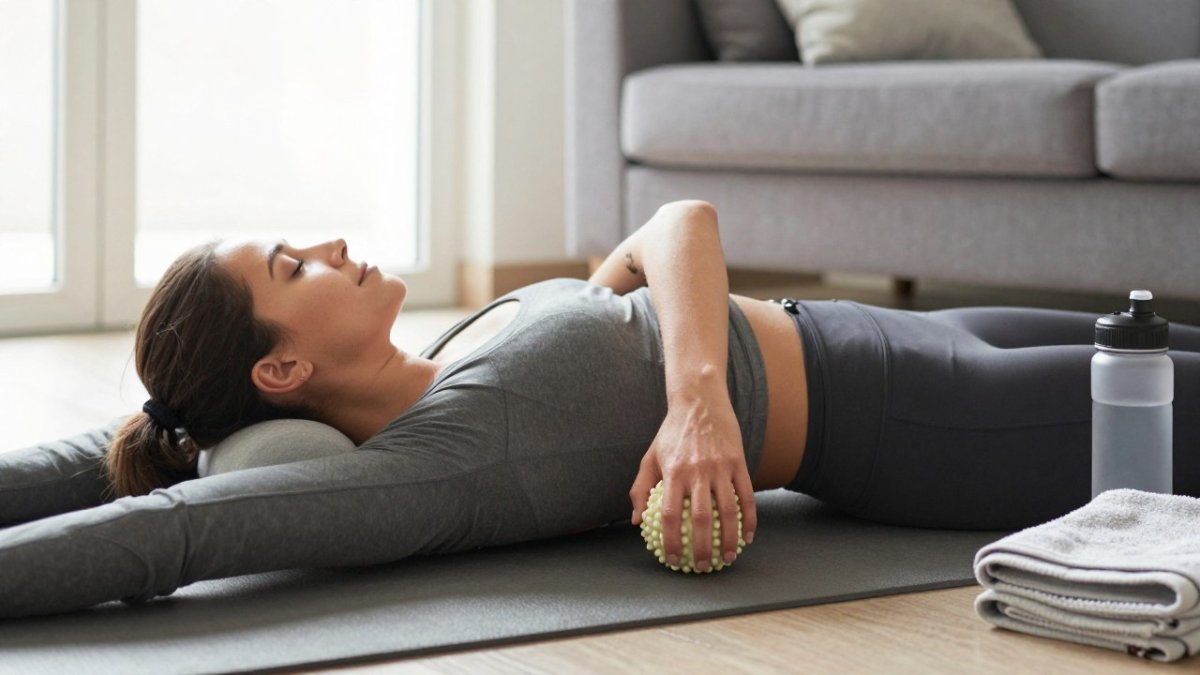
Self-massage for hip pain is a practical way to manage tightness between professional sessions. A focused 20-minute routine on the glutes and hip flexors can ease stiffness and keep your range of motion from slipping.
You need two things: a massage ball and a firm floor. That is it.
Try this routine two to three times a week:
- Glute work, 5 minutes. Sit on the ball on one side of your buttock. Lean into it and roll slowly. Pause on any sore spot for 20 to 30 seconds.
- Outer hip, 4 minutes. Lie on your side with the ball under the outer hip. Keep the pressure gentle here. This area is sensitive.
- Hip flexor release, 4 minutes. Lie face down with the ball under the front of your hip, just inside the hip bone. Breathe and let the muscle soften.
- IT band, 3 minutes. Lie on your side with the ball under the outer thigh. Roll slowly from hip to knee.
- Finish with movement, 4 minutes. Stand up and do slow hip circles and a gentle lunge stretch each side.
Watch out: do not roll directly over the bony point of your hip or your lower back. Stay on muscle, not bone.
If a spot feels bruised the next day, you pressed too hard. Back off.
Time spent on each part of the 20-minute self-massage routine
How to Massage Hips and Thighs: Target the Glutes, Hip Flexors, and IT Band
Knowing how to massage hips and thighs comes down to three muscle groups. Get these right and most hip tightness starts to let go.
The woman is American.
The glutes. The gluteus medius and minimus sit on the outer hip and stabilize every step you take. When they tighten, lateral hip pain follows. Work them with slow compression and small circles.
The hip flexors. The psoas and iliacus connect your spine to your thigh. Hours of sitting shorten them. Release here is gentle and deep, never aggressive.
The IT band. This thick band on the outer thigh is not a muscle. It tightens because of what happens above and below it. Work the muscles around it, not the band itself.
Use your body weight, not your hands, to control pressure. A massage ball or a handheld massage tool gives you more control than fingers alone. Go slow. Muscle tension releases with time, not force.
How to Choose a Massage Therapist for Hip Pain
Choosing a massage therapist for hip pain means looking for someone who asks questions and adjusts, not someone who follows a script. The right therapist treats your hip like a specific problem, not a generic hour.
Here is what actually matters when you vet one:
- Training in clinical or orthopedic massage. Relaxation certification is not the same as clinical training. Ask directly: "What continuing education have you done in hip or orthopedic work?" A therapist who has taken courses in assessment or treatment of the hip and pelvis will answer specifically. One who has not will pivot to general experience.
- A real intake. Before any hands-on work, a good therapist asks where it hurts, when it started, what makes it worse, and what you have already tried. If they skip this and tell you to get on the table, that is a red flag.
- Assessment before treatment. They should watch you move, stand, sit, maybe a squat or a single-leg stand, and palpate the area before deciding on a plan. This takes five minutes and tells them more than any menu description.
- A plan across visits. Ask what the arc looks like. One session for chronic hip tightness is rarely enough. A therapist who says "come back when it flares" is selling single bookings, not treatment.
- Consent and pressure checks. They should tell you what they are about to do and check in during the work. If you say "that is too much" and they ease off without attitude, that is the right response.
- Willingness to refer out. A good therapist will tell you when your symptoms sound like something they should not treat. If they never mention a doctor or another provider, be cautious.
A therapist who cannot explain why they are working a certain muscle is guessing. You want the opposite.
You can also read more on how to choose a massage therapist step by step. And you can meet our therapists and their modalities to see who fits your needs.
When Hip Pain Needs Medical Assessment Instead of Massage
Some hip pain is not a massage problem. If you have any of these signs, see a doctor before booking bodywork:
- Pain after a fall or impact
- A hip that locks, catches, or gives way
- Sharp groin pain that worsens with activity
- Numbness, tingling, or weakness in the leg
- Pain that wakes you at night and does not ease
- Fever, swelling, or redness around the joint
These can point to issues that massage will not fix and could aggravate. Hip impingement, labral tears, and joint problems need a proper diagnosis.
Massage still has a role in recovery. It just comes after you know what you are dealing with. Our guide to massage therapy for injury recovery explains how bodywork fits alongside medical care.
If you are unsure, ask. A good therapist will tell you when to see a doctor.
Book a Session That Fits Your Body and Your Goals
Hip pain rarely resolves in one session. It takes the right technique, the right pressure, and a plan you can keep up with at home.
At Body Alchemy Sedona, we build each session around your symptoms. We offer sessions in-studio or through mobile appointments, so care fits your schedule.
If you have questions before you book, our FAQs page covers what to expect during your visit.
Your hip has been asking for attention for a while. Give it the right kind of it. Get started with Body Alchemy Sedona and book a session built around your body, your symptoms, and your goals.
Frequently Asked Questions
What type of massage is best for hip pain?
It depends on the cause. If your hips feel tight from sitting or exercise, deep tissue massage for hip pain can target the glutes and hip flexors with focused pressure. If the area is inflamed or you're recovering from an injury, gentle Swedish massage or myofascial release may be more appropriate. A good therapist will assess your range of motion and ask about your symptoms before choosing a technique, rather than applying one standard routine.
Can self-massage really help with hip pain?
Yes, for many people. Self-massage for hip pain using a massage ball or handheld tool can release trigger points in the gluteus medius, gluteus minimus, and hip flexors. A 20-minute routine a few times a week can improve mobility and reduce stiffness. Work within a comfortable pressure range, avoid pressing directly on the hip bone, and stop if you feel sharp pain. Self-massage complements professional bodywork but doesn't replace it for chronic issues.
When should I avoid massage for hip pain?
Skip massage if you have a fever, an open wound, a recent fracture, or signs of a blood clot such as swelling, warmth, or redness in the leg. If your hip pain came on suddenly after a fall, or you can't bear weight on that leg, see a doctor first. Massage is not a substitute for medical diagnosis, and a therapist should never work on an area that hasn't been cleared when a serious injury is possible.
How do I explain hip pain to a massage therapist?
Be specific about location, timing, and what makes it worse. Tell them whether the pain is in the buttock, the outside of the hip, the groin, or the low back, and whether it's sharp, dull, or achy. Mention what triggers it, such as sitting, walking, or lying on that side. Also share any diagnosis you've received. This helps the therapist choose the right pressure and avoid areas that need medical attention instead.