 blog
7 Benefits of Deep Tissue Massage for Tight Muscles
Last Updated: November 19, 2026
Quick Summary
Deep tissue massage uses slower, firmer pressure aimed at the deeper layers of muscle and the connective tissue around them. People often book it for tight muscles, and many report less chronic tension, looser knots, and better range of motion after a session. Results usually build with regular sessions and stretching.
- Ask your therapist to spend extra time on the spots you feel most tension.
- Old scar tissue responds slowly, so expect gradual changes rather than one-session results.
- Get your doctor's OK before massaging a fresh or still-healing scar.
- Do not push through sharp pain, and speak up if the pressure feels too much.
- See a healthcare provider before massage for sharp pain, visible swelling, or a worsening injury.
Table of Contents
- What Deep Tissue Massage Does to Tight Muscles
- 1. Easing Chronic Muscle Pain and Tension
- 2. Loosening Stiffness and Muscle Knots
- 3. Breaking Up Adhesions and Scar Tissue
- 4. Supporting Better Circulation and Blood Flow
- 5. Improving Flexibility and Range of Motion
- 6. Helping With Inflammation and Injury Recovery
- 7. Reducing Stress and Supporting Relaxation
- Who Should Be Careful With Deep Tissue Massage
- Frequently Asked Questions
Tight muscles are one of the most common reasons people book a massage, and deep tissue work is often the first option they reach for. But what actually happens when a therapist works deeper into the muscle? Here is a plain look at seven benefits people commonly report, and where the evidence is stronger or thinner.
What Deep Tissue Massage Does to Tight Muscles
Deep tissue massage uses slower, firmer pressure aimed at the deeper layers of muscle and the connective tissue around them. Therapists usually work across the grain of the muscle fibers, not just along them. The goal is to ease tension that sits below the surface. If you want to see the specific service built around this kind of work, explore our deep tissue massage options.
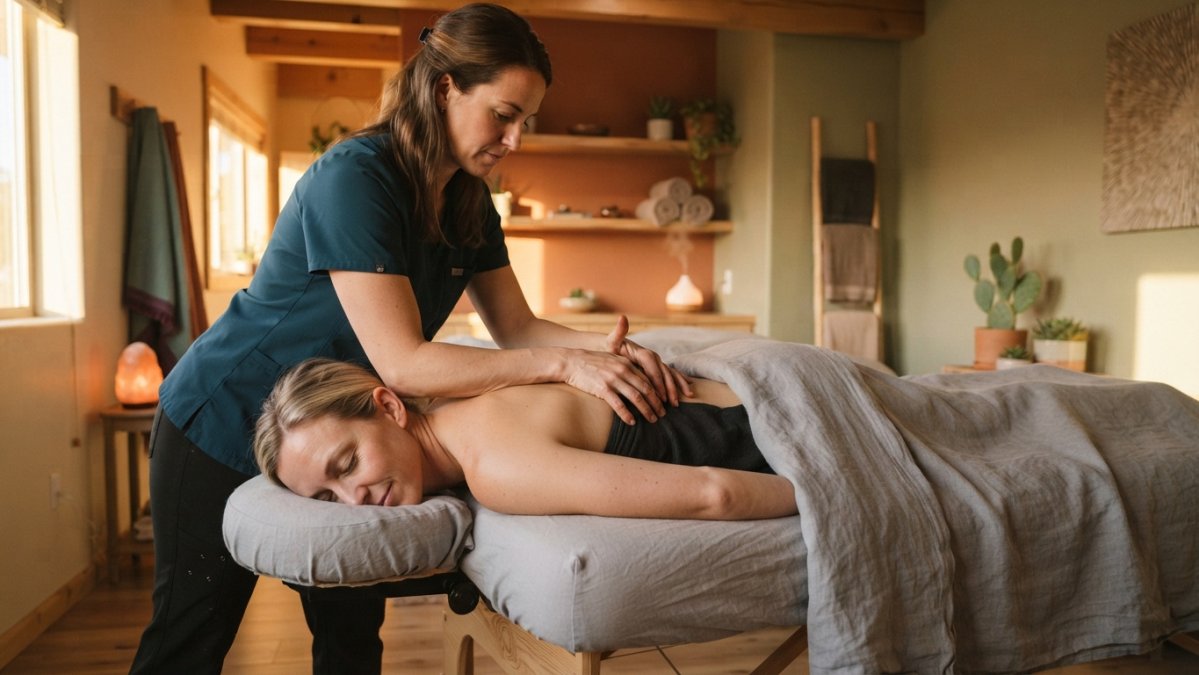
Expect a firmer experience than a relaxation massage. Some pressure can feel intense, but it should never feel like sharp pain. Tell your therapist right away if something feels too much.
1. Easing Chronic Muscle Pain and Tension
Many people who carry tension from long desk days, heavy lifting, or old injuries notice a lighter, less achy feeling after a session. If hip pain is what brought you here, learn how to choose a massage that actually helps.
Keep your expectations realistic. For a step-by-step approach to using massage on persistent back pain, read this how-to guide. One session may ease tension for a few days. Ongoing relief usually comes from regular sessions combined with stretching and movement.
2. Loosening Stiffness and Muscle Knots
Knots are tight spots in a muscle that feel hard or ropey. Slow, steady pressure can help these areas soften over time. Some people say their neck or shoulders feel looser the next morning.
Ask your therapist to spend extra time on the spots you feel most. They can work with you on those areas during the session.
3. Breaking Up Adhesions and Scar Tissue
Adhesions are bands of fibrous tissue that can form after surgery, injury, or long-term strain, binding structures that should glide past each other. You will see a lot of articles say deep tissue massage "breaks up" adhesions. That wording is stronger than the evidence supports. What massage more realistically does is apply sustained, controlled pressure and shear to tissue that has become guarded and less mobile, which can improve how that area moves and feels.
A few honest points about scar tissue:
- Old scars respond slowly. A scar that is months or years old is not going to change in one session.
- Fresh scars need clearance. If a scar is still healing, red, warm, or less than a few weeks old, get your surgeon's or doctor's OK before anyone works on it. Massaging a healing incision can do more harm than good.
- Technique matters more than pressure. Working directly on a scar with heavy pressure is rarely the answer.
Watch out: if a scar is painful, puckered, or pulling on nearby tissue in a way that limits movement, that is worth a conversation with your doctor or a physical therapist before you book a massage. Massage can be part of the plan, but it should not be the whole plan.
4. Supporting Better Circulation and Blood Flow
Some people feel warmer and more relaxed after a session.
The research on circulation is still developing, so treat this as a supportive benefit rather than a guaranteed medical outcome.
5. Improving Flexibility and Range of Motion
When tight muscles loosen, joints often move more easily.
Pair your massage with simple stretches at home. Gentle movement helps the new range of motion stick around longer.
6. Helping With Inflammation and Injury Recovery
This is the benefit where the marketing gets furthest ahead of the science, so it is worth slowing down.
Inflammation is not one thing. Acute inflammation is the short-term swelling and heat after an injury, and it is part of how tissue heals. Chronic, low-grade inflammation is the longer-running kind tied to stress, poor sleep, and ongoing strain. Massage is not a treatment for either in a medical sense, but it can influence both indirectly: it can help you relax, sleep better, and move more comfortably, and those things matter for recovery.
What the evidence actually supports:
- Soreness after exercise. Many people report less delayed-onset muscle soreness in the day or two after a session. The effect is usually modest and temporary, not a fix for a training problem.
- Recovery between workouts. Massage can help you feel looser and more ready to move, which is useful, but it does not replace sleep, food, and sensible programming.
- Acute injuries. This is where people get into trouble. If you have a fresh strain, a swollen joint, or a suspected tear, massage is not the first move. Rest, ice if it helps, and a proper assessment come first. Once you are cleared to book, follow these steps to find a massage therapist.
That is a reasonable use. Booking it the same day as a significant injury is not.
Watch out: sharp pain, visible swelling, bruising that spreads, or an injury that is getting worse instead of better are all reasons to see a healthcare provider before any massage. Deep tissue work on an acute injury can set you back.
7. Reducing Stress and Supporting Relaxation
Tight muscles and stress often go together. Some people feel calmer after a session.
Your therapist can adjust the pressure to suit you.
Who Should Be Careful With Deep Tissue Massage
Deep tissue work is not right for everyone. Speak with your doctor first if you have blood clots, osteoporosis, recent surgery, or are pregnant. Also let your therapist know about bruising, skin conditions, or medications that thin the blood.
Watch out: Do not push through sharp pain during a session. Soreness the next day is common, but pain that lasts several days is a sign to pause and check in with a professional.
Before booking, check this quick list of who should speak with a doctor first and what to watch for during and after a session.
| Situation | What to do |
|---|---|
| Blood clots | Speak with your doctor first |
| Osteoporosis | Speak with your doctor first |
| Recent surgery | Speak with your doctor first |
| Pregnancy | Speak with your doctor first |
| Blood-thinning medication | Tell your therapist |
| Bruising or skin conditions | Tell your therapist |
| Sharp pain during a session | Do not push through it |
| Pain lasting several days after | Pause and check in with a professional |
Tight muscles do not have to run your day. If you are ready to slow down and see how your body responds, dive in with us. Body Alchemy Sedona offers in-studio and mobile sessions, and our therapists tailor each visit to what you need.
Frequently Asked Questions
How long should you have a deep tissue massage?
Session length depends on the area you want to focus on and what you need that day. Pricing and session lengths vary by appointment type, so check Body Alchemy Sedona's website or call the studio for current options before you book.
Who should avoid deep tissue massage?
People with blood clots, recent surgery, fragile bones, open wounds, skin infections, or certain heart conditions should check with a doctor first. Pregnant clients should tell their therapist and get medical clearance, and anyone on blood thinners should be cautious with firm pressure. If you have chronic pain you are unsure about, a quick conversation with your healthcare provider can help you decide whether deep tissue work is a good fit.
How long can soreness last after a deep tissue massage?
Mild soreness usually fades within a day or two, similar to how muscles feel after a good workout. Drinking water, gentle movement, and a warm bath can help. If soreness is sharp, spreads, or lasts beyond several days, contact a healthcare provider. Telling your therapist about pressure levels during the session makes it easier to keep discomfort in a manageable range.
Is deep tissue massage better than Swedish massage for tight muscles?
Deep tissue massage uses slower, firmer pressure aimed at deeper muscle layers, which many people prefer for stubborn tightness. If you are new to massage or sensitive to pressure, starting with a medium approach and adjusting over sessions is a practical choice.