 comparison
Comparing Luxury Wellness Services in Sedona: 2026 Guide
Table of Contents
- What to Compare Before You Book Luxury Wellness in Sedona
- Resort Spas vs. Retreat Centers vs. Therapist-Led Studios
- Massage Therapy for Chronic Back Pain: What to Look For
- How to Choose a Massage Therapist Who Fits Your Goals
- Sedona Mobile Massage: Convenience Without the Commute
- Sedona Sound Healing and Energy Work: What a Session Looks Like
- Matching a Wellness Experience to Your Trip and Budget
- Conclusion
- Frequently Asked Questions
Last Updated: October 17, 2026
What to Compare Before You Book Luxury Wellness in Sedona
Comparing luxury wellness services in Sedona starts with three questions: what the setting actually is, what treatments are on the menu, and who is doing the work with their hands. Most booking pages answer the first two and stay quiet on the third. That silence is where disappointing sessions come from.
At Body Alchemy Sedona, we are a therapist-led collective in West Sedona, so we have a bias here: we think the practitioner matters more than the lobby. Founded in 2021 by Anne Lantry, our studio was built around the idea that a rested, well-supported therapist gives a better session than an exhausted one in a marble bathroom. Keep that lens handy as you read.
Setting, Services, and Who Does the Work
A resort spa sells an atmosphere. A retreat center sells a program. A therapist-led studio sells the hands and the training behind them. All three can be excellent, and all three can miss for you.
Ask what a session includes before you compare anything else. A 50-minute treatment often means 40 minutes on the table. Ask about intake, pressure preferences, and whether the therapist will adjust mid-session. Those details tell you more than a photo of the relaxation lounge.
Resort Spas vs. Retreat Centers vs. Therapist-Led Studios
Resort spas bundle treatments with amenities: pools, robes, quiet rooms, and a full day you can disappear into.
Retreat centers such as Sedona Mago Center lean toward meditation, spiritual practice, and multi-day programming. You go for structure and reflection, not a single deep-tissue appointment.
Therapist-led studios sit between the two. You book a specific practitioner, often for a specific problem, without a resort day attached. The trade-off is fewer amenities and more focus.
The differences that actually decide your booking are less glamorous than the photos. Here is what to ask each type before you commit.
Access for non-guests. Many resort spas open their treatment menu to outside guests but restrict the pool, fitness center, and relaxation lounge to hotel guests or day-pass holders.
Booking windows. Resort spas and destination retreats commonly fill weekend slots two to six weeks out in peak season, and holiday weekends further.
Cancellation and late-arrival terms. This is where comparisons get real. Resort and retreat policies are frequently stricter because the property has held a slot and staffed for it.
Age and party rules. Most spas set a minimum age for treatment rooms, often 18, with some offering teen services alongside a guardian. Retreat centers vary widely.
What "included" means. At a resort, the day pass, robe, locker, and lounge access may or may not come with your treatment. At a retreat, meals and programming may be bundled or sold separately.
| Type | What You Get | Best For | Watch For |
|---|---|---|---|
| Resort spa | Treatments plus amenities and a full-day pass | Travelers wanting one seamless experience | Bundled pricing that hides per-service cost; guest-only amenity access |
| Retreat center | Multi-day meditation and wellness programming | People seeking structure and reflection | Less one-on-one bodywork time; cohort-based scheduling |
| Therapist-led studio | A named practitioner focused on your goals | Chronic pain, targeted work, repeat visits | Fewer frills, book ahead |
| Mobile massage | Treatment in your rental or home | Tight itineraries, post-hike recovery | Screening and cancellation terms |
Massage Therapy for Chronic Back Pain: What to Look For
Massage therapy for chronic back pain works best when the therapist treats it as a specific problem, not a generic hour. That means a real intake: where the pain sits, what makes it worse, what you have already tried, and whether anyone has evaluated it.
Look for a therapist who asks about your history and adjusts pressure as they go. If you have an old injury, say so up front. A good practitioner will work around it, not through it.
One honest note: massage can ease muscle tension and help you move more comfortably, but persistent back pain deserves a medical evaluation too. Bodywork complements care; it does not replace it. The National Center for Complementary and Integrative Health's overview of massage therapy is a plain-spoken place to start.
How to Choose a Massage Therapist Who Fits Your Goals
Knowing how to choose a massage therapist comes down to matching training to your goal. Relaxation, sports recovery, and chronic pain call for different skills, and not every therapist specializes in all three.
Use this checklist before you book:
- Ask what modalities the therapist is trained in (deep tissue, myofascial, sports, prenatal)
- Confirm they take an intake and ask about injuries
- Ask whether they will adjust pressure during the session
- Check whether they have experience with your specific issue
- Read reviews for comments about listening, not just ambiance
- Confirm cancellation and late-arrival policies in writing
A common mistake is booking the earliest available slot with whoever is free. The better move is naming your goal when you call and letting the studio match you.
Sedona Mobile Massage: Convenience Without the Commute
Sedona mobile massage brings the table, linens, and therapist to your rental, hotel room, or home. For a short trip or a sore day after a hike, it removes the drive and the waiting room entirely.
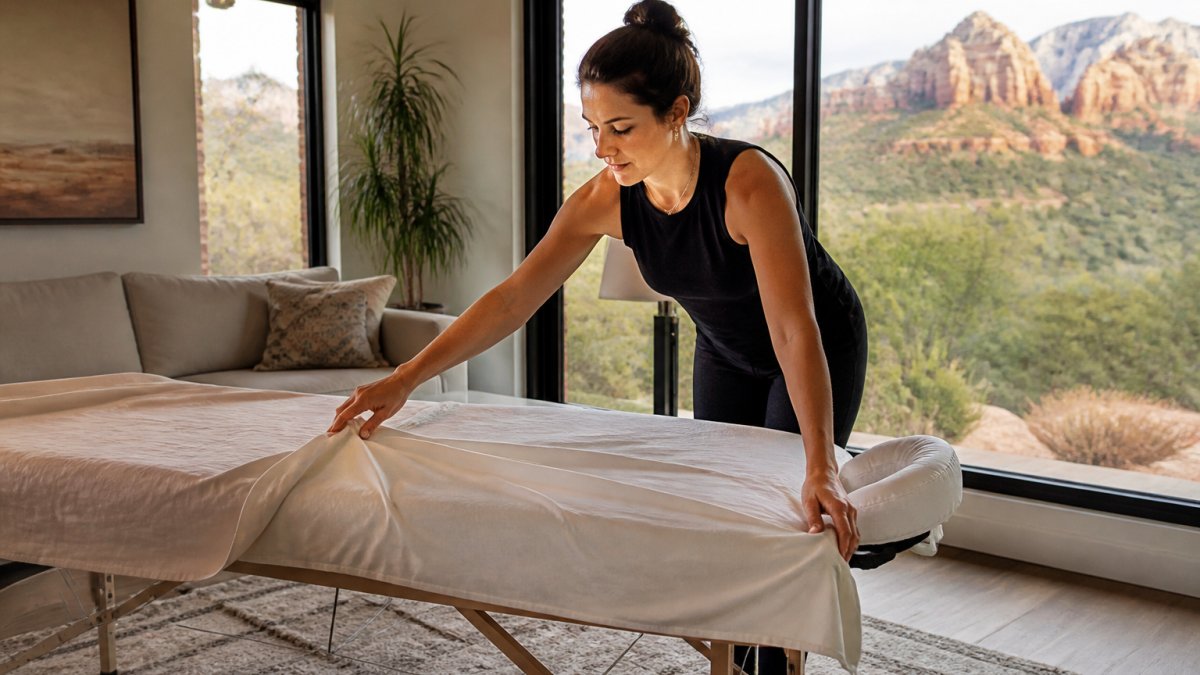
The trade-off is trust. You are inviting a stranger into your space, so ask how the studio screens practitioners, what they bring, and what happens if you are not comfortable. Get the cancellation policy before you pay. At Body Alchemy Sedona, mobile appointments are part of what we offer, and we would rather answer those questions upfront than have you wonder.
Sedona Sound Healing and Energy Work: What a Session Looks Like
Sedona sound healing uses instruments such as singing bowls and gongs to create vibrations you feel as much as hear. Sessions usually run 45 to 60 minutes, and you stay clothed, often lying down with a blanket. Some people drift off. Others notice tight muscles letting go.
Energy work is quieter. A practitioner uses light touch or hands-held-near-the-body techniques while you rest. Skeptical? Fair. These practices are best treated as relaxation and self-reflection tools rather than medical treatment. The Cochrane review on music and relaxation interventions for stress and anxiety shows relaxation approaches can help people feel calmer, and that is a reasonable bar.
If you only have a long weekend, one session can still leave you noticeably more relaxed. Deeper change usually comes from repetition.
Matching a Wellness Experience to Your Trip and Budget
Match the experience to the trip you are actually taking. A packed three-day itinerary calls for mobile massage or a single studio session. A week with space in it can hold a retreat program or a resort day.
A more useful way to choose is to start from your goal, not the venue. Most people book luxury wellness for one of five reasons, and each points somewhere different:
- Relaxation and stress relief. Almost any setting works. A resort day pass or a single studio session both deliver. Pick based on how much time you want to give the day.
- Pain relief or recovery. Go therapist-led. You want a named practitioner who takes an intake, works a specific region, and will adjust pressure. A resort spa can work if you request a clinical-minded therapist, but you are less likely to get continuity between visits.
- Post-hike or post-activity recovery. Mobile massage or a studio session close to your lodging beats driving to a resort and waiting in a lounge. Book for the evening after your longest hike, not the morning of.
- Skincare and facial services. Resort spas and day spas carry the widest menu and the estheticians who specialize. Ask what line they use and whether they will tailor for sensitive skin.
- Spiritual exploration or reflection. Retreat centers and sound or energy sessions fit here. Treat these as relaxation and self-reflection tools, not medical treatment, and give yourself more than one session if the goal is meaningful to you.
On budget: resort spas and packages price the setting into the service, so ask for a per-treatment breakdown before you commit. Studios tend to quote closer to the session itself. Body Alchemy Sedona does not publish rates online because sessions are customized, so reach out for current pricing and we will give you a straight answer.
A few cost-structure questions worth asking anywhere you book:
- Is gratuity included, or added at checkout? What is the customary range?
- Does a resort fee or amenity fee apply on top of the treatment price?
- Are there peak-season or weekend surcharges?
- What is the cancellation window, and what is retained inside it?
- For mobile appointments, is there a travel fee based on distance?
None of these are gotchas if you ask upfront. They are the difference between comparing two treatments and comparing two total visit costs.
Conclusion
The hard part of comparing luxury wellness services in Sedona is not finding options. It is telling them apart before you spend the money. Ask who does the work, what their training is, and what the session actually includes, and the choice gets much simpler.
If you want a therapist-led session built around your body rather than a package, come see us. Body Alchemy Sedona offers custom massage therapy, energy work, sound healing, and breathwork in-studio or through mobile appointments, with sessions tailored to what you actually need. Dive in with us and rediscover what it feels like to truly thrive.
Frequently Asked Questions
What should I compare when choosing a luxury wellness service in Sedona?
Start with who actually performs the work: a licensed therapist, an esthetician, or a retreat facilitator. Then compare the setting (resort spa, retreat center, or studio), the treatment menu, and whether sessions are customized or scripted. Ask about session length, cancellation terms, and whether services are available in-studio or through Sedona mobile massage. Reviews help, but a short phone consultation tells you more about fit than any star rating.
How do I choose between massage, energy work, yoga, and sound healing?
Match the service to what you want from the visit. Muscle tension and chronic back pain point toward therapeutic or deep-tissue massage. Stress and nervous system overload respond well to breathwork, sound healing, and energy work. If you want movement and body awareness, yoga fits. Many Sedona studios let you combine a bodywork session with sound healing in one appointment, which suits short trips where you want range rather than depth in a single modality.
Are mobile massage services available in Sedona?
Yes. Several Sedona providers, including therapist-led studios, offer mobile appointments at vacation rentals, hotels, and homes. Before booking Sedona mobile massage, confirm the therapist's license, what equipment they bring, and their screening process. Ask about travel radius, setup time, and the cancellation policy if you are uncomfortable. Mobile sessions work well for groups, post-hike recovery, and anyone who would rather not drive after a deep treatment.
How can I tell whether a massage therapist is a good fit for chronic back pain?
Ask directly about their training in therapeutic and deep-tissue work and how they assess an old injury. A good therapist asks about your history, movement patterns, and pain triggers before touching you, then adjusts pressure as they go. They should explain what they are doing and give you home care. If a provider only offers a standard relaxation hour with no intake, that is a sign they are not set up for massage therapy for chronic back pain.
How long should I allow for a massage or wellness session?
A 60-minute massage is the common entry point, but 90 minutes gives a therapist time to work specific areas like low back and hips without rushing. Sound healing and energy sessions often run 60 to 75 minutes. Add 15 to 30 minutes around the appointment for intake, changing, and settling. On a short trip, book the longer session once rather than two short ones; depth beats frequency for most visitors.