 listicle
Holistic Healing Practices in Sedona: 7 to Try
Table of Contents
- Why Sedona Became a Holistic Healing Destination
- Massage Therapy in Sedona: More Than Relaxation
- Energy Healing in Sedona: Reiki, CranioSacral, and More
- Breathwork Techniques for Deep Relaxation
- Yoga, Meditation, and Sound Healing
- How to Choose a Holistic Wellness Practitioner
- Retreats, Vortexes, and What to Realistically Expect
- Conclusion
- Frequently Asked Questions
Last Updated: October 5, 2026
Why Sedona Became a Holistic Healing Destination
People have been coming to this red rock country for decades, and it's not hard to see why. The landscape itself does something to you. Add in a long history of spiritual seekers, artists, and healers who settled here, and you get a town where holistic healing practices in Sedona aren't a trend. They're part of daily life.
At Body Alchemy Sedona, we work in West Sedona and see it every day: visitors arrive wound tight from city life, then slow down within a day or two.
Sedona sits at roughly 4,500 feet elevation, surrounded by national forest. The light is different here. The pace is different. That combination draws people who want to step away from stress and check in with themselves.
So what does that actually mean for you as a visitor? It means you have real choices, and most of them are within a short drive of each other. Below, we break down seven practices worth your time, plus how to pick a practitioner who knows what they're doing.
Massage Therapy in Sedona: More Than Relaxation
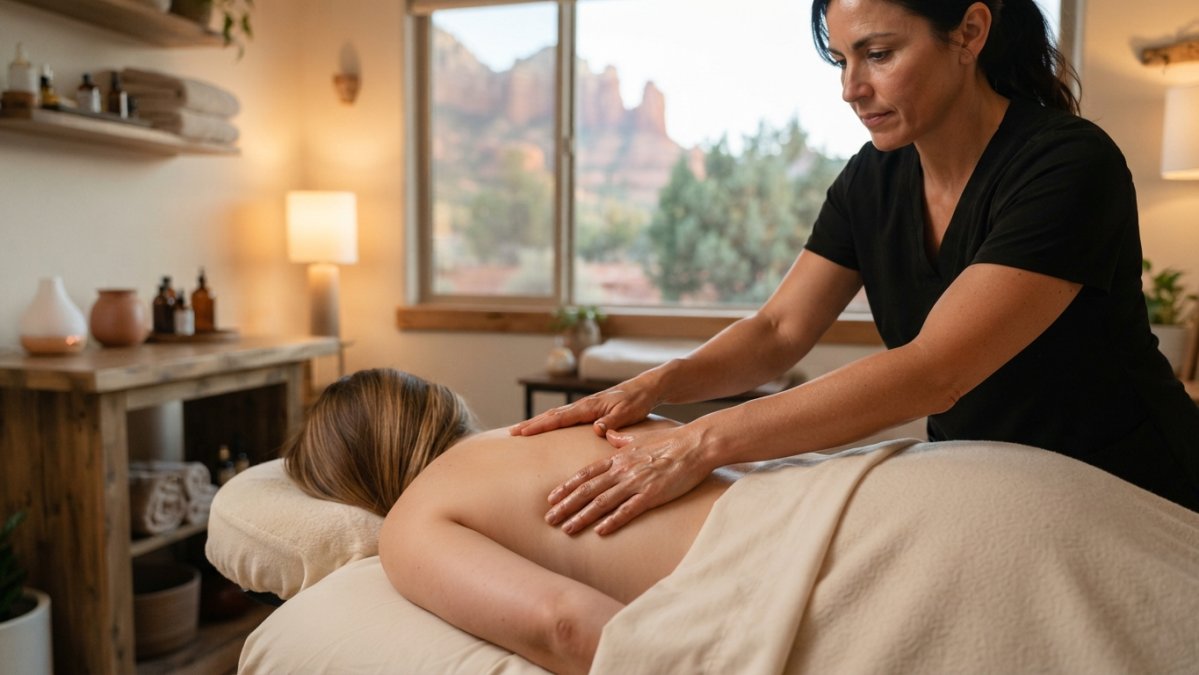
Massage therapy in Sedona goes well beyond a standard spa hour. The best local therapists treat it as therapeutic bodywork, meaning they work with your specific pain, tension, or injury rather than running through a scripted routine.
What separates a good session from a forgettable one comes down to intake. A skilled therapist asks about your history, your problem areas, and what you want out of the hour before you ever get on the table.
What to Expect in a Session
Your first visit usually starts with a short conversation about what's going on in your body. Tell them about that old back injury from years ago, even if it's not why you booked. It changes how they work.
From there, most sessions run 60 or 90 minutes. You stay draped, you speak up if pressure is too much, and you leave with a few notes on what to do at home. If a therapist never asks you a single question, that's a red flag.
Energy Healing in Sedona: Reiki, CranioSacral, and More
Energy healing in Sedona covers many practices, and it's worth knowing what you're signing up for before you book. Reiki and shamanic healing all fall under this umbrella, but they feel very different in practice.
Reiki is a Japanese technique where the practitioner uses light touch or hovering hands to encourage relaxation. Most people describe warmth, heaviness, or simply deep calm.
Shamanic healing and energy medicine draw on older traditions. Sessions may include guided imagery, drumming, or work with intention and ceremony.
Here's the honest part: the evidence base for these practices is mixed. Research on Reiki and similar modalities is limited, and results are often reported anecdotally. That doesn't mean they're worthless. It means you should go in with realistic expectations. Many people find them deeply relaxing and useful alongside conventional care, not as a replacement for it.
Breathwork Techniques for Deep Relaxation
Breathwork techniques for deep relaxation are the most accessible tool on this list. You can do them anywhere, they cost nothing, and the effects show up fast.
The simplest one is box breathing. Inhale for four counts, hold for four, exhale for four, hold for four. Repeat for five minutes. It's used by athletes, first responders, and anyone who needs to settle a racing mind.
A second option is extended exhale breathing. Breathe in for four counts and out for eight. A longer exhale tends to nudge your nervous system toward a calmer state.
A third is alternate nostril breathing, a yoga practice that many people find steadying before meditation.
If you'd rather be guided, many studios offer group breathwork sessions. Working with an instructor helps you catch habits you didn't know you had, like shallow chest breathing or holding your breath without noticing.
Yoga, Meditation, and Sound Healing
Yoga and meditation in Sedona range from drop-in studio classes to sunrise sessions on the rocks. You don't need experience. Most classes here welcome beginners, and instructors are used to people who've never done a downward dog in their life.
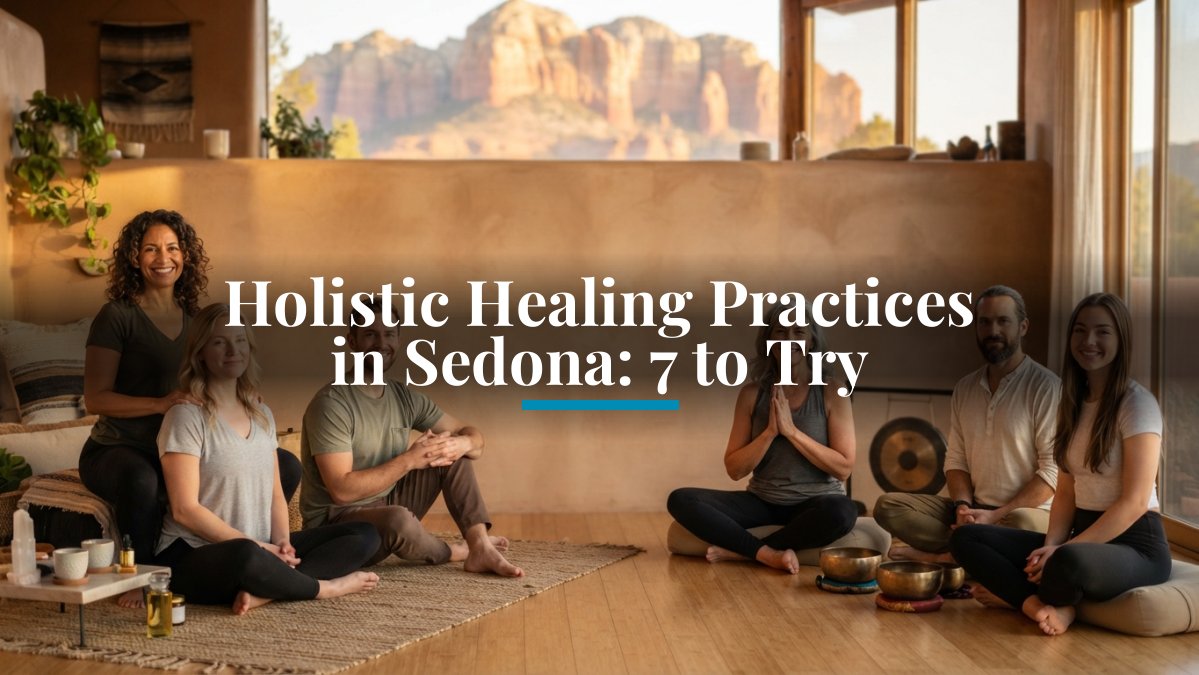
Sound healing is the one people ask about most. A practitioner plays singing bowls, gongs, or chimes while you lie down and listen. The vibrations are felt as much as heard.
Mindfulness practice fits in the same category. It's simply paying attention to the present moment without judgment, and even ten minutes a day makes a difference for stress management.
What most guides miss is that these practices work best in combination. A yoga class loosens you up, meditation quiets the mind, and sound healing helps you drop into rest. That's why our studio offers all three under one roof. It's easier to build a rhythm when you're not driving across town between appointments.
How to Choose a Holistic Wellness Practitioner
Choosing a holistic wellness practitioner comes down to three things: credentials, communication, and how you feel in the first five minutes. Most guides stop there. Here's what that actually looks like in practice.
Start with credentials, and verify them. Massage therapists are licensed at the state level in most states, and licensing boards typically publish a lookup tool. Ask for a license number, not just a certification. For other modalities, training varies widely. Reiki practitioners often hold a level or master certification through a lineage, but there's no single national standard. Shamanic practitioners usually train through apprenticeship or specific programs, and there's no licensing body. None of that makes a practitioner bad. It just means you have to ask more questions.
Ask what they can't help with. This is the fastest way to tell a good practitioner from a shaky one. Ethical practitioners describe benefits honestly and refer you to a doctor when that's the right call. If someone promises to cure a medical condition, walk away.
A few questions worth asking before you book:
- What training and licensing do you hold, and can I verify it?
- Have you worked with my specific condition before?
- What does a typical session look like, and what should I expect afterward?
- Are there any reasons I shouldn't do this, pregnancy, recent surgery, blood clots, skin infections, or a current injury?
- Do you coordinate with physicians or other providers?
Know the common contraindications. Active infections, blood clots, uncontrolled high blood pressure, recent fractures, and some skin conditions are reasons to wait or get clearance from a physician first. Gentle modalities like Reiki have fewer physical contraindications, but they're still not a substitute for medical care. If you're pregnant, recovering from surgery, or managing a chronic condition, call your doctor before booking anything hands-on.
Check scope of practice. A massage therapist can't diagnose. A Reiki practitioner can't prescribe. A shamanic practitioner can't treat illness. If someone steps outside their lane and starts giving medical advice, that's your signal to leave.
Ask about accessibility and logistics before you commit. Is the space wheelchair accessible? Is there an elevator? Can they accommodate a service animal? Do they offer a sliding scale or shorter sessions if cost is a concern? Do they have a cancellation policy, and what happens if you need to reschedule? These details matter more than ambiance, and good practitioners answer them without hesitation.
Retreats, Vortexes, and What to Realistically Expect
Retreats here range from a single afternoon to a full week. Weekend retreats typically combine yoga, meditation, healthy meals, and workshops. Longer programs add more time for introspection and self-discovery. But retreats aren't the only way in, and for a lot of people they're not the best fit.
Standalone sessions are the low-commitment option. You can book a single massage, Reiki session, or sound bath without signing up for a multi-day program. That's often the smarter first step. Try one modality, see how you respond, then decide whether a longer program makes sense. Many studios and practitioners offer drop-in classes or single appointments, and you don't need to be staying at a resort to book them.
Outdoor and low-cost options exist. The trails around Boynton Canyon, Airport Mesa, and Cathedral Rock are free to hike, and plenty of people treat a quiet morning on the rocks as their own meditation. Local meetup groups and community centers sometimes host donation-based yoga or meditation.
Vortexes: what they are and what to expect. These are spots around town where the rock formations are said to concentrate energy. Boynton Canyon, Airport Mesa, and Cathedral Rock are among the most visited. Whether you feel anything is personal. Most people find them peaceful regardless, and that alone is worth the short hike. Go early or late in the day to avoid crowds and heat.
Plan around the logistics. Most sessions run 45 to 90 minutes, and popular practitioners book out days or weeks ahead, especially on weekends and during peak seasons. If you're visiting from out of town, book before you arrive. If you're local and need ongoing care, ask about packages or memberships rather than paying per session. And check cancellation policies, some places charge for late cancellations, some don't.
What to bring. Comfortable clothes you can move in, a water bottle, layers (mornings and evenings get cool at this elevation), and an open mind. For bodywork, most studios provide everything else. For outdoor sessions, bring your own mat or cushion.
Now the realistic part. One session won't undo years of stress. A long weekend can genuinely reset your nervous system, but lasting change comes from what you do after you go home. The people who get the most out of this aren't the ones who book the most sessions. They're the ones who take one or two techniques home with them and actually use them.
Conclusion
Figuring out where to start with holistic healing can feel overwhelming when there are so many options and so little clear information about what actually helps. We built Body Alchemy Sedona to make that easier. Our therapist-led collective offers custom massage therapy, energy work, yoga, sound healing, and breathwork, all in one place, with sessions available in-studio or through mobile appointments. Every session is tailored to what your body actually needs that day. Dive in with us and see what slowing down feels like.
Frequently Asked Questions
What are holistic healing practices?
Holistic healing practices support the whole person, not just a symptom. They include massage therapy, energy work, breathwork, yoga, meditation, and sound healing. In Sedona, these practices often draw on the area's natural setting to help people slow down. The goal is to help your body and mind settle so you can feel more like yourself again.
What types of holistic healing are available in Sedona?
Sedona has a wide range. You can find massage therapy, Reiki, breathwork, yoga, meditation, sound healing, and retreat programs that last a weekend or a full week. Many practitioners work in studios, while some offer mobile appointments. It helps to think about what you need first, then look for a practitioner who specializes in that.
What happens during a breathwork session?
A breathwork session usually starts with a short check-in about how you're feeling. The practitioner then guides you through specific breathing patterns, often lying down with music or quiet in the background. Sessions can run 60 to 90 minutes. You might feel tingling, emotional release, or deep calm. It's normal to feel a little lightheaded at first, so let your practitioner know if anything feels off.
How do I choose a holistic wellness practitioner?
Start by asking what training and credentials they hold. Look for someone who listens to your goals and explains what a session will involve. Ask about their experience with your specific concern, whether that's chronic pain, stress, or general relaxation. A good practitioner will welcome questions and never pressure you to book more than you need.
Can yoga and sound healing be part of a wellness routine?
Yes. Both can fit into a regular routine alongside massage or breathwork. Yoga helps with flexibility, strength, and calming the nervous system. Sound healing uses instruments like singing bowls to create vibrations that many people find deeply relaxing. You don't need to be flexible or experienced to try either one. Start with a beginner class or a private session if you feel unsure.