 how-to
How to Ease Chronic Muscle Tension With Massage
Last Updated: November 1, 2026
Quick Summary
Massage eases chronic muscle tension mainly by signaling the nervous system to ease its guard, so tight tissue can let go. The relief is real but short-term, and it works best when paired with movement, good sleep, and stress management between sessions.
- Steady, moderate pressure can shift a muscle out of its guarded state.
- Sessions help you notice where you brace, which lets you release tension between visits.
- Range of motion often improves for a while after a session, a good window for gentle movement.
- Start with a weekly session for a few weeks, then space visits out as relief lasts longer.
- Skip massage and see a clinician for recent injuries, swelling, spreading numbness, or pain that keeps getting worse.
Table of Contents
- Why Chronic Muscle Tension Builds Up
- How Massage Helps Chronic Muscle Tension
- Massage Techniques for Muscle Tension
- Deep Tissue Massage for Muscle Tension
- How Often to Get a Massage for Tight Muscles
- When to Avoid Massage and When to See a Clinician
- Booking Your First Session and Caring for Your Muscles Between Visits
- Frequently Asked Questions
Why Chronic Muscle Tension Builds Up
Chronic muscle tension is the kind that never really lets go. You rub your neck after a long day, it eases a little, and by Tuesday it's back. It usually has less to do with one bad moment than with repetition.
Muscles tighten when they're asked to hold a position for a long time. Desk work, driving, lifting the same way every day, and stress all add up. The body isn't failing here. It's protecting itself, and it stays on guard longer than it needs to.
A few common contributors:
- Sitting for hours with the head forward and shoulders rounded
- Repetitive movement like typing, lifting, or sports training
- Stress that keeps the shoulders and jaw braced without you noticing
- Poor sleep, which makes muscles recover more slowly
- Old injuries that changed how you move and load your body
The tricky part is that tension can become a habit. The muscle stays tight, you adjust how you move to avoid discomfort, and that new movement pattern puts strain somewhere else.
How Massage Helps Chronic Muscle Tension
Massage doesn't 'fix' a tight muscle the way you'd fix a flat tire. What it does is more subtle, and understanding that helps you get more out of it.
Here's what's actually happening during a session:
- Pressure signals the nervous system to dial down. Steady, moderate pressure on tight tissue can shift the muscle out of its guarded state. This is a nervous system effect more than a mechanical one.
- You get better at noticing tension. A lot of chronic tightness is invisible to the person holding it. A session draws attention to where you brace, and that awareness is often what lets you release it between visits.
- Range of motion can improve short-term. After a session, the treated area often moves more freely. That window is useful, it's a good time to do gentle movement or mobility work while the muscle is more cooperative.
What massage does not reliably do is undo years of postural habit in one visit. The honest version is that massage creates a short-term window of reduced tension and better movement, and what you do with that window matters more than the massage itself.
That's why the people who get the most from massage are the ones who pair it with movement, sleep, and stress management. The massage opens the door; the habits walk through it.
Massage works in a few specific ways, and each one points to something you can act on between sessions.
| What happens | What it means for you | Why it matters |
|---|---|---|
| Steady, moderate pressure | Signals the nervous system to ease its guard | Mostly a nervous system effect, not mechanical |
| Sessions draw attention to bracing | You notice where you hold tension | Awareness helps you release it between visits |
| Improved range of motion after a session | Treated area moves more freely for a while | Good window for gentle movement or mobility work |
| Relief is short-term | Massage resets rather than repairs | Habits like movement and sleep make results last |
Massage Techniques for Muscle Tension
Not every massage style is built the same. Different techniques suit different kinds of tightness, so it helps to know what you're asking for.
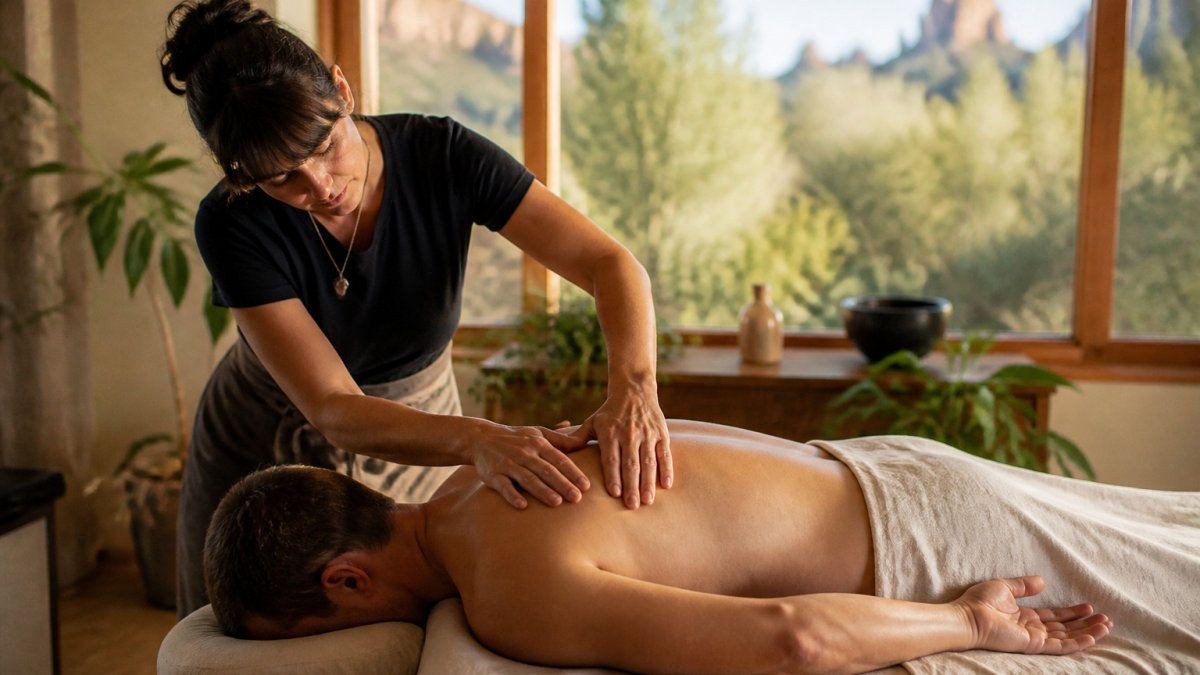
Common massage styles include Swedish, deep tissue, and trigger point work, each suited to different kinds of tightness.
If you're new to massage, start with a moderate pressure. You can always ask for more firmness, but you can't undo too much pressure in one session. Speak up during the session. Good communication is one of the best tools you have.
Try this: before your appointment, note two or three areas that feel most tight. Tell your therapist where they are and how they feel, such as "a burning knot near my right shoulder blade" or "a constant ache at the base of my skull."
Deep Tissue Massage for Muscle Tension
Deep tissue massage is often the first choice people reach for when they have stubborn tightness. It uses slower strokes and firmer pressure to work on the deeper layers of muscle and the connective tissue around them.
It helps to know what to expect. Deep tissue work can feel intense, especially on tight spots. A good session should feel like a productive kind of discomfort, not sharp or painful pain. If you feel pain that makes you want to tense up, tell your therapist right away.
Many people find that deep tissue work is most useful when they:
- Have tension that comes back in the same places
- Feel comfortable with firm pressure
- Want to work on a specific area, like the neck, back, or legs
If you're not sure whether deep tissue suits you, a American Massage Therapy Association overview of massage styles is a good place to learn the basics before you book.
How Often to Get a Massage for Tight Muscles
There's no universal schedule, but there is a practical way to think about it. Most people do best with a short burst of sessions up front, then a maintenance rhythm once things settle.
A reasonable starting point is one session per week for the first few weeks, then spacing visits out as you notice improvement. Many people settle into a monthly rhythm for maintenance, though it varies from person to person.
Session length matters too.
How do you know it's working? Look at three things:
- The day after: Does the area feel looser, or just sore? Mild soreness is normal; sharp pain is not.
- The week after: Does the relief last a few days, or is it gone by the next morning? Longer-lasting relief is a good sign.
- The month after: Are you having fewer flare-ups, or are they just as frequent? Fewer flare-ups means the plan is working.
If you've had four to six sessions and nothing has changed, that's useful information. It may mean the pressure or technique isn't right for you, or that something else is driving the tension, which is worth a conversation with a clinician.
When to Avoid Massage and When to See a Clinician
Massage isn't right for every situation. Some conditions call for a doctor or physical therapist first.
Skip or postpone massage and check with a health professional if you have:
- A recent injury, fracture, or suspected blood clot
- Unexplained swelling, warmth, or redness in a limb
- Skin infections, open wounds, or rashes in the area
- Pain that is severe, sharp, or getting worse over time
- Numbness, tingling, or weakness that spreads
If your tension has lasted for months or keeps coming back despite good habits, it's worth a visit to a clinician. Massage can be a helpful part of care, but it shouldn't replace an evaluation when something doesn't feel right. A MedlinePlus guide to back and neck pain can help you know which warning signs deserve a checkup.
Booking Your First Session and Caring for Your Muscles Between Visits
Before your first visit, share your health history and what you want to get out of the session. Mention any injuries, medications, or conditions that affect how you feel pressure. Be clear about how firm you like things.
After your session:
- Drink water to help your body process the work
- Move gently rather than jumping into hard exercise right away
- Stretch daily for a few minutes, especially the areas that feel tight
- Adjust your setup by raising your screen and taking breaks from sitting
- Notice your stress, and breathe slowly when your shoulders start to climb
Between visits, short habits add up. Stand up every hour, roll your shoulders, and do a few slow neck stretches. These small moves keep the muscles from settling back into the same tight pattern.
Ready to try it? Visit Body Alchemy Sedona and find the session that fits your body. Dive in with us.
Frequently Asked Questions
Do massages help loosen muscles?
Yes, massage is often used to ease tightness in muscles that feel stiff or sore. Pressure and movement can help soft tissue relax, and many people notice looser muscles and better comfort right after a session. The effect is usually temporary, which is why regular sessions or a self-care routine tends to matter more for chronic tension than a single visit. If a muscle stays tight or hurts for weeks, it is worth having a clinician check the cause.
How often should you get a massage for tight muscles?
There is no single right schedule. Some people book a session every week or two while tension is high, then space visits out as things settle. Others come in monthly for maintenance. Your therapist can help you set a pattern based on how your body responds. Pay attention to how long the relief lasts between visits, since that is often the best guide to whether you need more or fewer sessions.
Can massage make muscle tension worse?
It can, if the pressure is too deep, too fast, or applied to an area that is inflamed or injured. Some soreness the day after a session is normal, but sharp pain, bruising, or a feeling that the muscle is more irritated is a sign to tell your therapist and adjust. Speak up during the session about pressure, and never push through pain that feels wrong.
When should you avoid massage for muscle pain?
Avoid massage over open wounds, fresh bruises, recent fractures, active blood clots, or areas with unexplained swelling, redness, or warmth. Check with a doctor first if you have a fever, a recent surgery, or a condition that affects circulation. Muscle pain that comes with numbness, weakness, or swelling in one leg should be evaluated before any bodywork.