 how-to
Benefits of Regular Massage for Stress Relief
Table of Contents
- Why Regular Massage for Stress Works
- How Often to Get a Massage for Stress
- Physical Benefits: Tension, Sleep, and Recovery
- Mental and Emotional Benefits: Mood, Anxiety, and Calm
- Types of Massage for Stress and Massage for Anxiety
- Stress Management Techniques That Work With Massage
- What to Expect and How to Track Your Results
- Frequently Asked Questions
Last Updated: October 18, 2026
Why Regular Massage for Stress Works
Massage for stress works because it calms the nervous system. Skilled touch signals safety to your body. That signal slows your heart rate, eases muscle guarding, and pulls you out of the constant low-grade alarm most of us live in.
One session helps. Regular sessions help more.
Here's the part most guides skip: the benefit builds like interest. Each session lowers accumulated tension a little, and the next one starts from a calmer baseline. Skip a month, and you're often back where you started.
Guests who come once for a treat feel good for a few days. Guests who come monthly tell us they handle hard weeks differently.
There's a mind-body link at work too. When your shoulders stop bracing, your thoughts tend to slow down with them.
How Often to Get a Massage for Stress
Most people do best starting with one session every two to four weeks, then adjusting based on how long the calm actually lasts. That's a starting point, not a rule. The right frequency is the one you can sustain without turning it into another chore.
Here's a practical way to think about it:
- High stress or chronic tension: every two weeks for a month or two, then reassess
- Maintenance and general well-being: once a month
- Acute flare-ups or recovery from overuse: weekly for a short stretch, then taper
- Tight budget or schedule: every six weeks still beats nothing
A common mistake is waiting until you're completely depleted to book. That's like only drinking water when you're dehydrated. Many therapists suggest starting a little more frequent, then spacing sessions out as your body holds the calm longer.
Pay attention to when tension creeps back. If it returns within a few days, you may need closer spacing for a while. If you're still feeling the benefit at week four, you can stretch it out. That feedback loop matters more than any fixed schedule.
A few signs it's time to adjust frequency or talk to a clinician:
- Tension returns faster each time, or you need more pressure to feel relief
- You feel sore for more than a day or two after sessions
- You're using massage to manage pain that hasn't been evaluated
- You have a health condition, are pregnant, or are recovering from injury or surgery
If any of those apply, check with your doctor or a qualified therapist before booking. Massage is generally safe for healthy people, but it isn't right for every condition at every stage. A good therapist will ask about your health history and modify the session or refer you out when needed.
One more thing: frequency isn't the only lever. A shorter session every two weeks can work better than a long one every six weeks if consistency is the goal. The point is to build a rhythm you can keep, not to chase the perfect interval.
Physical Benefits: Tension, Sleep, and Recovery
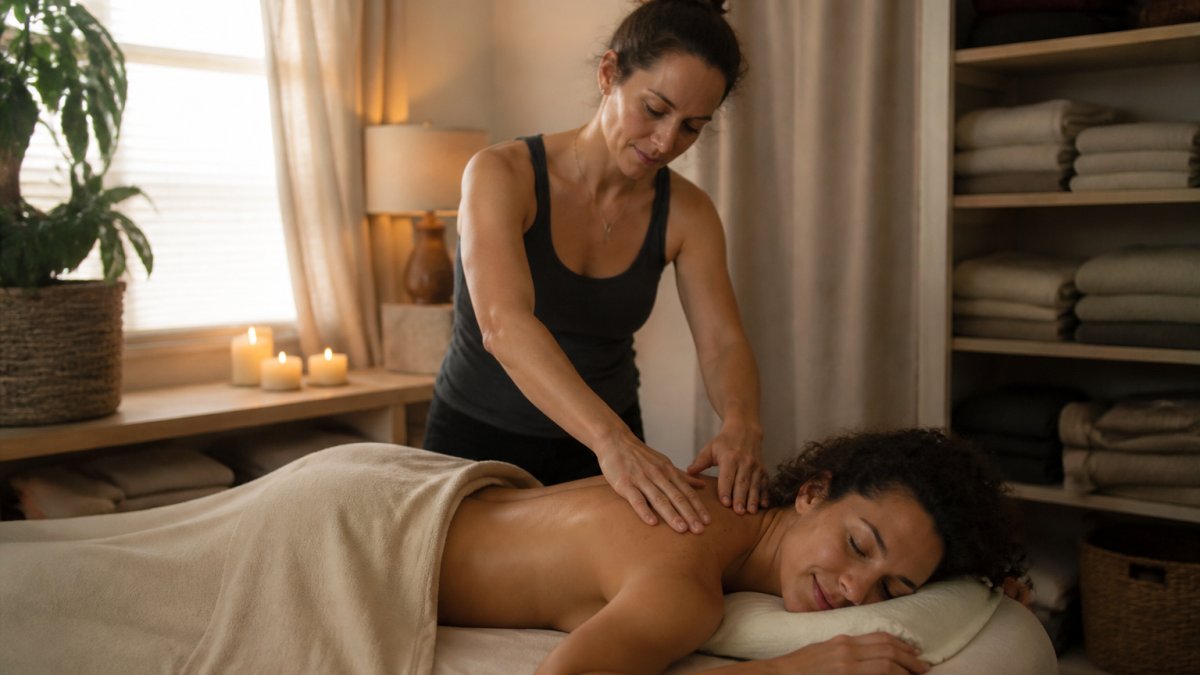
The physical benefits of regular massage show up in your muscles, your sleep, and how fast your body bounces back.
First, muscle tension. Stress lives in the body as tight shoulders, a clenched jaw, and a stiff lower back. Massage releases that holding pattern. Over time, regular sessions help your muscles stay softer between visits.
Sleep quality improves for many people too. A relaxed body falls asleep faster. If you struggle to wind down, an evening session can set you up for a deeper night.
Recovery is the quiet benefit. Massage supports circulation and helps your body clear the byproducts of tension and overuse. Athletes and physical workers notice this most.
Better posture and mobility often follow. When muscles stop guarding, you move more freely.
Mental and Emotional Benefits: Mood, Anxiety, and Calm
The mental side is where massage surprises people. Many guests come in for their back and leave with a lighter mood.
Massage for anxiety works partly through the nervous system. Calming touch can lower stress hormones and support the feel-good chemicals your body makes on its own. You don't need to understand the science to feel the shift.
Here's what regular clients report:
- Less irritability during stressful weeks
- A calmer, more even mood
- More patience with family and coworkers
- A general sense of emotional balance
The calm you feel on the table doesn't stay there. With practice, your body learns the way back to that relaxed state. That's the real gift of regular sessions.
Types of Massage for Stress and Massage for Anxiety
Not every massage is built for stress, and more pressure isn't automatically better. For stress relief, the goal is usually to calm the nervous system, not to prove you can take it.
Swedish massage is the classic relaxation choice. Long, flowing strokes and light-to-medium pressure are designed to settle the nervous system. If your main goal is stress and anxiety relief, this is often the right starting point.
Deep tissue massage targets stubborn knots and chronic tightness. It's firmer and can help people whose stress lives in their back and shoulders, but it isn't required for stress relief. Some people find very firm work overstimulating rather than calming. If you're new to massage or highly stressed, start moderate and see how you respond.
Hot stone massage uses warmth to melt muscle guarding. It's a good fit if you run cold or hold tension deep, and many people find the heat itself relaxing.
Shiatsu and acupressure work on pressure points. Many people find these deeply calming for anxiety.
Energy work and sound healing round out the options for emotional stress. These are gentler, and many guests pair them with bodywork. They're worth trying if you find hands-on pressure intense, but treat them as complementary rather than a substitute for medical care.
If you're unsure, ask for a customized session. A good therapist reads your body and blends techniques to fit what you actually need. Tell them your goal is stress relief, not just knot removal, and ask them to check in on pressure as they go.
One practical tip: if you leave a session feeling drained or sore rather than calmer, that's useful information. It may mean the pressure was too much for where your nervous system is right now. The best stress massage is the one that leaves you feeling more settled, not more beat up.
Stress Management Techniques That Work With Massage
Massage does more when you support it between sessions. These habits help the calm last.
- Breathe slowly for two minutes a day. Long exhales tell your nervous system you're safe.
- Move your body gently. A short walk or a few stretches keeps muscles from locking back up.
- Protect your sleep. A consistent bedtime does more for stress than most people realize.
- Take real breaks. Step away from screens for five minutes every couple of hours.
- Hydrate after your session. It helps your body flush what the massage released.
- Notice your jaw and shoulders. When you catch yourself clenching, soften on purpose.
None of this is complicated. The trick is doing it on ordinary days, not just good ones.
What to Expect and How to Track Your Results
Your first session is mostly about communication. Tell your therapist where you hold tension and how much pressure you like. Good bodywork should never feel like something you have to endure.
Afterward, expect to feel relaxed, maybe a little sleepy. Some people feel mild soreness the next day, similar to after a good workout. That usually fades quickly.
Tracking results is simple, and most people skip it. Try this:
- Rate your stress from 1 to 10 before and after each session
- Note how you sleep for the next three nights
- Jot down when tension starts creeping back
After a few sessions, patterns appear. You'll know your ideal frequency, which techniques work best, and whether you're actually improving. That beats guessing.
If you're visiting for a short trip, one session can still help. It won't undo months of stress, but many guests leave feeling noticeably lighter. Locals who come regularly tend to see the deeper, lasting shift.
Frequently Asked Questions
How long do the stress-relief effects of massage last?
Most people feel calmer for a day or two after a single session, and that window tends to stretch with regular massage. Sleep and muscle tension often improve first, while mood and anxiety shifts build over weeks of consistent sessions. The effects fade if you stop, which is why spacing matters. Track how you feel for 48 hours after each appointment to learn your own rhythm, then adjust frequency from there.
Can massage help with anxiety and chronic stress?
Massage for anxiety is a reasonable support, not a cure. Research on massage and stress points to modest but real reductions in anxiety and tension, likely through the nervous system settling into a calmer state. It works best alongside other stress management techniques like breathwork, sleep habits, and movement. If anxiety is severe or ongoing, tell your therapist and keep your doctor in the loop. Bodywork can sit alongside professional care, not replace it.
What type of massage is best for stress relief?
Swedish massage suits most people new to bodywork, with slow, flowing strokes that encourage relaxation. Deep tissue helps when stress shows up as stubborn knots and stiffness, though it can feel intense the next day. For anxiety, gentle pressure and predictable rhythm often work better than deep work. The therapist matters as much as the modality, so book with someone who asks about your stress, sleep, and pain before starting.
Will one session make a difference, or do I need to commit to several?
One session can absolutely take the edge off. Many people leave feeling looser and sleep better that night. But the benefits of regular massage for stress compound over time, so a short series, such as every two weeks for a month or two, gives you a clearer sense of what consistent bodywork does for you. If you are visiting for a long weekend, book one session and treat it as a reset rather than a fix.
Stress doesn't disappear on its own, and waiting for a quiet season rarely works. Regular bodywork gives your nervous system a real chance to reset. At Body Alchemy Sedona, our therapist-led team offers customized massage, energy work, and breathwork in-studio or through mobile appointments, all built around your specific needs. We founded our collective in 2021 to make deeply restorative care feel personal, not routine. Dive in with us and rediscover what calm actually feels like.