 how-to
How to Combine Gentle Yoga and Massage for Recovery
Last Updated: November 2, 2026
Quick Summary
Massage first, then gentle yoga, is the simplest way to combine gentle yoga and massage for recovery. Massage loosens tight muscles, a short rest lets them settle, and slow poses held at an easy stretch help the body move freely again.
- Start with 10 to 20 minutes of light to medium massage on the back, hips, or legs.
- Rest for 5 to 10 minutes before you move so the stretch feels easy, not forced.
- Hold each of 3 to 4 gentle poses for 30 to 60 seconds at a 3 or 4 out of 10 stretch.
- Finish with 5 to 10 minutes of stillness, such as legs up the wall.
- Skip active yoga for 24 hours after deep tissue work on the same area.
Table of Contents
- Why Gentle Yoga and Massage Work Well Together
- Yoga Before or After Massage: Which Order Makes Sense
- What You'll Need Before You Start
- Step-by-Step: Building Your Recovery Session
- Restorative Yoga Poses to Use After Massage
- How Long to Wait Before Exercising After a Massage
- Building a Recovery Yoga Routine You Can Repeat
- Booking Your First Combined Session in Sedona
- Frequently Asked Questions
Why Gentle Yoga and Massage Work Well Together
Gentle yoga and massage are a natural pair for recovery. Massage works on tight muscles from the outside, while gentle yoga moves the body from the inside. Used together, they can leave you feeling looser and calmer than either one alone.
Here's the simple version: massage softens the muscles, and yoga helps them lengthen and move freely afterward. Many people find that a massage makes a gentle stretch feel easier and safer.
- Massage eases muscle tension and helps you relax
- Gentle yoga improves mobility and range of motion
- Together, they support a calmer nervous system
- Both can help you feel more connected to your body
Many clients want more than a quick rub-down. They want their bodies to feel like they can move again. Pairing bodywork with slow, intentional movement is a gentle way to get there. If you're recovering from an injury, you can read our practical guide to massage for injury recovery first.
Yoga Before or After Massage: Which Order Makes Sense
For most people, the best order is massage first, then gentle yoga. A massage warms up tissue and eases tension, so your body is ready to stretch without forcing it.
There are a few exceptions. If you want energy and focus before a massage, a short gentle flow can help. But for recovery, the massage-first order is usually the better choice.
Watch out: Avoid hard or intense yoga right after a deep tissue session. Sore muscles need time to settle.
What You'll Need Before You Start
You don't need much to get started. A few basics make the session more comfortable:
- A yoga mat or soft blanket
- Two or three folded towels for support
- A bolster or pillow
- Water to sip before and after
- Comfortable clothes you can move in
Plan for at least 60 to 90 minutes if you want a full session. Give yourself a quiet space where you won't be rushed.
Step-by-Step: Building Your Recovery Session
Here's a sequence that holds up whether you're sore from a workout, stiff from desk work, or just wound up. The order matters less than the pacing.
- Massage first, light to medium. Spend 10 to 20 minutes on one or two areas, back, hips, or legs. Use slow strokes toward the heart. If you're using a foam roller or massage ball, keep pressure at a 4 or 5 out of 10. Sharp pain means back off.
- Rest for 5 to 10 minutes. Lie down, breathe, and let the tissue settle. This is the step most people skip, and it's the one that makes the stretch feel easy instead of forced.
- Breathe for 2 to 3 minutes. Slow nasal breathing, longer exhale than inhale. This nudges your nervous system toward rest before you move.
- Move through 3 to 4 gentle poses. Hold each 30 to 60 seconds. Aim for a stretch you could hold a conversation through, a 3 or 4 out of 10 on the stretch scale. If your breath gets choppy, you've gone too far.
- Finish with 5 to 10 minutes of stillness. Legs up the wall or a supported savasana. Let the work land.
A few intensity rules of thumb:
- Restorative yoga (props, long holds, no effort) is the right pick after a deep massage or when you're run down.
- Gentle flow (slow movement, easy poses) fits when you're mildly sore and want to move.
- Skip active yoga for 24 hours after deep tissue work on the same area. Sore muscles need time to settle.
If you're recovering from an injury, keep the massage light and the poses supported, and get clearance from your clinician before adding load. Recovery isn't one-size-fits-all, a stressed body and a post-run body need different sessions.
Here's how the recovery session flows, step by step, with the timing for each part.
| Step | What to do | Time or frequency |
|---|---|---|
| Massage first | Light to medium pressure on back, hips, or legs | 10 to 20 minutes |
| Rest | Lie down and let tissue settle | 5 to 10 minutes |
| Breathe | Slow nasal breathing, longer exhale | 2 to 3 minutes |
| Gentle poses | Hold each pose at a 3 or 4 out of 10 stretch | 3 to 4 poses, 30 to 60 seconds each |
| Stillness | Legs up the wall or supported savasana | 5 to 10 minutes |
Restorative Yoga Poses to Use After Massage
Restorative poses work well after massage because they ask very little of your muscles. Try these:
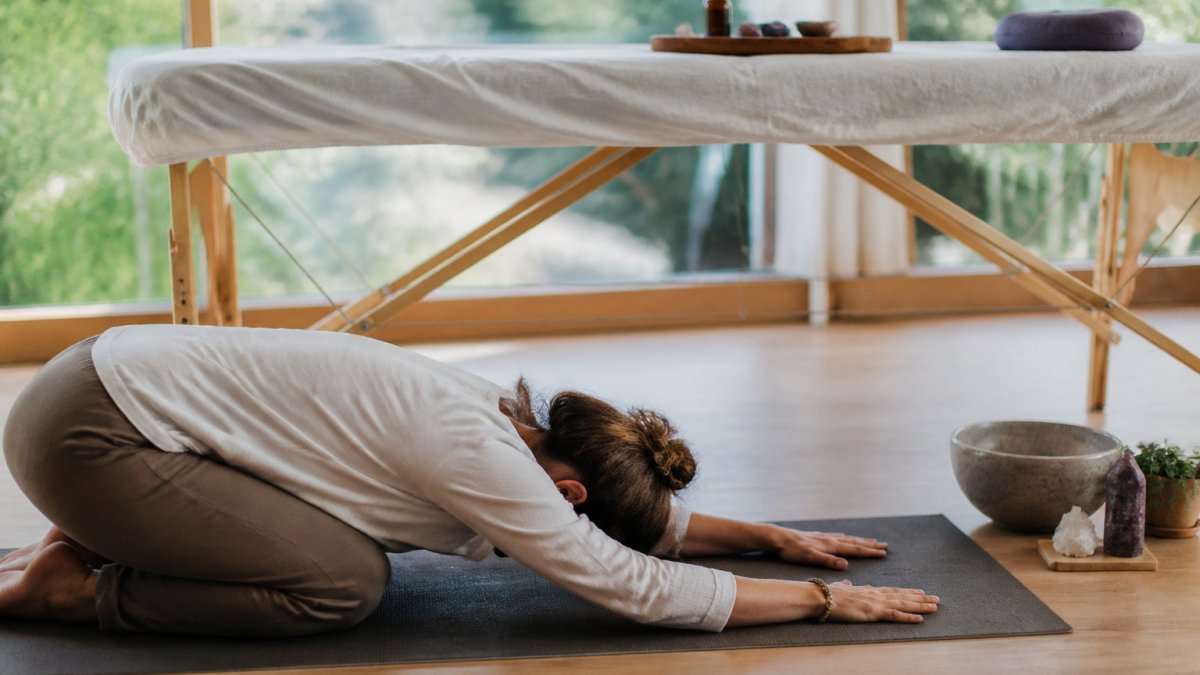
- Child's pose: Relaxes the back and hips
- Supported bridge: Opens the chest and front of the body
- Reclined twist: Eases the lower back
- Legs up the wall: Helps the legs feel light and rested
Use props generously. A bolster under your knees or a folded blanket under your hips makes a big difference.
How Long to Wait Before Exercising After a Massage
There's no single number, but there is a sensible way to think about it. Massage leaves tissue feeling looser and sometimes a little tender, and your sense of where your body is can be temporarily dulled. That's why hard training right after a deep session isn't a great idea.
A practical guide:
- Light activity, walking, easy mobility, gentle yoga, is usually fine within 30 minutes.
- Moderate training, steady cardio, bodyweight work, give it 2 to 4 hours after a light or medium massage.
- Heavy lifting or hard intervals, wait until the next day after deep tissue work, especially on the same muscles.
- Competition or a PR attempt, don't schedule it within 24 hours of a deep massage. Save the massage for after.
Why the caution? Deep work can leave muscles feeling fatigued and slightly sore, similar to a light workout. Stacking hard training on top raises the chance you tweak something or underperform. Light work is different, it often helps you feel better.
A common pattern among people who recover well: massage in the evening, sleep, then train the next day. Sleep does a lot of the settling work for you.
Building a Recovery Yoga Routine You Can Repeat
A routine you can actually stick to beats an ambitious one you drop after a week. Try this pattern:
- Pick two or three days per week for gentle yoga
- Pair one of those days with a massage when you can
- Keep the poses the same for a few weeks so you notice changes
- Note how your body feels afterward in a simple journal
Consistency matters more than length. Ten focused minutes often does more than an hour you rush through.
Booking Your First Combined Session in Sedona
If you're visiting or living in Sedona, you can book massage and yoga sessions with Body Alchemy Sedona. Our therapist-led studio offers custom massage therapy, and you can book in-studio or ask about a mobile appointment.
Tell your therapist about any injuries or areas that feel sore before your session starts. That helps us tailor the massage and suggest the right poses for you.
Ready to slow down and feel the difference? Dive in with us and book your first session.
Frequently Asked Questions
Should you do yoga before or after a massage?
Most people feel best with a light massage first, then gentle yoga. The massage warms and loosens muscles, so the stretches that follow feel easier and safer. If your goal is a warm-up before a workout, reverse the order and keep the yoga light. Listen to your body either way. If you feel sore or tired after a deep massage, skip intense poses and stick to slow, supported movement.
How long should you wait to exercise after a massage?
Many people feel fine to walk or do light movement right after a massage. For harder exercise, waiting an hour or so is a common, practical choice, because your body may still feel loose and a little tender. If you had a deep tissue session, give yourself more time and drink water. Gentle yoga is usually fine sooner than strength training or running.
Which gentle yoga poses are best for recovery?
Child's pose, supported bridge, reclined twist, and legs-up-the-wall are simple choices that ease the lower back, hips, and spine without strain. Hold each pose for several slow breaths and stop before you feel any pinching or sharp pain. Restorative poses that use props like bolsters and blankets are especially helpful after a massage, since they let muscles relax without effort.
Can massage and yoga help with muscle soreness?
Both can help you feel less tight and more mobile, which many people experience as relief from soreness. Gentle movement increases blood flow, and massage can ease muscle tension. Results vary from person to person, and these methods support recovery rather than fix injuries. If soreness is severe, lasts more than a few days, or follows an injury, check with a doctor or physical therapist first.
Book a massage session with Body Alchemy Sedona to start your recovery, or book private yoga in Sedona to practice the poses with an instructor.