 how-to
Sedona Sound Healing for Nervous System Calm
Table of Contents
- Why Sedona Sound Healing for the Nervous System Works
- What to Expect at a Sound Bath
- How Long Does a Sound Bath Last?
- Nervous System Regulation Techniques You Can Pair With Sound
- Sound Healing and Breathwork: A Natural Pairing
- What to Bring to a Sedona Sound Healing Session
- Conclusion
- Frequently Asked Questions
Last Updated: October 8, 2026
Why Sedona Sound Healing for the Nervous System Works
If you live with constant stress, your body may feel stuck in overdrive. Sedona sound healing for nervous system support works by giving your body a simple, gentle way to shift out of that state. At Body Alchemy Sedona, we see this happen often in our West Sedona studio.
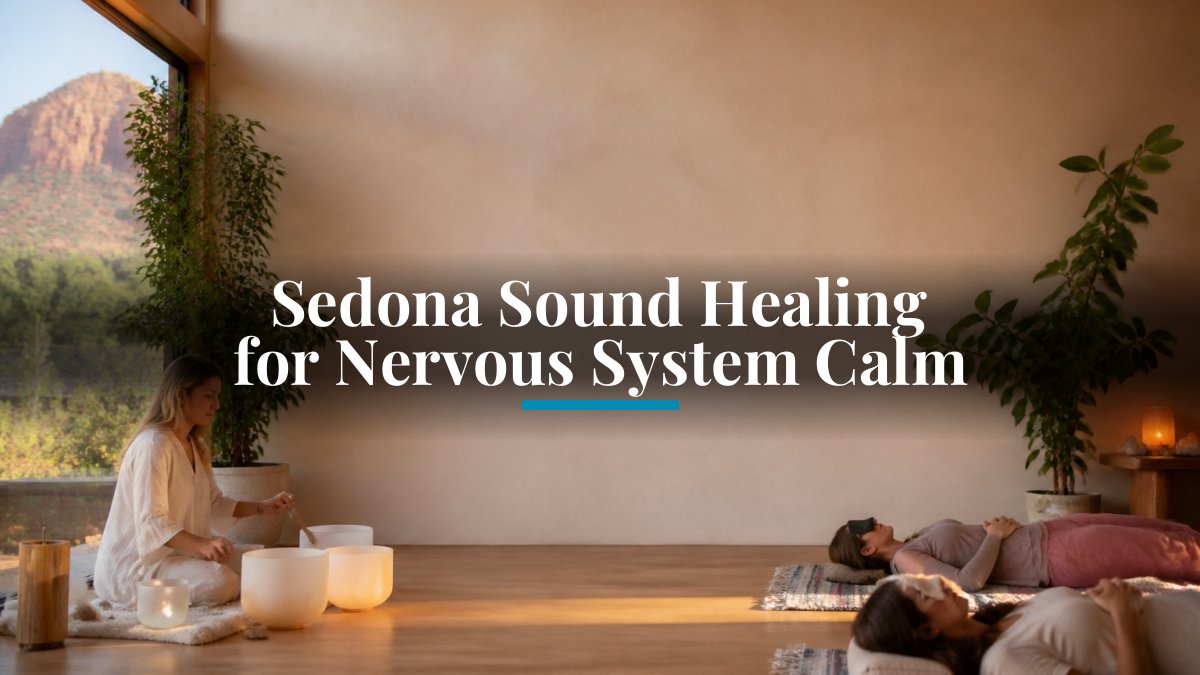
Sound healing is the practice of using instruments like singing bowls, gongs, and chimes to create vibrations that help your body relax. These vibrations are felt, not just heard. Many people find that a single session leaves them calmer and more grounded.
The reason is simple. Your nervous system responds to rhythm and tone. Slow, steady sound can help signal safety to your body. That signal lets your muscles soften and your breathing slow down.
This article covers what to expect at a sound bath, how long a session lasts, and how to pair sound with breathwork and other nervous system regulation techniques.
National Center for Complementary and Integrative Health overview of sound and music therapies
What to Expect at a Sound Bath
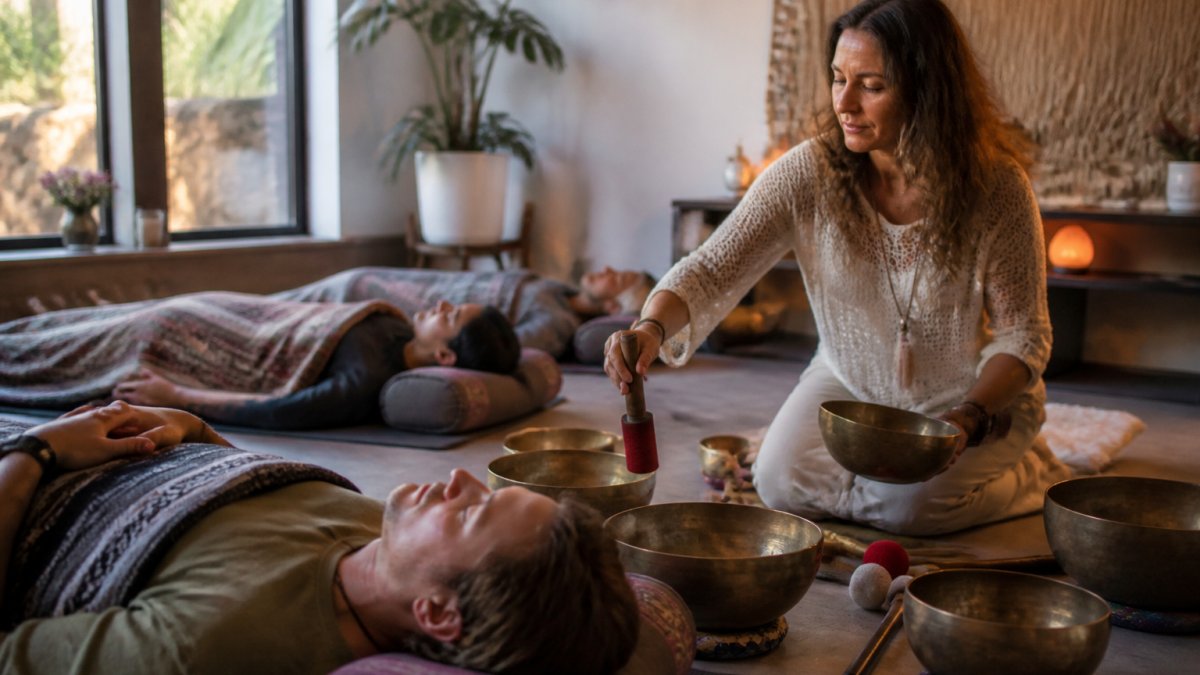
A sound bath is a guided listening experience where you rest while instruments are played around and near you. You stay fully clothed and lie down on a mat. No water is involved, despite the name.
Most sessions follow a calm, predictable flow. You arrive, settle in, and then simply rest while sound moves through the room.
Before You Arrive
A few small choices make the session easier.
- Wear comfortable, loose clothing
- Skip heavy meals in the hour before
- Leave your phone in the car or on silent
- Arrive a few minutes early to settle in
During the Session
You lie down and close your eyes. The practitioner plays bowls and other instruments, often starting soft and building gently. You may feel vibrations in your chest, hands, or legs.
Thoughts will come and go. That's normal. You don't need to force your mind to empty. Just let the sound carry you.
Some people drift off. Some stay alert the whole time. Both are fine.
How Long Does a Sound Bath Last?
A sound bath usually lasts between 45 and 90 minutes, depending on the setting. Group sessions often run about an hour. Private sessions can go longer and may include time for talking before and after.
Shorter sessions of 20 to 30 minutes exist too, often paired with massage or breathwork. If you're new to sound, a shorter session is a good place to start.
The length matters less than how well you settle in. A calm 30 minutes can do more than a restless 90.
Nervous System Regulation Techniques You Can Pair With Sound
Sound healing works best when it's part of a routine, not a one-time event. A few simple techniques can support what the sound starts.
- Slow breathing: Breathe in for four counts, out for six
- Body scan: Move your attention slowly from head to feet
- Grounding: Press your feet into the floor and notice the pressure
- Humming: Hum on the exhale to create your own gentle vibration
- Cool-down: Sit quietly for a few minutes before rushing off
Sound Healing and Breathwork: A Natural Pairing
Breathwork and sound healing support each other well. Breath gives your body a direct lever to slow down. Sound gives it something gentle to rest on.
At Body Alchemy Sedona, we often combine the two. A slow breathing practice before a sound session helps you settle faster. Sound then helps hold that calm in place.
You can try this at home too. Take five slow breaths, then play a calming track for ten minutes. Notice how your body responds.
Harvard Health overview of relaxation techniques and the stress response
What to Bring to a Sedona Sound Healing Session
Bring very little. Most studios provide mats, blankets, and bolsters. A few personal items make the experience more comfortable.
- A water bottle
- A light layer in case the room is cool
- An eye mask or small towel for your eyes
- Socks, since shoes come off
- Anything that helps you lie still, like a small pillow
If you're not sure what's provided, ask when you book. Most places are happy to tell you.
Conclusion
Stress doesn't reset on its own. It builds until your body forces the issue, often through poor sleep, tension, or pain. Sound healing offers a simple way to interrupt that cycle and give your nervous system real rest.
At Body Alchemy Sedona, our therapist-led team blends sound healing with breathwork, energy work, and custom massage. Every session is tailored to what your body actually needs that day. You can visit our West Sedona studio or book a mobile appointment.
Dive in with us and give your nervous system the reset it's been asking for.
Frequently Asked Questions
Can sound healing help calm the nervous system?
Yes. Steady tones from singing bowls and gongs give your nervous system a single, predictable thing to track, which can ease the mental scanning that keeps you on edge. Many people notice slower breathing and looser shoulders within the first ten minutes. It is not a medical treatment, but it is a low-effort way to shift out of a stressed state and into rest.
How long does a sound bath last, and do I need more than one session?
Most sessions run 45 to 90 minutes, including a short settling-in period at the start and a quiet few minutes at the end. One session can leave you noticeably calmer for a day or two. If you are working on ongoing stress or tension, a series of weekly sessions tends to build more lasting change than a single visit.
I am skeptical about sound healing. Is there any real basis for it?
That skepticism is fair. Sound healing is not a substitute for medical or mental health care, and no one should claim otherwise. What it does offer is a structured, low-demand environment where your body can downshift. Think of it as a nervous system regulation technique, similar to guided breathing, rather than a cure. Try one session and judge by how you feel afterward.
Can I combine sound healing and breathwork in one visit?
Yes, and the two work well together. Slow breathing before or during a sound session gives your body a head start on relaxing, and the sound gives your mind something to rest on. Many studios, including ours, offer both in the same appointment. If you are new to either, start with a gentle guided breath and let the practitioner set the pace.