 ultimate-guide
Is Energy Healing Scientifically Backed? What Research Shows
Last Updated: October 23, 2026
Quick Summary
Energy healing is only partly scientifically backed. Studies show mixed and often weak results, with the most consistent benefits reported for relaxation, stress reduction, and self-reported well-being rather than measurable physical change. There is no reliable evidence that practitioners can manipulate a subtle energy field to cure disease.
- Most energy therapies lack high-quality evidence for treating specific diseases, per the National Center for Complementary and Integrative Health.
- Slow, attentive touch and quiet presence can nudge the body toward parasympathetic dominance, the rest and digest state.
- Sound healing studies report reduced tension and improved mood, but effects are short-term and largely self-reported.
- Common study flaws include small samples, no blinding, inconsistent terminology, and short follow-up.
- See a doctor first for unexplained pain, numbness, or sudden mood changes before booking a session.
Table of Contents
- What Energy Healing Actually Is (and Isn't)
- The Energy Healing Scientific Evidence: What Studies Show
- Energy Healing for Anxiety: The Nervous System Connection
- Sound Healing Research for Anxiety
- The Placebo Effect and Energy Healing
- The Limits of the Studies, Explained Honestly
- Safety, Contraindications, and When to See a Doctor
- Conclusion
- Frequently Asked Questions
What Energy Healing Actually Is (and Isn't)
Energy healing is a family of practices that claim to influence a person's "biofield" or subtle energy to support physical and emotional well-being. At Body Alchemy Sedona, we practice energy work as a complement to bodywork, never as a replacement for medical care. That distinction matters more than most people realize.
The honest answer to "is energy healing scientifically backed" is: partly, and not in the way most marketing suggests. The strongest evidence isn't for invisible energy fields. It's for what happens to your nervous system when a calm practitioner gives you focused, unhurried attention for an hour.
That's not a dismissal. It's a reframe. And it changes how you should think about booking a session.
The Energy Healing Scientific Evidence: What Studies Show
Here's where the research actually stands: studies on energy healing show mixed and often weak results, with the most consistent benefits reported for relaxation, stress reduction, and self-reported well-being rather than measurable physical change.
Where the Research Is Strongest
The clearest signals come from outcomes you can feel: lower self-reported stress, improved mood, and a sense of calm. Many practitioners find these effects are real and repeatable, even when researchers can't identify a mechanism beyond relaxation and the therapeutic relationship itself. The National Center for Complementary and Integrative Health draws a careful line here, noting that most energy therapies lack high-quality evidence for treating specific diseases.
Where the Research Falls Short
The gaps are significant. Small sample sizes, inconsistent definitions of what "energy healing" even means, and a lack of blinding make many studies hard to trust. Some trials show no difference between energy healing and a placebo. That doesn't mean nothing happens in a session. It means the evidence can't yet separate the technique from the context around it.
Energy Healing for Anxiety: The Nervous System Connection
The most defensible case for energy healing for anxiety is physiological, not metaphysical. Slow, attentive touch and quiet presence can nudge the body toward parasympathetic dominance, the "rest and digest" state that counterbalances chronic stress.
When you spend an hour lying still while someone holds space for you, heart rate variability often improves and stress hormones settle. This is the mind-body connection in action. It's also why breathwork and energy work pair so naturally: both give the nervous system a clear, gentle signal that it's safe to downshift.

Sound Healing Research for Anxiety
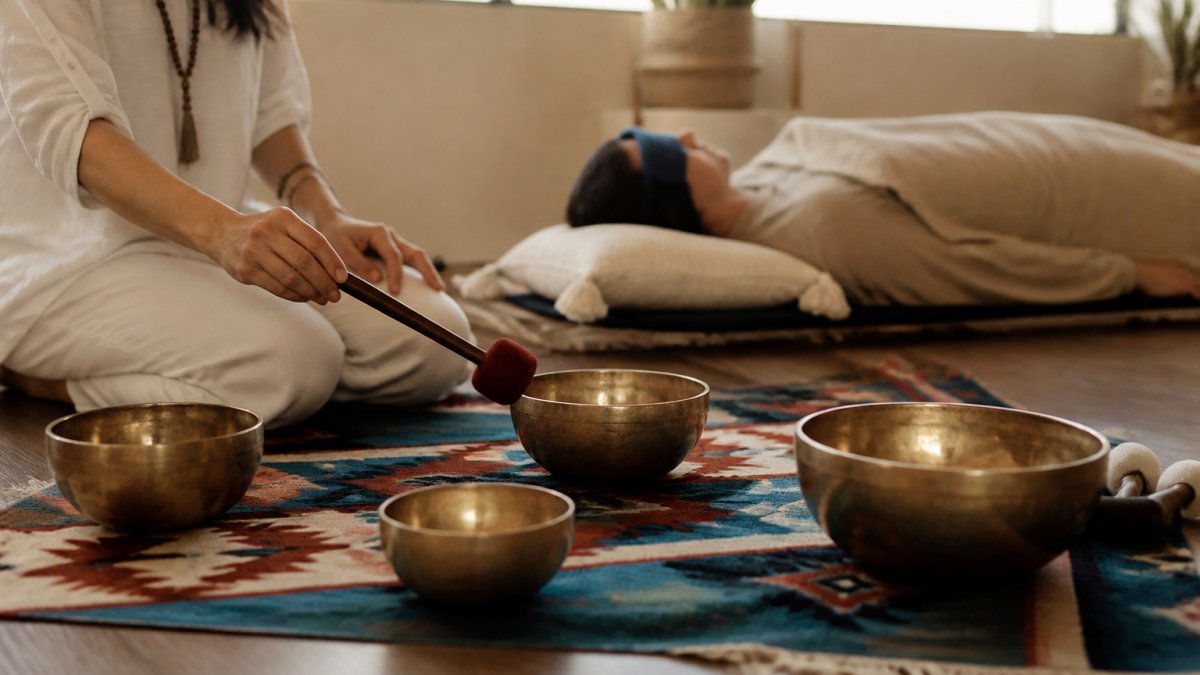
Sound healing research for anxiety is younger than energy healing research but points in a similar direction. Studies on singing bowls, gongs, and guided sound meditations generally report reduced tension and improved mood, with the same caveat: effects are short-term and largely self-reported.
What most guides miss is that the mechanism is partly mechanical. Certain frequencies and rhythms entrain breathing and brainwave patterns, which is why a sound bath can feel so different from sitting in silence. If you're skeptical, start with one session and judge by how you feel the next day, not during it.
The Placebo Effect and Energy Healing
The placebo effect and energy healing are not opposites. Placebo is a real, measurable physiological response, and it's a feature of every healing encounter, not a trick.
Expectation, ritual, a calm room, and a trusted practitioner all shape how your body responds. That's true of surgery and it's true of a sound bath. The question worth asking isn't "is this placebo?" but "does the whole experience reliably help me feel better?" For many people, the answer is yes, and that's a legitimate reason to keep going.
But there's a line worth drawing, and most articles blur it. Two different claims get bundled under "energy healing," and they don't stand on the same footing:
- Measurable physiological change: relaxation, lower self-reported stress, shifts in heart rate variability, a calmer breathing pattern. These are things you can feel and, in a lab, sometimes measure. The evidence here is modest but real, and it doesn't require any unseen force to explain it.
- Unproven metaphysical claims: that a practitioner can detect or manipulate a subtle energy field to cure disease, clear blockages, or diagnose illness at a distance. There is no reliable evidence for this, and it's where the marketing usually outruns the science.
A good practitioner can hold both ideas honestly: the session may genuinely help you relax and feel better, and that doesn't mean anyone moved your energy field. You don't have to choose between "it's all fake" and "it's magic." The middle ground is where the evidence actually lives.
That distinction also protects you. If someone sells you on the measurable part, stress relief, nervous system regulation, a quiet hour, you can judge whether it delivered. If someone sells you on the metaphysical part as a cure, you've found the edge of what the science supports, and you should keep your doctor in the loop.
The Limits of the Studies, Explained Honestly
Most energy healing studies share the same weaknesses, and naming them is the only way to read the evidence fairly. But a list isn't enough. You need to know how each flaw bends the result.
- Small samples: many trials include only a few dozen participants. With that few people, a handful of strong responders can drag an average into significance, and one dropout can erase it. A result that would be a footnote in a 500-person drug trial becomes a headline in a 30-person energy study.
- No blinding: a practitioner knows what they're doing, and so does the client. That invites expectation bias on both sides. Some trials try to fix this with sham practitioners who go through the motions, but experienced clients often guess who's real, which quietly breaks the blind.
- Inconsistent terminology: "energy healing," "therapeutic touch," "healing touch," and "biofield therapy" get used interchangeably, but they aren't the same intervention. Pooling them in a review is like comparing aspirin, ibuprofen, and ice packs under the label "pain relief" and calling the results mixed.
- Short follow-up: few studies track outcomes beyond a few weeks, so we know almost nothing about whether benefits last or fade.
- Outcome measurement: most rely on self-reported questionnaires, which are vulnerable to how hopeful someone feels on the day. Objective markers like heart rate variability or cortisol are used far less often, and when they are, the effects are smaller and less consistent.
Here's the part most guides skip: these flaws cut both ways. They don't prove energy healing works, and they don't prove it fails. They mean the current evidence can't settle the question either way. A skeptical reader and a hopeful one can look at the same pile of studies and both be honest.
What would actually move the needle? Larger trials, pre-registered protocols, consistent definitions, and objective physiological outcomes alongside self-report. Until that exists, treat any single study as a clue, not a verdict, and be suspicious of anyone, on either side, who cites one paper as the final word.
Safety, Contraindications, and When to See a Doctor
Energy healing is generally low-risk because it's non-invasive, but "low-risk" isn't "no-risk." The real danger is delayed care when a symptom needs medical attention.
See a doctor first for unexplained pain, numbness, sudden changes in mood, or anything that's getting worse. Energy work can support recovery alongside medical care, but it can't identify what's wrong. Tell your practitioner about injuries, pregnancy, recent surgery, or a history of trauma so they can adapt the session.
Conclusion
The honest takeaway is that energy healing isn't proven to cure disease, but it is a reasonable, low-risk way to support relaxation and nervous system regulation, and that's worth something in a stressed-out world. If you want to experience it with practitioners who treat it as one part of a whole approach, Body Alchemy Sedona offers therapist-led energy work, sound healing, and breathwork in-studio or through mobile appointments. We blend intuition with a grounded, science-aware perspective and tailor every session to what your body actually needs. Dive in with us and see how it feels to slow down.
Frequently Asked Questions
Is there scientific evidence that energy healing works?
It depends on what you mean by 'works.' Studies on energy healing scientific evidence show mixed results. Some small trials report improvements in stress, relaxation, and self-reported well-being, but many have design flaws like small sample sizes and no blinding. There is no strong evidence that energy healing treats disease or replaces medical care. The honest take: it may support relaxation and comfort, but the evidence is not solid enough to call it proven.
Can energy healing reduce stress or anxiety?
Some research on energy healing for anxiety suggests people feel calmer after sessions, and that's worth something. But it's hard to separate the technique from the quiet setting, the caring touch, and the expectation of feeling better. If you struggle with anxiety, energy work can be a supportive add-on alongside therapy or medical care, not a replacement. Think of it as a relaxation tool, not a treatment.
Is sound healing scientifically proven to help with anxiety?
Not proven, but there's promising early research. Sound healing research for anxiety includes small studies where participants report lower stress after sound baths, and some show shifts in heart rate variability, a marker of nervous system regulation. The catch: most studies are small and short-term. It's reasonable to try if it feels good, but don't expect it to cure a clinical anxiety disorder.
How much of energy healing's benefit comes from the placebo effect?
A meaningful chunk, likely. The placebo effect and energy healing are closely linked: expectation, a calm environment, and a caring practitioner can all produce real changes in how you feel. That doesn't make the experience fake. Placebo responses are real physiological events. The key is honesty: if a session helps you relax and feel better, that's valuable, even if the mechanism isn't fully understood.