 ultimate-guide
What Should You Expect From a Sound Healing Session?
Last Updated: October 30, 2026
Quick Summary
A sound healing session is a relaxation practice where a practitioner plays instruments like Tibetan singing bowls, gongs, chimes, and drums while you rest. Most people lie down on a mat with a blanket and pillow, and you don't need any music or meditation experience to take part.
- Most sessions use a sound bath format where you lie on a mat with a blanket and pillow.
- Instruments often include crystal or Tibetan bowls, gongs, chimes, drums, and tuning forks.
- Shifting, stretching, or rolling to your side mid-session is allowed.
- Tell your practitioner ahead of time if back pain, injury, or pregnancy makes lying flat hard.
- Check with your doctor first if you're pregnant, have a seizure disorder, or have an implanted device.
Table of Contents
- What Sound Healing Actually Is
- What Happens During a Sound Bath From Start to Finish
- How to Prepare for a Sound Bath
- How Long a Sound Bath Usually Lasts
- Can Sound Healing Help With Anxiety and Stress?
- Safety, Individual Reactions and When to Skip a Session
- Booking Your First Session at Body Alchemy Sedona
- Frequently Asked Questions
What Sound Healing Actually Is
Sound healing is a relaxation practice where a practitioner uses instruments like Tibetan singing bowls, gongs, chimes, and drums to create sound and vibration that you rest in. Most people come for the deep relaxation, the quiet, and a break from their usual noise. You don't need to know anything about music or meditation to take part.
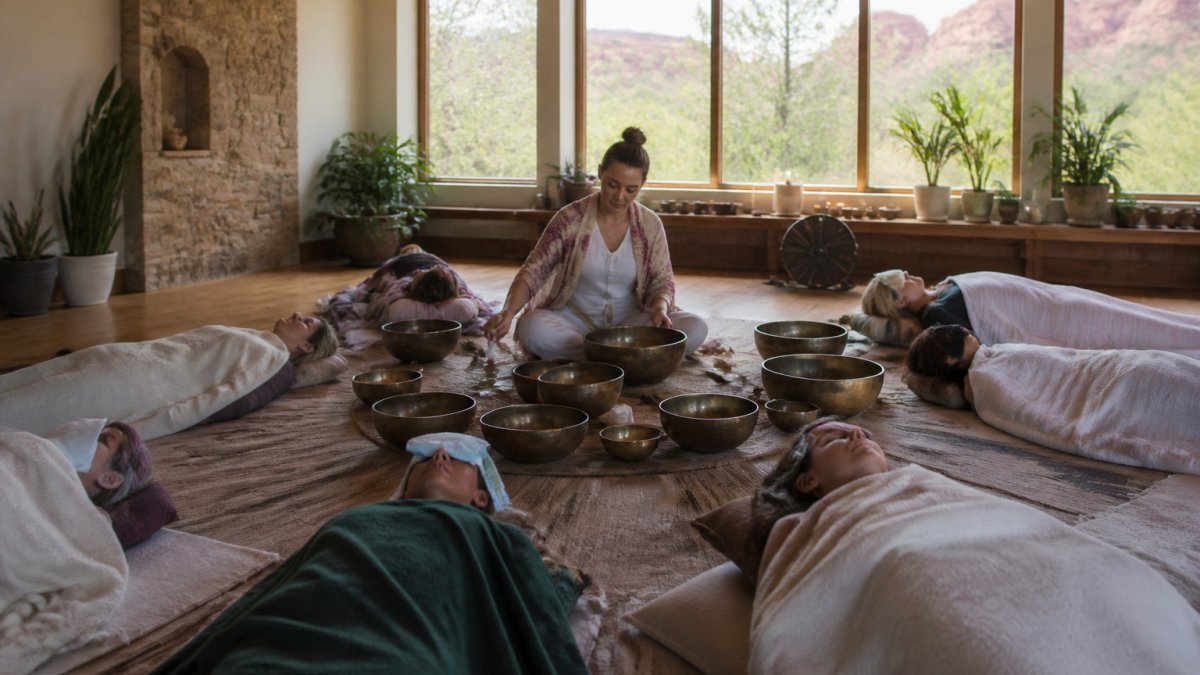
People often use "sound healing" and "sound bath" to mean the same thing. A sound bath is the most common format: you lie down, usually on a mat with a blanket and pillow, and the sound washes over you for the length of the session. Some sessions are one-on-one, and some are group sessions in a studio.
Body Alchemy Sedona offers sound healing alongside massage, energy work, yoga, and breathwork.
What Happens During a Sound Bath From Start to Finish
Most sessions follow a general rhythm, and knowing it ahead of time can take some of the mystery out of a first visit.
A few practical notes on the room itself:
- If staying still is hard. Back pain, a recent injury, pregnancy, or just restlessness can make lying flat uncomfortable. Tell the practitioner ahead of time. They can adjust the setup, shorten the lying portion, or suggest a seated position. You're also free to shift, stretch, or roll to your side mid-session, nobody is grading your stillness.
The Instruments and Sounds You'll Hear
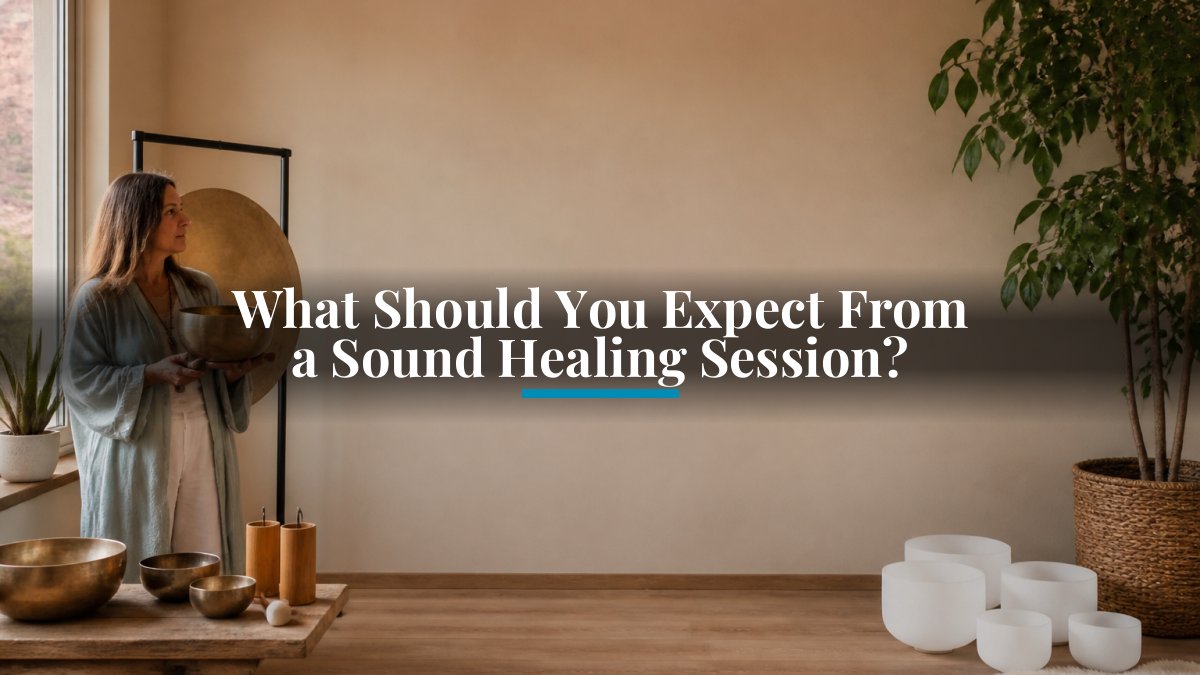
The bowls are the centerpiece for most people. Sound healing sessions often use crystal bowls, Tibetan bowls, gongs, chimes, drums, or tuning forks.
You don't need to identify any of it. Many people find that the instruments blur together after a few minutes, and that's usually when they start to relax the most.
What Your Body Might Feel
Physical reactions vary a lot.
It's also normal to feel restless, distracted, or a little emotional. None of those mean the session "didn't work." If something feels uncomfortable, say so. Your practitioner can adjust the volume or pause the instruments.
Here is a quick look at what to expect in a session, drawn from the sections above.
| Aspect | What to expect | Note |
|---|---|---|
| Position | Lying down on a mat with a blanket and pillow | Seated option available on request |
| Instruments | Crystal or Tibetan bowls, gongs, chimes, drums, tuning forks | No prior knowledge needed |
| Clothing | Loose, comfortable clothes | Avoid tight waistbands and jewelry |
| Movement | Shifting, stretching, or rolling to your side is allowed | Practitioner can adjust volume or pause |
| Session format | One-on-one or group studio session | Ask when booking |
| Reactions | Relaxation, restlessness, distraction, or emotion | All are normal; speak up if uncomfortable |
How to Prepare for a Sound Bath
A little preparation makes the experience much easier to enjoy. Most of it is common sense, but a few details are worth knowing before your first visit.
What to wear and bring. Loose, comfortable clothing you can lie down in without feeling restricted is the main thing. Avoid tight waistbands, stiff jeans, or anything you'd hate to wrinkle. Most studios provide mats, blankets, and a pillow, but it's worth asking, some people prefer to bring their own blanket or a small pillow for neck support. A water bottle is a good idea. Leave the jewelry that clinks at home if you can.
Lying down vs. sitting. You don't have to lie on the floor. If lying flat is uncomfortable, back pain, a recent injury, pregnancy, or just preference, ask about a chair or a seated position against the wall. Good practitioners keep options available and won't make it awkward.
Tell your practitioner about any needs. Back pain, a recent injury, a fear of lying on the floor, or a history of trauma that makes closing your eyes in a group feel hard, all of it is worth mentioning. A good practitioner will adjust without making it a big deal.
If you're unsure what to bring, feel free to reach out to us before your visit.
How Long a Sound Bath Usually Lasts
Session length depends on the format you book, so ask when you schedule so you know what to expect.
Can Sound Healing Help With Anxiety and Stress?
Some people use sound healing to unwind after a stressful week. That said, a session is not a treatment for an anxiety disorder, and no one should expect a single visit to fix a long-running problem. For a closer look at how sound supports calm in the body, see nervous system calm through sound healing.
Think of sound healing as one tool among many. It pairs well with breathwork, regular rest, and, when needed, support from a licensed healthcare provider. If you want to see the specific benefits people report for stress relief, read more about stress relief benefits.
Safety, Individual Reactions and When to Skip a Session
Sound healing isn't right for everyone. Check with your doctor before booking if you're pregnant, have a seizure disorder, have a pacemaker or other implanted device, or have a recent injury. Loud or deep tones can be uncomfortable if you have sound sensitivity, and some people find the experience emotionally intense.
Reactions can differ from one session to the next. Some people feel lighter afterward, while others feel a bit tired or emotional. If a session brings up something difficult, tell your practitioner and take it slow.
Being cautious here is a sign you're taking your well-being seriously.
Booking Your First Session at Body Alchemy Sedona
If you're ready to try it, you can explore our sound healing sessions at our West Sedona studio. Visit our website for current options and details. If you'd like hands-on work alongside the sound, you can look at our sound healing massage and compare it with a sound-only session. Dive in with us when you're ready to slow down.
Frequently Asked Questions
What happens during a sound healing session?
Sound healing sessions generally involve lying down or sitting comfortably while a practitioner plays instruments such as singing bowls, gongs, chimes and drums. Many people find it a relaxing experience.
What does a sound bath feel like?
People describe it in different ways. It's normal for your mind to wander or for emotions to surface, and it's also normal to stay alert the whole time. There's no correct way to feel.
What should I wear and bring to a sound bath?
Wear loose, comfortable clothing in layers, since body temperature can change while you lie still. Avoid anything tight around the waist or neck. Bring a water bottle and anything you use to stay comfortable, such as a small pillow. It's worth checking ahead about what's provided. Leave jewelry and phones off or silenced so the experience isn't interrupted.
How long does a sound bath usually last?
Check the session length when you book, and ask whether you can arrive a few minutes early to settle in.
Can sound healing help with anxiety or stress?
Some people find it a useful break from a stressful week. It's best viewed as a relaxation practice rather than a treatment for an anxiety disorder. If anxiety is affecting your daily life, talk with a licensed healthcare provider alongside any wellness practice.
Is sound healing safe for everyone?
For most healthy adults it's low risk, but it isn't ideal for everyone. Loud sounds can be uncomfortable for people with sound sensitivity, hearing conditions, or tinnitus. Pregnant people, people with heart conditions and people who have recently had surgery should check with their doctor first. Tell your practitioner about any health concerns before the session, and you can always ask for quieter instruments or step out.
Can I leave a sound bath if I feel uncomfortable?
Yes. You're free to sit up, move, step out or stop at any point. Tell your practitioner quietly if something feels wrong. Feeling uneasy is a valid reason to leave, and you don't need to explain why.
Do I need to commit to multiple sessions to see results?
A single session can leave you feeling noticeably more relaxed, but many people find that regular sessions help them unwind more quickly over time. If you're only visiting for a few days, one session is still a worthwhile experience. Plan around how you want to feel, and talk with your practitioner about what fits your schedule and goals.