 ultimate-guide
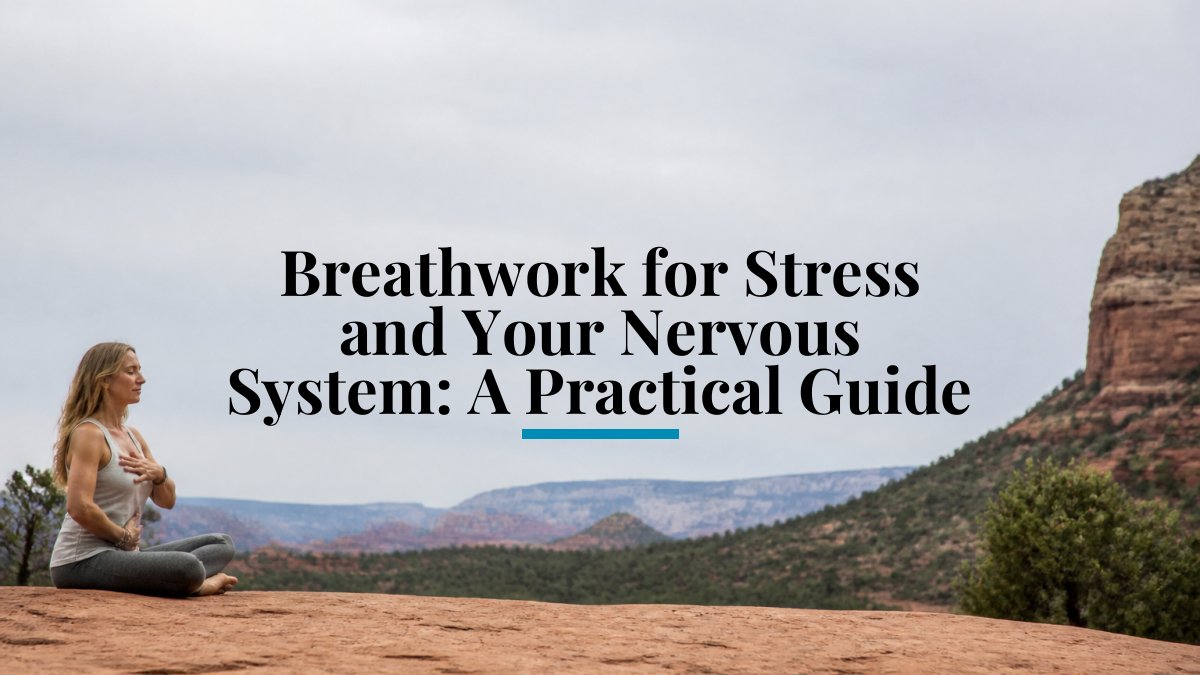
Breathwork for Stress and Your Nervous System: A Practical Guide
Last Updated: October 28, 2026
Quick Summary
Breathwork for stress works by slowing your breathing and lengthening the exhale, which nudges your nervous system out of fight-or-flight and into rest-and-digest mode. It is a low-cost skill that helps you settle in the moment, though it does not treat anxiety or depression on its own.
- Slow paced breathing around five to six breaths per minute is the rate most often studied for calming.
- Start with diaphragmatic belly breathing for five to ten minutes, practicing for a few days before judging it.
- Box breathing uses four-count inhales, holds, exhales and holds, repeated for three to four rounds.
- Stop right away if you feel dizzy, faint, have chest pain, or a racing heart that won't settle.
- Check with a clinician first if you have heart or lung conditions, blood pressure issues, or a history of panic attacks.
Table of Contents
- How Breathing Shapes Your Stress Response
- What Breathwork Can and Cannot Do: Evidence and Limits
- Diaphragmatic Breathing: Your Foundation Practice
- Box Breathing for Acute Stress Moments
- Matching Breathing Exercises for Stress to Your Current State
- Breathwork Safety: When to Stop and Who Should Adapt
- Building a Simple Daily Practice You Can Keep
- Frequently Asked Questions
Breathwork for stress is one of the simplest tools you can practice, and it costs nothing but a few minutes. At Body Alchemy Sedona, breathwork is one of the services offered by our therapist-led wellness collective. This guide covers what breathing does to your nervous system, which techniques are worth trying, and how to practice them without overdoing it. For a fuller set of specific breathing techniques for deep relaxation, see Breathwork Techniques for Deep Relaxation: A Guide.
How Breathing Shapes Your Stress Response
Breathing is one of the few body functions that runs automatically and can also be changed on purpose. If you want a practical walkthrough of nervous system regulation techniques, that guide covers the how-to in more detail. That's why it's such a useful lever for stress. When your breath speeds up and gets shallow, your body reads it as a signal that something is wrong. When it slows down and lengthens, your body gets a different message.
The autonomic nervous system in plain terms
Your autonomic nervous system runs the things you don't consciously control, like heart rate, digestion, and how fast you breathe. It has two main branches. The sympathetic branch prepares you for action, while the parasympathetic branch helps you settle. Stress tends to keep the first one switched on longer than it needs to be.
Parasympathetic activation and the rest-and-digest response
The parasympathetic system is often described as the rest-and-digest side of the body. Slow exhalation is one of the more direct ways to nudge it into play. Many people notice that a few long, unhurried breaths make them feel less rushed, even when the situation hasn't changed. That shift is what breathwork is really aiming for.
What Breathwork Can and Cannot Do: Evidence and Limits
Breathwork for stress is promising, but it isn't a cure for anxiety, depression, or chronic stress. The honest version of the evidence is more useful than either hype or dismissal, so here's how to read it.
What research actually measures
Most studies on slow breathing look at short-term outcomes: heart rate variability, self-reported calm, blood pressure during a single session, or performance on a stressful task right afterward. Those are real effects, and they're worth having. What's much thinner is long-term evidence that a breathing practice alone changes clinical anxiety or depression over months. Many trials are small, short, and use different breathing rates, which makes them hard to compare head to head.
Why pace and technique change the result
Breathing isn't one intervention. A gentle six-breaths-per-minute pace, a forceful round of breath holds, and a quick physiological sigh are different physiological events. Research on slow paced breathing generally clusters around roughly five to six breaths per minute, which is close to the rate many people find calming. Faster, more activating patterns are studied for different purposes and carry more risk of lightheadedness. So when you read that "breathwork helps stress," ask which practice, at what pace, for how long, and in whom.
How to weigh a claim
A few questions cut through most breathwork marketing:
- Does the claim describe a short-term feeling or a treated condition? Short-term calm is plausible; curing panic disorder is not something a breathing pattern does on its own.
- Is the study in healthy volunteers or in people with a diagnosed condition? Results don't always transfer.
- Is the practice being sold as a replacement for care, or as a complement to it? The second is defensible; the first is a red flag.
What it can reasonably do
For most people, the realistic wins are modest and real: a faster return to baseline after a stressor, a tool you can use in a meeting or before sleep, and a way to notice tension earlier. Those are worth practicing. They're just not the same as treating a condition.
Diaphragmatic Breathing: Your Foundation Practice
If you only learn one technique, make it this one. Diaphragmatic breathing, sometimes called belly breathing, uses the large muscle under your ribs to draw air deep into your lungs instead of shallowly into your chest.
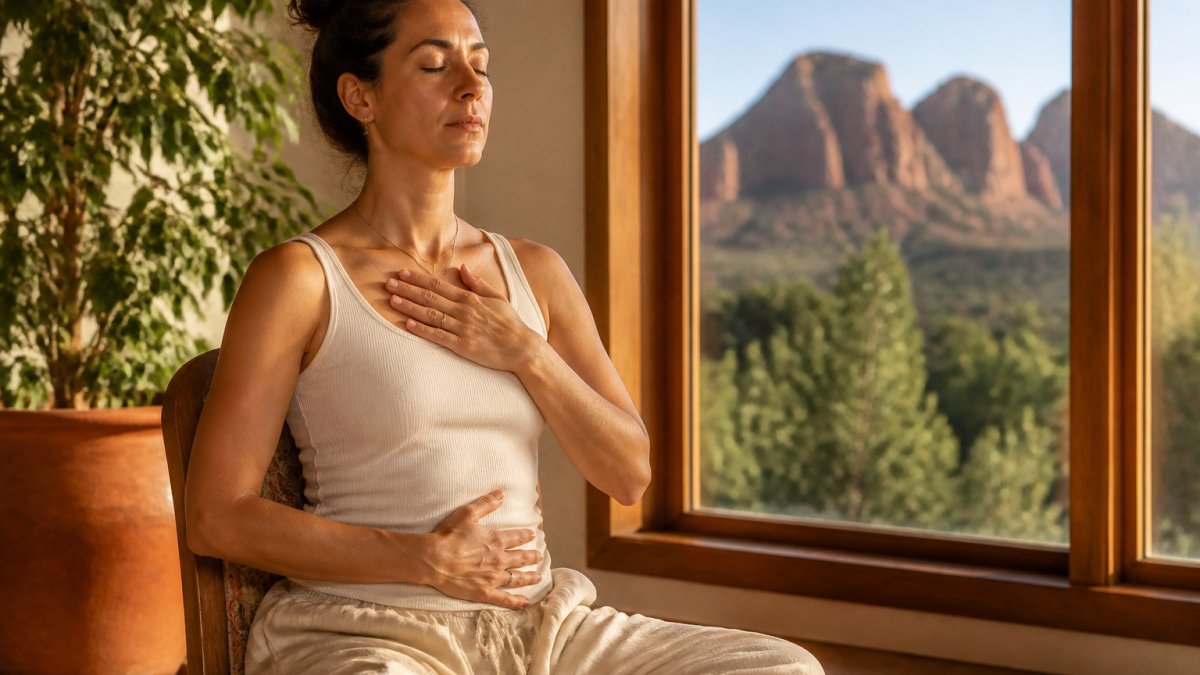
- Sit or lie down somewhere quiet, and rest one hand on your upper chest and one on your belly.
- Breathe in slowly through your nose, letting your belly rise more than your chest.
- Exhale gently through your nose or lips, allowing your belly to fall.
- Continue for five to ten minutes, keeping the breath smooth rather than forced.
Most people find it feels awkward at first. That's normal. Practice it for a few days before judging whether it helps.
Box Breathing for Acute Stress Moments
Box breathing is a structured pattern that works well when you feel tense and need something you can do anywhere, like before a presentation or while waiting in a stressful line.
- Inhale for a count of four.
- Hold the breath for a count of four.
- Exhale for a count of four.
- Hold the empty lungs for a count of four.
- Repeat for three to four rounds.
If holding for four feels like too much, shorten it. The goal is steady, comfortable rhythm, not strain.
Matching Breathing Exercises for Stress to Your Current State
Not every moment calls for the same approach. When you're wound up and restless, a slightly longer exhale than inhale can help you come down. When you feel flat or foggy, a brisk pattern with a shorter exhale may feel more energizing. When you're simply running on empty, gentle diaphragmatic breathing before bed is often the easiest place to start.
Pay attention to how you feel after each practice. If a technique leaves you lightheaded or more anxious, switch to something gentler. Your body's response is better information than any general rule.
If you'd rather have someone guide you through this in person, Body Alchemy Sedona offers breathwork.
Breathwork Safety: When to Stop and Who Should Adapt
Breathwork is generally gentle, but it isn't risk-free for everyone, and the difference between a calming practice and an activating one matters more than most guides admit. Here's how to practice with some judgment.
Gentle vs. activating: know which one you're doing
Gentle practices, slow diaphragmatic breathing, a longer exhale, a soft physiological sigh, are low-intensity and suitable for most people. Activating practices, forceful breath holds, rapid breathing, intense round-based patterns, push harder on the system and are where most adverse experiences come from. If you're new, stay in the gentle lane until you know how your body responds.
When to stop
Stop immediately if you feel dizzy, faint, chest pain, or a racing heart that doesn't settle. Don't push through lightheadedness. Avoid forceful or prolonged breath-holding, and never practice while driving or in water.
Who should adapt or check first
Some people should modify the practice or talk with a healthcare provider first, including those with heart or lung conditions, high or low blood pressure, pregnancy, or a history of panic attacks or trauma. For panic-prone readers, a fast or hold-heavy pattern can mimic the sensations of a panic attack and make things worse; a slow exhale with normal breathing is usually the safer starting point.
A trauma-informed approach
For some people, closing the eyes and focusing inward on the breath feels uncomfortable or destabilizing. That's not a failure, it's information. Alternatives that keep you oriented to the room:
- Keep your eyes open and softly focus on a fixed point.
- Count objects in the room or name what you can see and hear.
- Feel your feet on the floor and the chair against your back.
- Choose the pace yourself and stop whenever you want. Choice is part of the practice.
If a technique brings up strong or distressing feelings, pause, open your eyes, orient to the room, and return to normal breathing.
Troubleshooting the common bumps
- Lightheaded or tingly: you're likely breathing too fast or too deep. Return to normal breathing and shorten the next session.
- Breath hunger or air hunger: slow down less, not more. A slightly quicker, comfortable pace beats forcing a long count.
- Can't slow the breath: don't force it. A gentle sigh or a few longer exhales is enough to start.
- More anxious afterward: switch to an eyes-open, externally focused practice or a shorter session.
Building a Simple Daily Practice You Can Keep
The best breathing practice is the one you'll actually do. Start with two or three minutes of diaphragmatic breathing each morning or before bed. Add a box breathing round when a stressful moment comes up. Over a few weeks, you'll learn which patterns feel most natural to you. If you want other calming routines to pair with your habit, try sound-based nervous system calm.
Tracking how you feel, even with a quick note, helps you see progress that's easy to miss day to day. Keep the bar low, stay consistent, and adjust as you go. Body Alchemy Sedona offers energy work and breathwork.
Frequently Asked Questions
Can breathwork help with stress?
Body Alchemy Sedona offers breathwork as part of its holistic range of services. Individual experiences vary.
How does breathing affect the nervous system?
Breathwork is one of the holistic services offered by Body Alchemy Sedona. Individual experiences vary.
What is the best breathing technique for calming down?
Body Alchemy Sedona offers breathwork. Ask the studio about the practices available.
Can breathwork make anxiety worse?
Body Alchemy Sedona offers breathwork. Ask a healthcare provider about personal health concerns before trying a breathing practice.
When should I stop a breathwork exercise?
If you have concerns about whether a breathing practice is appropriate for you, speak with a healthcare professional.
How often should I do breathing exercises for stress?
Body Alchemy Sedona offers breathwork. Ask a healthcare professional for guidance on a practice suited to your needs.
What is the difference between breathwork and meditation?
Body Alchemy Sedona offers breathwork, yoga, and sound healing. Ask the studio about its services.
Stress rarely goes away on its own schedule, but your breath is always with you. Start small, practice with patience, and give your nervous system a chance to show you what it needs.